Brain Adapts: Misplaced Neurons Still Work Perfectly
Scientists discovered that neurons in the wrong place can take over essential brain functions, challenging everything we thought about how the brain works. This breakthrough could transform treatments for brain injuries and developmental disorders.
Your brain might be more adaptable than anyone imagined.
Researchers at the University of Geneva just discovered that neurons positioned in the wrong location can still perform their normal functions perfectly. This finding challenges decades of scientific assumptions about how our brains need to be organized to work properly.
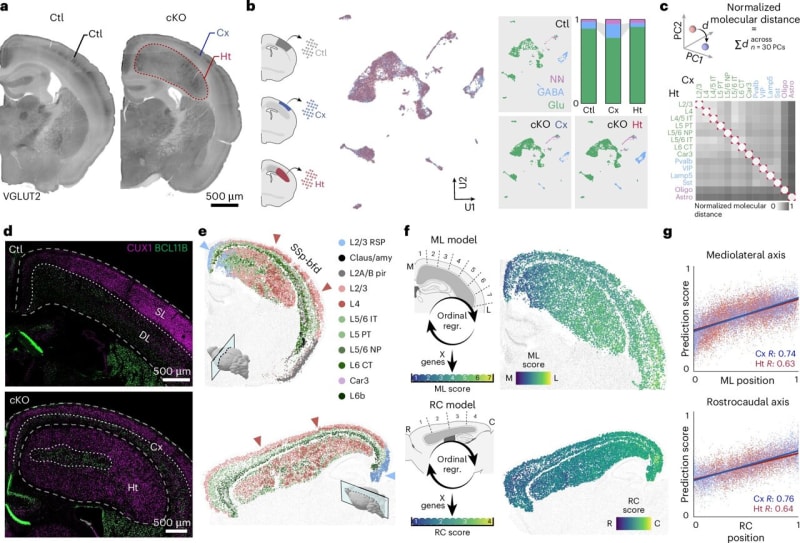
The team studied mice with heterotopias, brain malformations where neurons end up clustered in the wrong spots beneath the cortex. This condition also occurs in humans and can sometimes cause epilepsy or intellectual disabilities.
What they found was remarkable. These misplaced neurons weren't just surviving. They were forming circuits almost identical to normal brain tissue, with the same connections to the rest of the brain and spinal cord.
Then scientists tested something bold. They temporarily turned off the normal cortex while mice performed a delicate task that required distinguishing between two whiskers. The mice kept performing perfectly because the misplaced neurons had completely taken over.
When researchers switched off those misplaced neurons instead, the task failed completely. The relocated neurons had become essential for sensory processing.
"It's like moving an entire neighborhood to a different part of a city, and the residents still maintain the same relationships and connections with the rest of the city," explains Sergi Roig-Puiggros, the study's lead researcher.
Why This Inspires
This discovery opens exciting doors for medicine and our understanding of evolution. If neurons can function normally even in abnormal locations, treatments for brain injuries could work differently than we thought.
Professor Denis Jabaudon, who led the study, sees huge potential. "If neurons can function normally in an abnormal architectural context, then neuronal grafts or brain organoids might not need to perfectly replicate natural brain structure to be effective," he notes.
The findings could revolutionize how doctors approach brain regeneration and repair. Transplanted neurons or lab-grown brain tissue might not need to match the original structure perfectly to restore function.
The research also sheds light on how new brain structures emerged throughout evolution, showing that the brain's flexibility might have helped species adapt and survive.
The team is now investigating whether this adaptability exists in other neurodevelopmental disorders beyond heterotopias. Each answer brings us closer to new treatments that could help millions of people with brain injuries or developmental conditions.
Our brains are more resilient and flexible than we ever knew.
More Images
Based on reporting by Medical Xpress
This story was written by BrightWire based on verified news reports.
Spread the positivity!
Share this good news with someone who needs it