Brain Immune Cells Use Sugar, Then Build Roads for Backup
Scientists discovered that brain immune cells rush to injury sites powered only by sugar, then spend six hours building pathways to bring in their cellular powerhouses. This finding could help researchers understand what goes wrong during aging and brain disease.
Your brain's immune cells are like emergency responders who sprint to the scene with nothing but a candy bar in their pocket, relying on quick energy until reinforcements arrive.
Researchers at Dartmouth College discovered that microglia, the brain's main immune cells, use a surprising two-step process when responding to injury. These shapeshifting defenders send out arm-like projections within minutes of detecting damage, but they arrive essentially empty-handed.
The team found that these early-responding arms lack mitochondria, the energy-producing powerhouses that fuel most cellular activities. Instead, the cells rely on glycolysis, a quick but inefficient way of converting sugar into energy, to power their initial response.
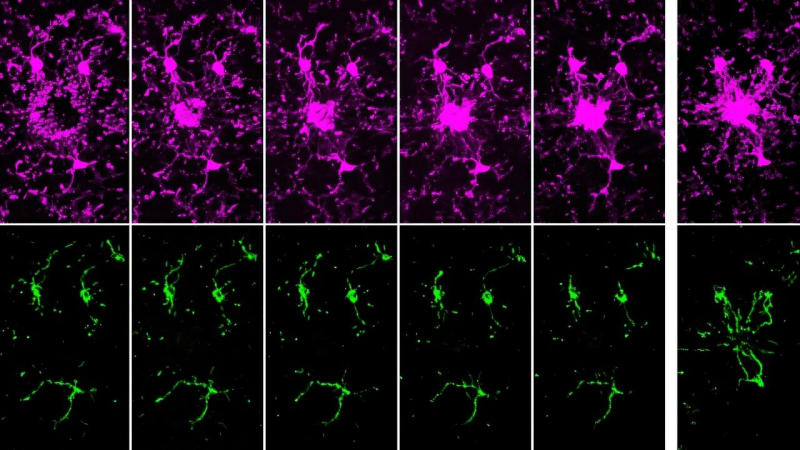
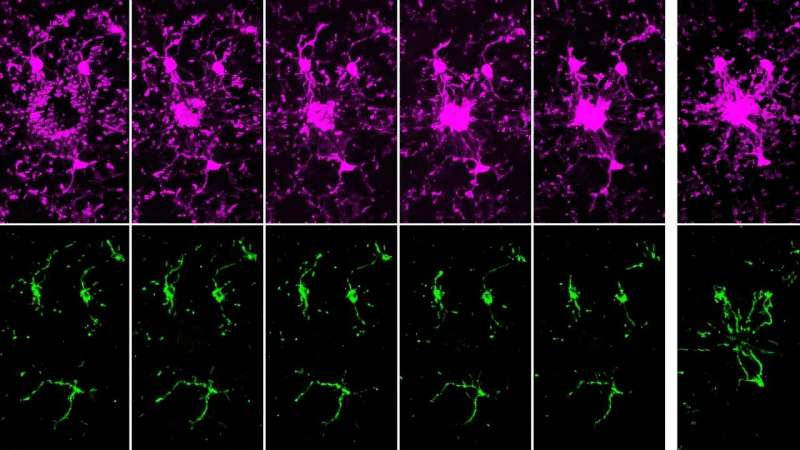
Using mice with fluorescent markers, the researchers filmed microglia in living brains and watched the response unfold in real time. Within five minutes, the immune cells were already probing and containing the damage. But mitochondria only appeared at the injury site after six hours.
The delay happens because cells must first build pathways to transport the mitochondria. "They only carry enough supplies to power that initial invasion, but to really resolve the damage, you need to build a road and pull in the mitochondria," says Robert Hill, associate professor of biological sciences and senior author of the study published in Nature Communications.
The research also revealed that mitochondria aren't spread evenly throughout healthy microglia. Some of the cells' arm-like processes contained many mitochondria, while others had none at all. The more active processes actually had fewer mitochondria than less active ones.
Why This Inspires
This discovery helps explain how brain immune cells multitask so effectively. By traveling light, they can respond immediately to threats while still calling for backup to handle longer-term damage control. It's an elegant system that prioritizes speed over power in those critical first moments.
The findings matter beyond basic biology. Microglial metabolism becomes dysfunctional during aging and neurodegeneration, contributing to diseases like Alzheimer's and Parkinson's. Understanding how healthy microglia manage their energy needs gives researchers a baseline for identifying what goes wrong.
"This study establishes a foundation for understanding mitochondria and microglia in the healthy brain, and we'll be referring back to it for a long time as we start investigating diseased contexts," says Alicia Pietramale, who led the research as a doctoral candidate in Hill's lab.
The research opens new pathways for developing treatments that could help aging brains maintain their defense systems.
More Images
Based on reporting by Medical Xpress
This story was written by BrightWire based on verified news reports.
Spread the positivity!
Share this good news with someone who needs it