Brain Implant Lets Paralyzed People Talk and Gesture at Once
Scientists created a brain implant that translates both speech and gestures into text and avatar movements in real time. For people with paralysis, it's the first device to restore full communication—words, nods, waves, and shrugs—all at once.
Imagine trying to say "hello" without being able to wave, or wanting to nod "yes" but having no way to move your head. Two people with severe paralysis just got both abilities back through a single brain implant that reads their thoughts and turns them into words and gestures simultaneously.
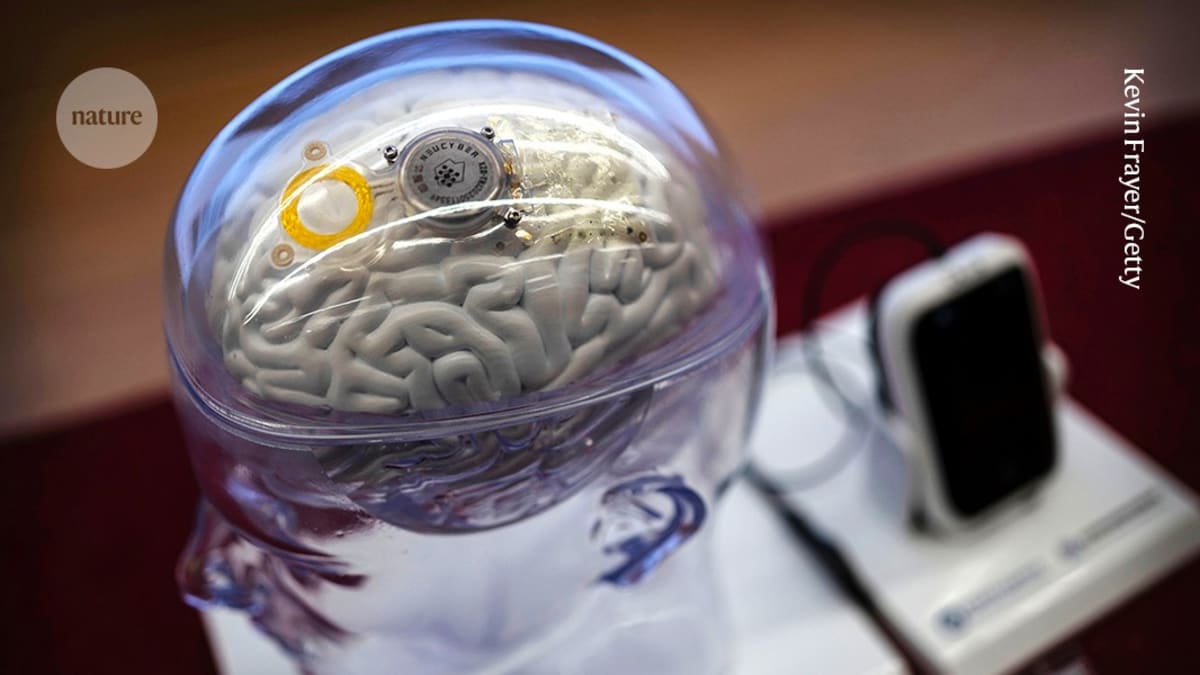
Scientists at the University of California, San Francisco developed a device with 253 tiny electrodes that sit on the brain's surface. It captures signals from areas controlling both speech and body movement, then uses artificial intelligence to display text on screen and animate an avatar that mimics the user's intended gestures.
The breakthrough helps two participants who lost their ability to communicate naturally. One man had a brainstem stroke that impaired his speech and movement. The other has ALS, a disease that progressively paralyzes muscles including those needed for talking.
The system learned to recognize when each person tried to speak phrases like "hello" or "yes" while also attempting gestures like waving, nodding, shrugging, or giving a thumbs up. Within seconds of their intent, the words appeared on screen and their personalized avatars moved accordingly.
Previous brain-computer interfaces helped paralyzed people either talk or control movement, but never both together. The challenge was that brain signals for speech and gestures overlap, and they change slightly when someone tries to do both simultaneously—just like when we naturally talk and gesture at the same time.
Why This Inspires
This technology recognizes something profound: communication is more than words. We express ourselves through facial expressions, hand movements, and body language. Restoring just speech leaves people with paralysis still unable to fully express themselves the way they did before.
Christian Herff, a neuroscientist at Maastricht University who wasn't involved in the research, says the work "gives us hope for neural prosthesis that will enter day-to-day usage." The device captures more of the natural expressivity that makes human conversation feel authentic and alive.
For now, the system is a proof of concept with just two participants. But it represents a major step toward devices that don't just restore function—they restore personality, emotion, and the full richness of how humans connect with each other.
One day soon, people with paralysis may communicate as naturally as anyone else, complete with all the waves, nods, and gestures that make us human.
More Images
Based on reporting by Nature News
This story was written by BrightWire based on verified news reports.
Spread the positivity!
Share this good news with someone who needs it