Brain Implant Lets Paralyzed People Type 22 Words Per Minute
Two people with paralysis can now type using only their thoughts at speeds nearly matching smartphone texting, thanks to a breakthrough brain implant. The technology brings life-changing communication within reach for people who've lost the ability to speak or move.
Imagine losing the ability to move or speak, but having your thoughts perfectly intact. Two people living with paralysis just experienced something remarkable: typing full conversations using only their minds, at speeds that rival texting on a phone.
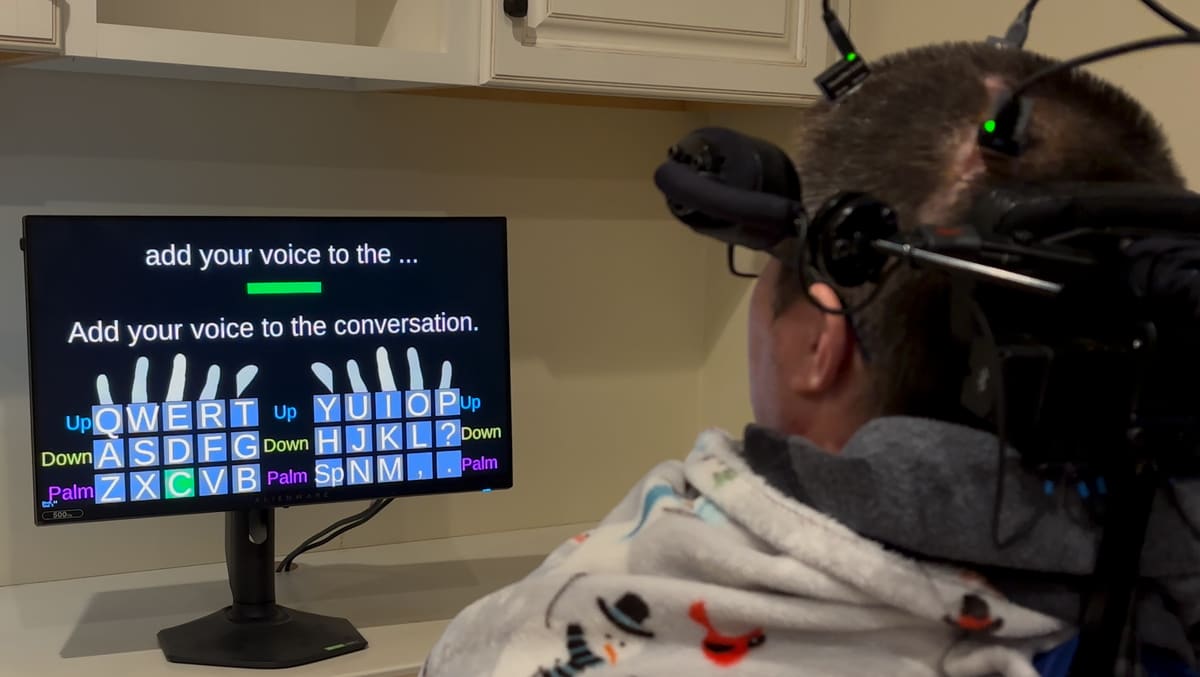
Scientists at BrainGate, a research consortium based at Brown University, developed a brain implant that reads intended hand movements and translates them into typed letters. One participant typed 22 words per minute with a word error rate of just 1.6 percent.
The breakthrough uses artificial intelligence to decode signals from the brain's movement area. As participants imagined moving their paralyzed fingers over a QWERTY keyboard, the AI predicted which letters they wanted to type. The system learned to recognize their unique brain patterns.
Previous brain-typing systems required users to slowly move a cursor to select each individual letter. This new approach lets people access any key instantly, just like typing with fingers. That difference transforms frustratingly slow communication into real conversation.
The two participants had different causes of paralysis. One has ALS, a progressive disease that affects movement and speech. The other has a spinal cord injury but retained the ability to speak. Both gained a powerful new way to connect with others.
Daniel Rubin, a neurologist at Massachusetts General Hospital who worked on the study, explains why speed matters so much. "Being part of a conversation matters," he says. Eye-tracking systems exist, but they're too slow for natural back-and-forth exchanges.
The technology still needs refinement before widespread use. The device requires brain surgery, which carries risks. Researchers tested it with just two people. The system also needs daily calibration, like tuning a musical instrument each morning.
Why This Inspires
This research represents more than technical achievement. It restores something fundamental: the ability to share thoughts in real time. For people with severe paralysis, every extra word per minute means more connection, more independence, and more dignity in daily life.
Several companies are now developing commercial versions of brain-computer interfaces. China recently approved the first invasive brain implant for partial paralysis, and American regulators are watching closely.
Communication is what makes us human, and this technology is bringing that gift back to people who thought they'd lost it forever.
More Images




Based on reporting by Scientific American
This story was written by BrightWire based on verified news reports.
Spread the positivity!
Share this good news with someone who needs it

