Brain Region Unlocks New Hope for Bipolar Disorder
Scientists discovered a specific brain region causing bipolar disorder symptoms, opening the door to better treatments for millions who struggle with current medications. This breakthrough could transform how we diagnose and treat a condition affecting 1 in 100 people worldwide.
Scientists in Japan just identified the exact brain region responsible for bipolar disorder, a discovery that could revolutionize treatment for 80 million people worldwide.
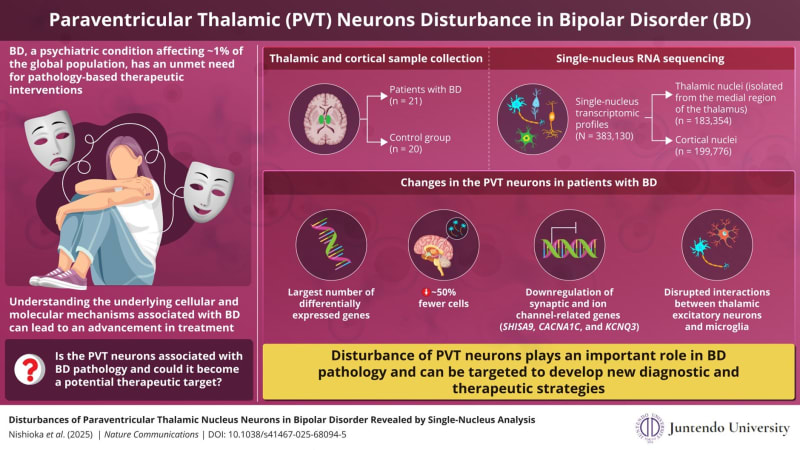
Researchers at Juntendo University pinpointed the paraventricular thalamic nucleus, a small area deep in the brain, as the key player in bipolar disorder. Using advanced genetic sequencing on brain tissue, they found this region had lost about half its cells in patients with the condition.
The discovery matters because current medications only work for some patients, and many people stop taking them due to harsh side effects. Right now, doctors essentially guess which treatments might help, leaving countless patients cycling through debilitating manic and depressive episodes that damage relationships and careers.
The research team found specific genes in this brain region weren't working properly, disrupting how brain cells communicate and regulate mood. Even more exciting, the region responds to dopamine, which explains why certain antipsychotic medications help some patients.
Professor Tadafumi Kato, who led the research, called it a paradigm shift. For years, his team studied why bipolar disorder affected energy production in cells, eventually realizing this meant a specific brain area had to be involved. Finding that area took persistence, but the payoff could be enormous.
Why This Inspires
This discovery transforms bipolar disorder from a mysterious condition we manage into one we actually understand. Knowing the exact brain region involved means scientists can now design targeted treatments that work directly on the problem, potentially with fewer side effects.
The research also opens possibilities for diagnostic tests that could predict who needs medication before severe episodes occur. Imagine catching the condition early, preventing years of suffering and helping people maintain stable lives from the start.
Dr. Masaki Nishioka emphasized how new treatments targeting these specific neurons could restore normal brain function instead of just masking symptoms. The study appeared in Nature Communications, one of the world's most respected scientific journals, giving the findings significant credibility in the medical community.
Beyond better pills, understanding this brain region could lead to entirely new approaches like targeted brain stimulation or gene therapies. Each advance brings hope to families watching loved ones struggle with a condition that's been brutally difficult to treat effectively.
Scientists now have a roadmap for the next generation of bipolar disorder research, focusing efforts where they'll make the biggest difference. What seemed impossibly complex just became significantly clearer, bringing genuine hope to millions who've waited too long for better answers.
More Images
Based on reporting by Medical Xpress
This story was written by BrightWire based on verified news reports.
Spread the positivity!
Share this good news with someone who needs it