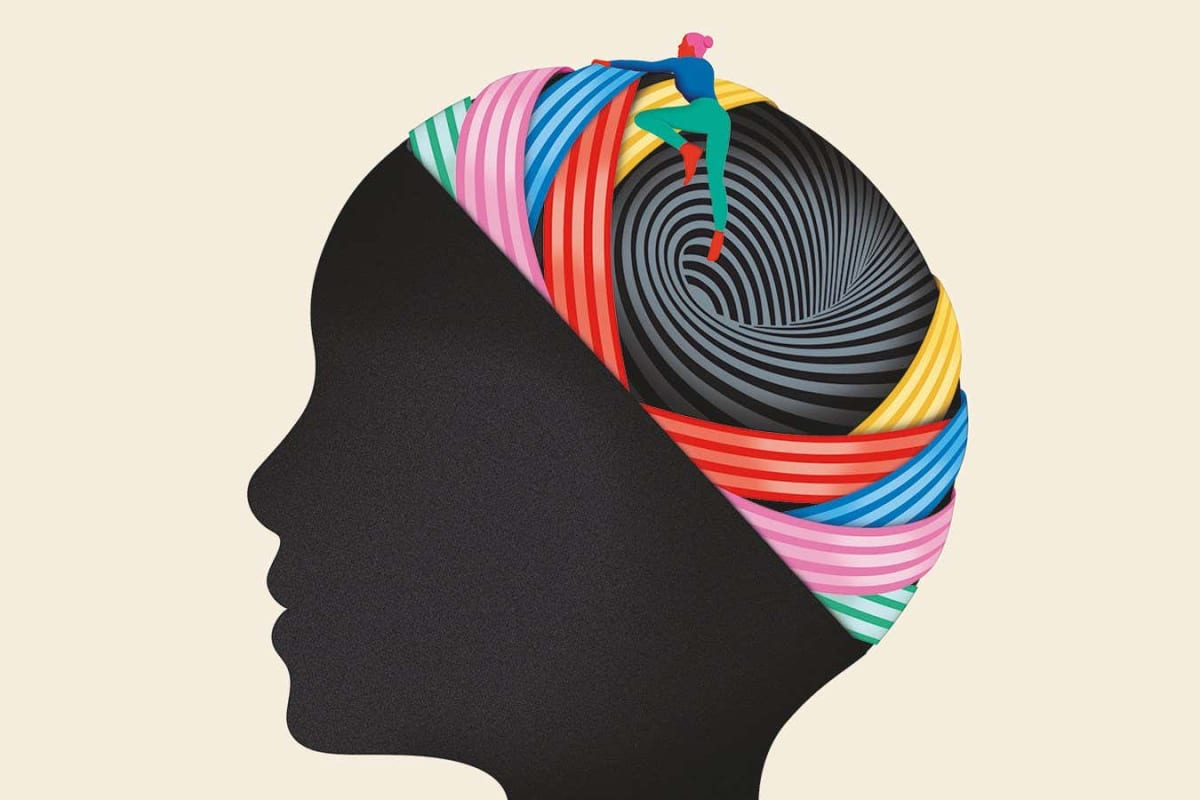
Brain Science Unlocks New Hope for Anorexia Treatment
Scientists are discovering how anorexia changes brain circuits, opening doors to breakthrough treatments that could help the one-third of patients who don't recover with current therapy. New research shows these brain changes may be reversible with proper nutrition.
Scientists are finally cracking the code on why anorexia nervosa is so deadly and difficult to treat, and their discoveries are lighting the way to new therapies that could save thousands of lives.
Anorexia affects up to 4% of women and 0.3% of men during their lifetime, and roughly one-third don't recover even with treatment. It has the highest mortality rate of any mental health condition. But researchers are now mapping exactly how the disorder alters brain circuits governing reward, habit, and emotion.
A groundbreaking 2022 study of nearly 1,700 women found that anorexia thins the brain's outer layer more dramatically than depression or OCD. The encouraging part? When patients began regaining weight, their brains started healing.
"After eating and getting renourished, people are less anxious. They are less depressed. They are less obsessional," says Joanna Steinglass at Columbia University. The brain changes appear to result from starvation itself rather than being permanent differences.
These insights trace back to a 1940s experiment where researchers studied 36 healthy men during controlled starvation. After six months, the men developed anxiety, depression, and obsessive food behaviors mirroring anorexia symptoms. Decades later, doctors realized treating starvation first was crucial for recovery.
Now scientists like Ulrike Schmidt at King's College London are building on that foundation. Her team and others worldwide are studying how anorexia rewires the brain to make eating feel threatening, even when patients desperately want to recover.
The research is already inspiring potential new treatments, from targeted brain stimulation to experimental medications designed to reset those altered circuits. While still in early stages, these approaches offer fresh hope for patients who haven't responded to traditional therapy and supervised weight restoration.
Clara Moreau at the University of Montreal notes that understanding these mechanisms helps separate what's caused by the disorder versus what's caused by starvation. "The brain is strongly affected by food restriction," she says, because brain tissue relies heavily on dietary fats.
Why This Inspires
This research represents a fundamental shift in how we understand and treat anorexia. For decades, doctors focused on external motivations, asking why someone would starve themselves. They've learned that's the wrong question.
The brain science shows that starvation creates a vicious cycle, changing how the brain processes food and fear. Breaking that cycle requires addressing both the physical and psychological components together.
For the one-third of patients who don't recover with current treatments, these discoveries offer something precious: new pathways to healing. Understanding that brain changes are reversible transforms anorexia from an intractable condition into a solvable puzzle.
Research teams worldwide are now racing to translate these insights into practical treatments, knowing each breakthrough could mean the difference between life and death for thousands of young people and their families.
More Images


Based on reporting by New Scientist
This story was written by BrightWire based on verified news reports.
Spread the positivity!
Share this good news with someone who needs it