Brain Stimulation Boosted Generosity in New Study
Scientists discovered they could make people more willing to share by gently syncing two brain regions. The breakthrough suggests our capacity for kindness may be tied to how different parts of our brain communicate.
Researchers just found a way to dial up human generosity, and it involves nothing more than gentle electrical signals between two brain areas.
A team led by Jie Hu at East China Normal University discovered that when they synchronized activity between the frontal and parietal lobes, people became noticeably more willing to share money with strangers. Even when being generous meant they'd walk away with less cash themselves.
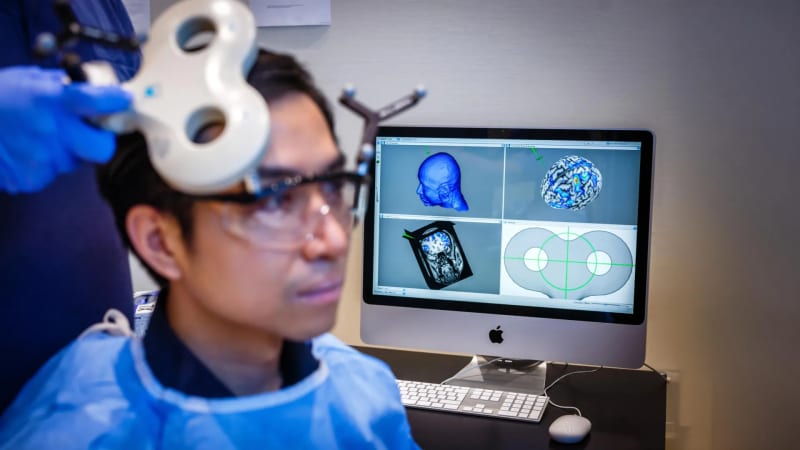
The study, published in PLOS Biology, involved 44 volunteers who made 540 decisions about splitting money with another person. During the task, researchers used a noninvasive technique called transcranial alternating current stimulation to encourage neurons in two brain regions to fire together in coordinated rhythms.
When the stimulation strengthened gamma synchrony between these areas, something shifted. Participants consistently made more altruistic choices, giving away larger amounts even when doing so cost them personally.
The researchers used computational modeling to understand what changed. The brain stimulation didn't make people irrational or blindly generous. Instead, it shifted how they weighed decisions, making them place greater value on the other person's outcome when dividing the money.
Why This Inspires
This discovery goes beyond a lab curiosity. It suggests that generosity isn't just a personality trait you're born with or a moral lesson you either learn or don't. Instead, it appears to be tied to something more fundamental: how well different parts of your brain work together.
Coauthor Christian Ruff notes the research improves our basic understanding of how the brain supports social decisions. It could eventually help us understand cooperation better, especially in situations where success depends on people working together.
The team emphasizes they didn't directly measure brain activity during the experiment, so future research combining stimulation with brain imaging will help confirm exactly how these changes happen. Still, the cause and effect relationship is clear: alter the communication pattern between these brain regions, and sharing behavior shifts in a consistent direction.
Parents everywhere spend years teaching children to share and think of others. This research hints that we might one day understand the biological foundations of those behaviors, opening doors to helping people who struggle with social decision making.
The study offers hope that our better angels may be more accessible than we thought.
Based on reporting by Science Daily
This story was written by BrightWire based on verified news reports.
Spread the positivity!
Share this good news with someone who needs it