Gene Therapy Reverses Brain Disorder in Mice After Birth
Scientists used a precise gene-editing tool to fix a rare brain disorder in mice, reversing learning problems and behavioral issues after birth. The breakthrough suggests that genetic brain damage might not be permanent, offering new hope for treating neurodevelopmental conditions.
A team of researchers just answered a question that could change how we think about genetic brain disorders: can the damage be reversed after birth?
The answer appears to be yes. Scientists successfully corrected a rare genetic brain disorder in mice using a new precision gene-editing tool, restoring normal behavior and learning abilities in animals that previously struggled with cognitive and social problems.
The study focused on Snijders Blok–Campeau syndrome, a neurodevelopmental disorder caused by mutations in the CHD3 gene. Since first being identified in 2018, only 10 cases have been recorded worldwide. Children with this condition experience intellectual disabilities, speech delays, motor difficulties, and autism-related behaviors.
The CHD3 gene controls how cells access DNA, playing a crucial role in brain development. When it's mutated, neurons fail to grow properly or migrate to the right locations during early brain formation.
Researchers created mice with the exact same CHD3 mutation found in humans with the syndrome. These mice developed similar learning and behavioral problems, confirming they had successfully modeled the human condition.
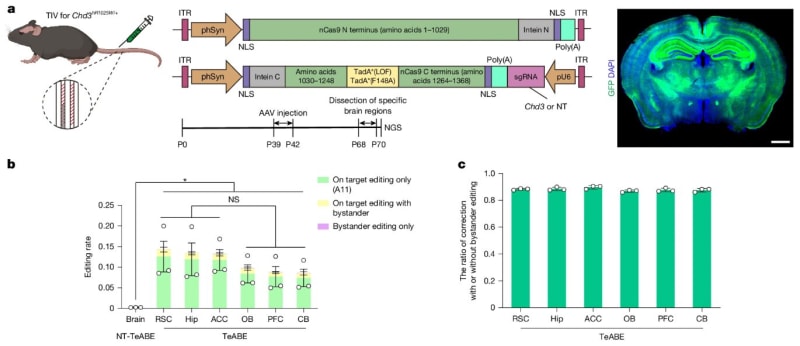
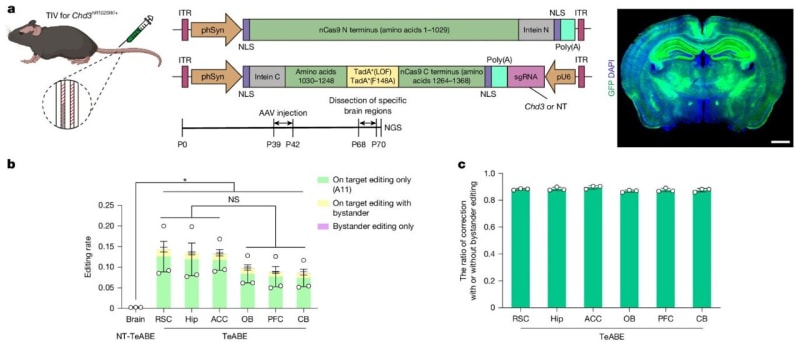
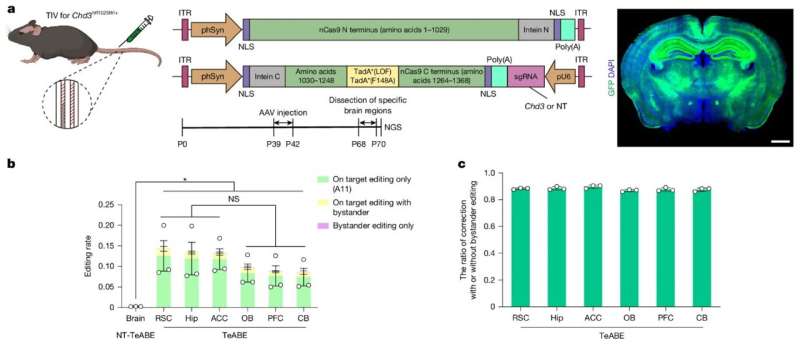
Instead of using traditional CRISPR technology, which cuts both strands of DNA, the team designed a more precise tool called TeABE. This base editor changes just a single letter in the genetic code, like fixing a typo instead of rewriting an entire sentence.
They delivered the editor to brain cells using a modified harmless virus. Once inside, TeABE corrected the mutation by converting the faulty genetic letter back to its normal form.
The results were remarkable. CHD3 protein levels returned to normal in treated mice. The animals showed better learning, improved social behavior, and significantly better physical coordination and strength compared to untreated mice.
The team also tested the delivery system in macaque brains, successfully reaching many nerve cells with the genetic material. This step brings the therapy closer to potential human trials.
Why This Inspires
This research challenges a long-held assumption about genetic brain disorders. For years, scientists wondered if correcting a harmful mutation after birth could truly undo the damage, or if the critical window for intervention closed during early development.
The fact that mice showed improvement after treatment suggests the brain retains some ability to repair itself when given the right tools. That's incredibly hopeful for families affected by genetic neurodevelopmental conditions, many of which currently have no targeted treatments.
The precision of base editing also matters. Unlike older gene-editing methods that make larger, potentially risky changes to DNA, this approach makes minimal alterations, potentially reducing side effects.
With only 10 recorded cases of Snijders Blok–Campeau syndrome, this might seem like a small victory. But the principles proven here could apply to many other genetic brain disorders caused by single-letter DNA changes.
The path from mice to humans is long and requires extensive safety testing, but this study proves the concept works in living brains.
More Images

Based on reporting by Medical Xpress
This story was written by BrightWire based on verified news reports.
Spread the positivity!
Share this good news with someone who needs it