Breakthrough: Mathematics Opens New Doors to Understanding and Helping the Brain
Scientists have developed an innovative mathematical approach that reveals how our brains connect and communicate, offering exciting new possibilities for supporting people with autism and understanding healthy aging. This groundbreaking tool could pave the way for personalized brain therapies and interventions.
In an inspiring fusion of mathematics and neuroscience, researchers have discovered a powerful new way to understand how our brains work—and how we might better support brain health across the lifespan.
Scientists from the Max Planck Institute for Mathematics in Sciences in Leipzig, Germany, partnering with colleagues from the Institute of Mathematical Sciences in Chennai, India, have created an innovative mathematical tool that reveals the intricate ways different brain regions communicate with each other. Published in the journal Patterns, this research represents a promising leap forward in our ability to understand both autism spectrum disorder and the aging brain.
The breakthrough centers on a sophisticated mathematical technique called persistent homology, which allows scientists to examine the underlying "shape" of complex brain connectivity data. Think of it as giving researchers a new pair of glasses through which they can see patterns in brain activity that were previously invisible.
What makes this approach particularly exciting is its precision. The team developed something called "node persistence," which doesn't just tell scientists that brain connectivity has changed—it pinpoints exactly which brain regions are involved and how they're different. This specificity opens tremendous possibilities for developing targeted, personalized interventions.
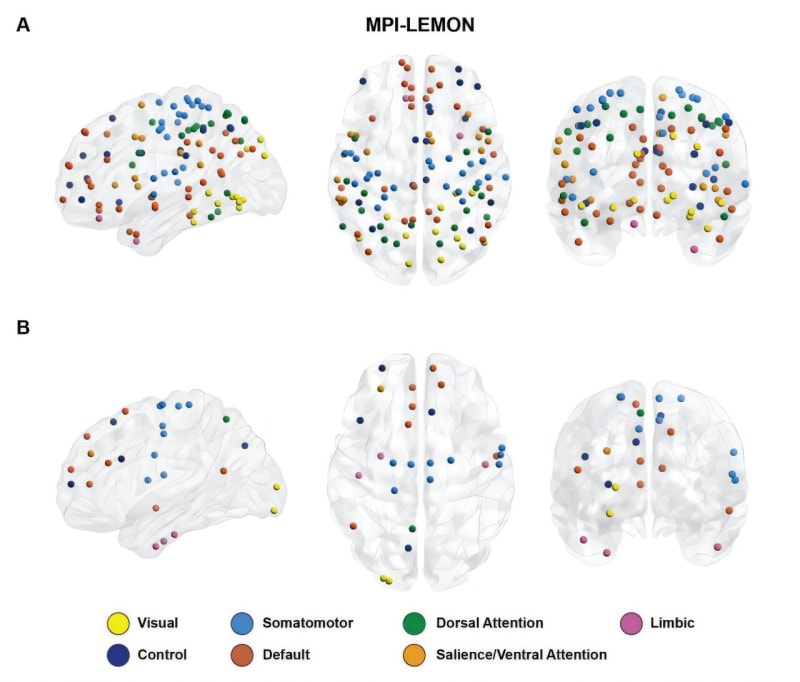
Working with brain scan data from over 1,000 individuals, the researchers conducted a comprehensive analysis across multiple scales, from the whole brain down to individual regions. Their findings revealed fascinating insights: young adults show more complex brain connectivity patterns than older adults, while individuals with autism display unique organizational features in their brain networks.
The research identified specific brain networks that change with aging and autism, including those involved in movement, attention, memory, and social cognition. Remarkably, many of the brain regions they identified overlap with areas that respond well to non-invasive brain stimulation techniques like transcranial magnetic stimulation (TMS) and transcranial direct current stimulation (tDCS).
"This is more than just a new analytical tool," explained lead authors Professor Jürgen Jost and Professor Areejit Samal. "We've created a bridge between pure mathematics and clinical neuroscience. Node persistence doesn't just detect changes, it identifies the specific brain regions that are most vulnerable or altered in these conditions. This gives us a powerful new way to generate hypotheses for targeted therapies."
This optimistic statement captures the heart of why this research matters: it transforms our understanding from simply observing differences to actively identifying opportunities for intervention and support.
The implications extend far beyond the laboratory. By pinpointing specific brain regions that show differences in autism and aging, this mathematical approach could help doctors and therapists design more effective, individualized treatment plans. It offers hope for developing targeted interventions that could improve quality of life for people with autism and support healthier cognitive aging for everyone.
This work beautifully demonstrates how seemingly abstract mathematics can have profound real-world applications. By bringing together expertise from pure mathematics and neuroscience, these researchers have created a tool that could ultimately help millions of people live fuller, more connected lives.
As our global population ages and awareness of neurodiversity grows, innovations like this remind us that science continues to open new pathways toward understanding, acceptance, and meaningful support for all kinds of minds.
Based on reporting by Medical Xpress
This story was written by BrightWire based on verified news reports.
Spread the positivity! 🌟
Share this good news with someone who needs it
More Good News
 🧘 Health & Wellness
UVA Scientists Discover Promising Way to Prevent Alzheimer's After Head Injuries
 🧘 Health & Wellness
Breakthrough GLP-1 Study Shows 27% of Global Adults Could Transform Their Health
 🧘 Health & Wellness
Brazilian Scientists Crack Code on Pig-to-Human Kidney Transplants
Joke of the Day
Why did the dog apply for a job at the bank?
Explore Categories
Quote of the Day
"The greatest thing you'll ever learn is just to love and be loved in return."
— Moulin Rouge (from the film, popularized by Ewan McGregor)