British Scholar Uncovers 65 Hidden Bhagat Singh Documents
A London professor discovered dozens of previously inaccessible documents in Pakistan revealing Indian freedom fighter Bhagat Singh as a sophisticated thinker, not just a martyr. The archives could transform understanding of one of history's most radical young minds.
A forgotten archive in Lahore is rewriting the story of one of India's most celebrated revolutionaries.
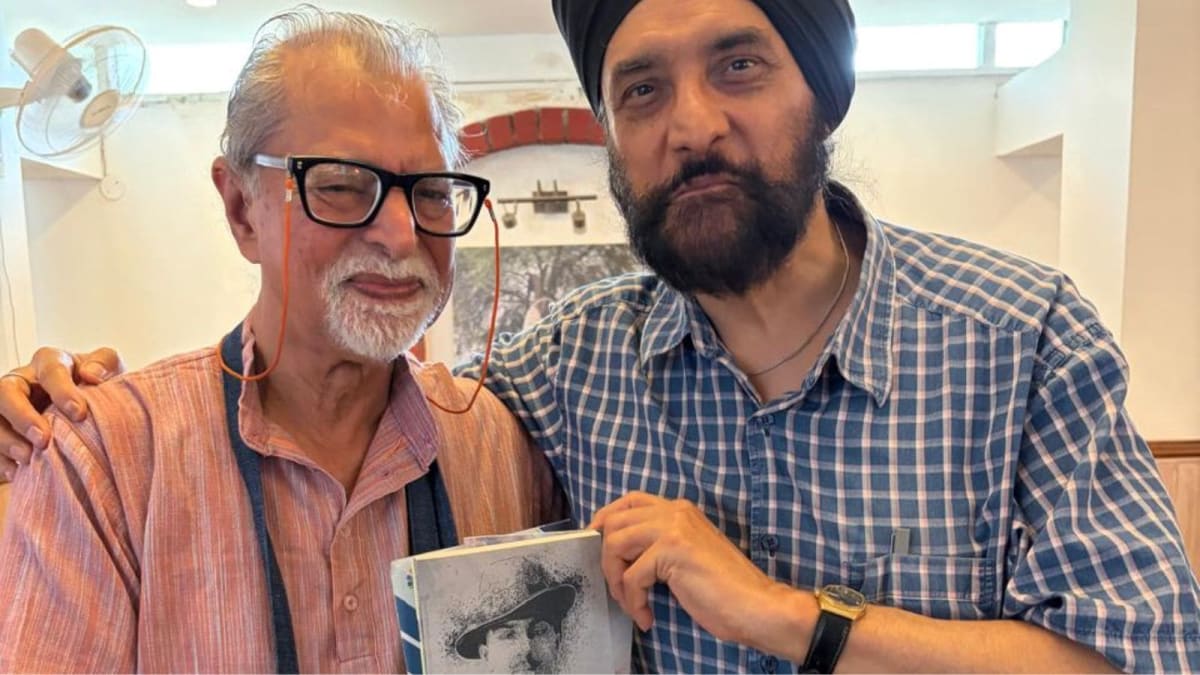
Satvinder Singh Juss, a law professor at King's College London, spent two years uncovering 65 documents related to Bhagat Singh, the 23-year-old freedom fighter executed by British colonial authorities in 1931. Indian scholars believed only 30 such documents existed, and none could access them across the border in Pakistan.
Juss's journey began with a simple question: why not just go look? Using his British passport, he traveled to Lahore expecting bureaucratic resistance but found the opposite.
"To my surprise, they were completely open," Juss said. Archive officials welcomed his research, allowing him to systematically examine each document between 2017 and 2019.
What he found challenges the common image of Bhagat Singh as simply a brave young martyr. The documents reveal a globally minded intellectual who studied Irish republican hunger strikes, engaged with the Russian Revolution, and developed sophisticated ideas about education, gender equality, and secular governance.
Juss argues that history has frozen Bhagat Singh in a single heroic frame, overlooking the restless, searching mind behind the icon. At just 23, Singh was reading voraciously and corresponding with revolutionaries worldwide while organizing resistance against colonial rule.
The documents include correspondence, organizational notes, and records showing Singh's ideological evolution. They demonstrate his prescient warnings about religious polarization decades before the subcontinent's painful partition into India and Pakistan.
Why This Inspires
This discovery matters because ideas outlast symbols. Singh's vision included universal education, abolishing caste hierarchies, and building a radically egalitarian society through structural change, not just transferring power from British to Indian hands.
His atheism and critique of entrenched hierarchies made him uncomfortable for nationalists then and now. In Pakistan, his non-Muslim identity complicates his place in official history. In India, his more radical ideas are often softened or sidelined.
Yet precisely these uncomfortable truths make Singh relevant today. His warnings about communal division, his commitment to secular unity, and his insistence on dismantling hierarchies remain unfinished business across South Asia.
Academics are now pushing for greater access to the Lahore archives through digitization or bilateral agreements. Prof Chaman Lal, whose writing first inspired Juss's research, has long advocated for retrieving these documents to construct a fuller, evidence-based account of India's freedom struggle.
The stakes extend beyond academic historiography. These papers belong to everyone invested in understanding how young people can think globally while acting locally, how intellectual depth fuels lasting change, and how ideas survive even when their authors don't.
As Juss puts it: "Do you own your history?" The question resonates because Bhagat Singh belongs to both India and Pakistan, yet sits uncomfortably in both national narratives.
Now, thanks to one scholar's curiosity and a surprisingly open archive, the world can reclaim not just a martyr but a thinker whose vision of justice still challenges us nearly a century later.
Based on reporting by Indian Express
This story was written by BrightWire based on verified news reports.
Spread the positivity!
Share this good news with someone who needs it