Brussels Store Turns Demolition Waste Into Beautiful Homes
A Belgian cooperative is rescuing ornate tiles, solid wood doors, and vintage fixtures from buildings headed for the wrecking ball. Their work could help the construction industry slash emissions by 40% while giving old materials new life.
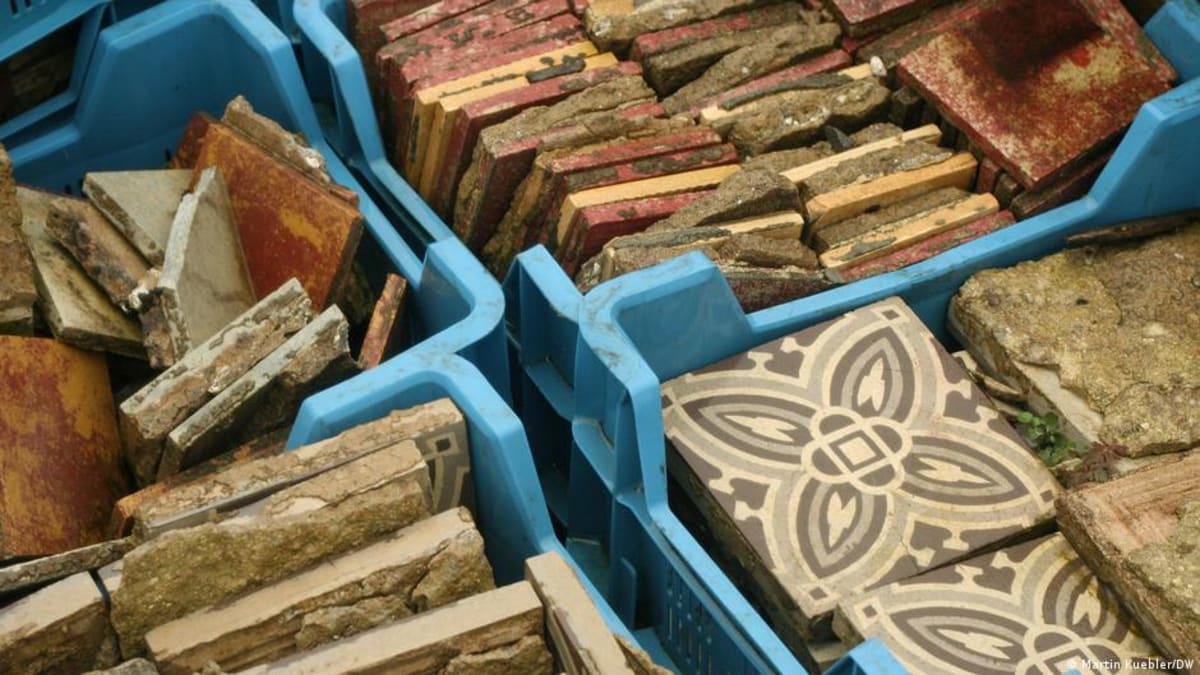
In a Brussels warehouse, art nouveau floor tiles with delicate floral patterns sit in crates next to handcrafted doors and gold-tinted windows, waiting for their second chance at making a house a home.
Rotor DC, a cooperative that opened in 2016, practices what they call urban mining. Instead of crushing old buildings into rubble, their scouts search structures slated for demolition for treasures worth saving. They've rescued everything from Murano glass light fixtures to solid oak flooring, cleaning and cataloging each piece for resale.
"We know how to crush buildings very efficiently, but we are still learning how to disassemble them intelligently," said Areti Markopoulou, academic director at the Institute for Advanced Architecture of Catalonia. Right now, construction and demolition waste makes up more than a third of the European Union's trash.
The environmental stakes are enormous. Europe's building sector consumes around 50% of all extracted materials and produces up to 12% of total emissions. A 2019 report by The Ellen MacArthur Foundation found that reusing steel, aluminum, concrete and plastic from old buildings could cut the global construction industry's emissions by 40% by 2050.
Micheal Ghyoot, a researcher at Rotor who specializes in architectural reuse, admits convincing builders to use secondhand materials isn't easy. Supply can be inconsistent, older materials may contain toxins, and deconstruction takes more time than demolition. Building codes and insurance systems were designed around new materials, creating bureaucratic hurdles.
But the concept isn't new. Medieval builders used pieces of ancient Roman structures to save time and money, and some of those buildings still stand today. Industrialization shifted focus to mass production, but pioneers like Rotor are bringing the circular approach back.
The Ripple Effect
Rotor DC isn't alone in this mission. Similar stores now operate across Europe and North America, each one proving that yesterday's demolition waste can become tomorrow's design feature. Every reclaimed door or rescued tile represents emissions avoided and landfill space saved.
The movement faces real challenges around certification, storage, and matching salvaged materials with new projects. Yet each successful reuse demonstrates a path forward for an industry desperately needing sustainable solutions.
Outside Rotor's warehouse, a photographer arranges vintage bathroom sinks on wet grass for the online catalog. These fixtures have already lived one full life, and now they're ready to bring character and history to homes across Brussels.
One reclaimed tile at a time, urban mining is proving that the best building materials might already exist.
More Images

Based on reporting by DW News
This story was written by BrightWire based on verified news reports.
Spread the positivity!
Share this good news with someone who needs it