Budapest Pride Marches Free After New PM Ends Orban Ban
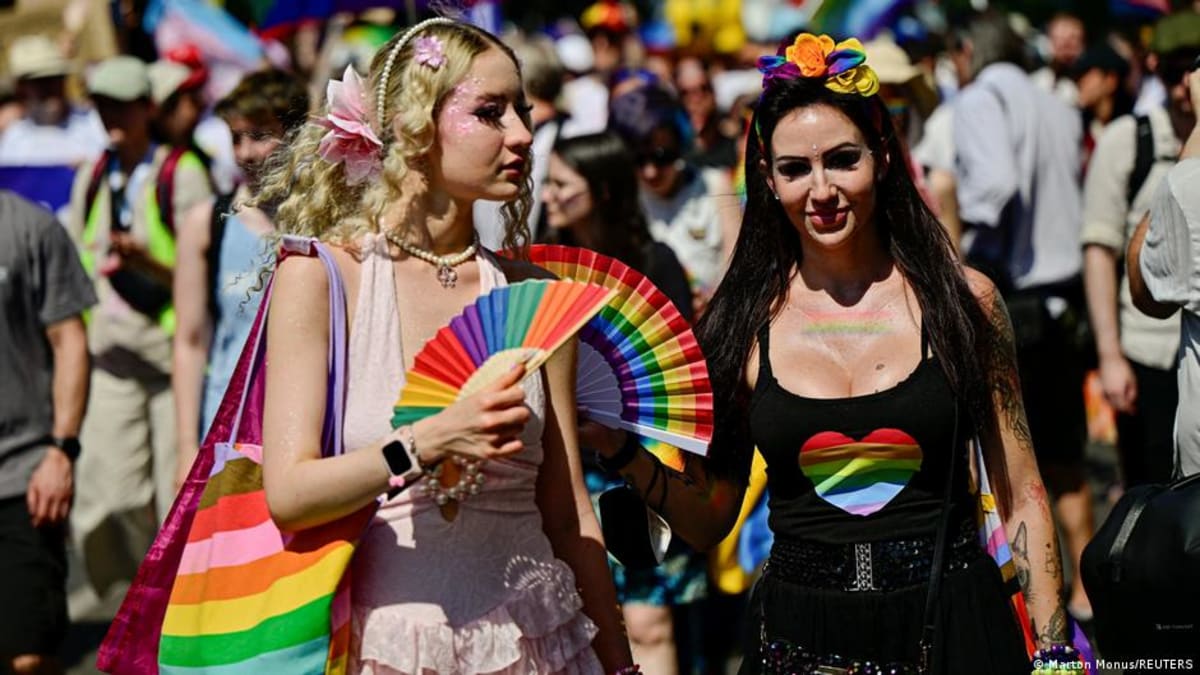
Tens of thousands celebrated at Budapest's Pride parade this weekend, the first since a new government ended Viktor Orban's 16-year crackdown on LGBTQ+ rights. The march marks a hopeful turning point for Hungary's LGBTQ+ community after years of restrictive laws.
For the first time in years, Budapest's Pride marchers walked through the city without fear of government bans or legal threats.
Tens of thousands gathered Saturday in scorching heat to celebrate Pride in Hungary's capital, marking a dramatic shift since Prime Minister Peter Magyar took office in April. His pro-EU Tisza party swept to victory, ending Viktor Orban's 16-year rule and some of the European Union's harshest anti-LGBTQ+ policies.
"I think the situation is getting better and better, mainly because of the change in government," 18-year-old Petra Toth told reporters at her first Pride march with her girlfriend.
The celebration carries extra weight after last year's parade, when a record 200,000 people marched in open defiance of Orban's sweeping ban. His government had passed a constitutional amendment arguing Pride events violated children's moral and spiritual development.
Orban's administration spent years tightening restrictions on LGBTQ+ rights. Same-sex couples lost adoption rights, transgender people couldn't change their official documents, and schools faced limits on materials discussing homosexuality or gender identity.
Participants walked from Budapest's Opera house through the city center before crossing the Elisabeth Bridge over the Danube River. The route itself symbolized reclaiming public space that had been legally off-limits just months earlier.
Why This Inspires
This story shows what happens when people refuse to be silenced. Last year's massive turnout despite the ban sent a message that helped drive political change.
Magyar hasn't yet announced specific plans to reverse Orban-era legislation, asking for patience from Hungarian media. But his stance marks a clear departure from the previous government.
"Everyone is free to love whom they want and live with whom they want, as long as they do not violate the law," Magyar said when asked about same-sex marriage and adoption earlier this month. He added his government shouldn't dictate how Hungarians live their private lives.
Magyar expressed openness to discussing these "socially and politically sensitive issues" if there's public demand. For now, the freedom to march openly represents progress worth celebrating.
The packed streets of Budapest this weekend proved that change, even after 16 years, is possible when communities stand together.
More Images

Based on reporting by DW News
This story was written by BrightWire based on verified news reports.
Spread the positivity!
Share this good news with someone who needs it