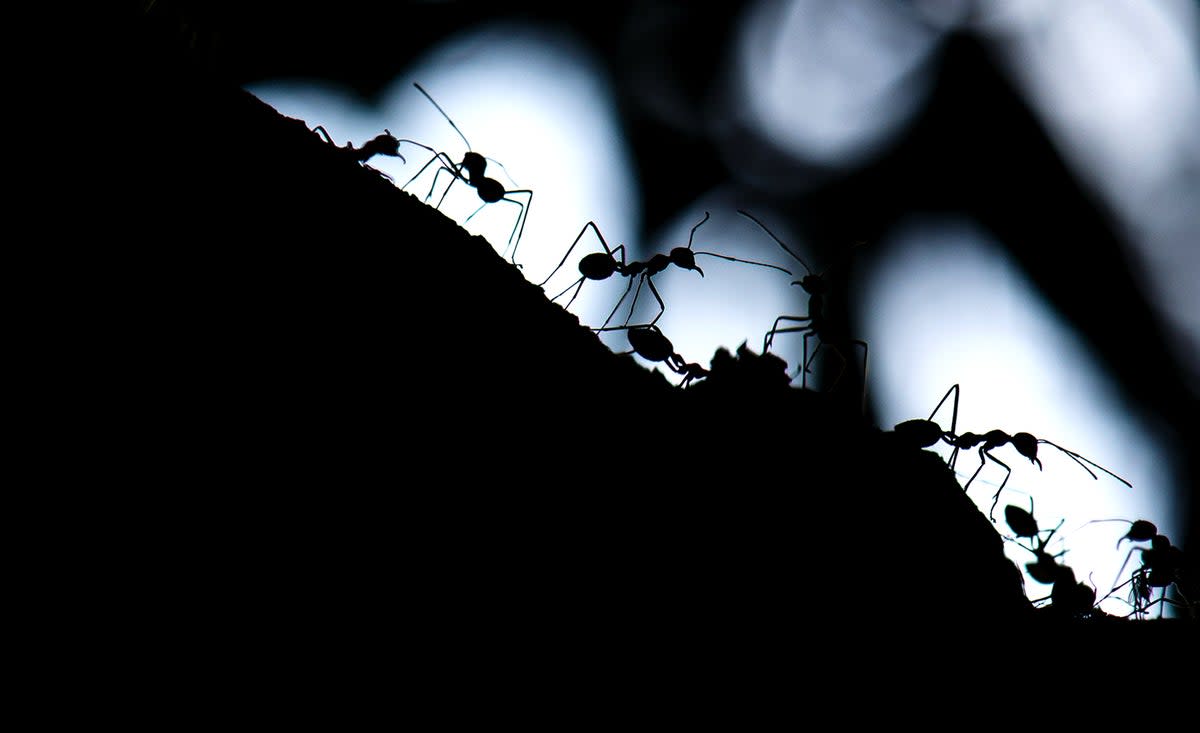
Bull Ants Navigate at Night Using the Moon as Their GPS
Scientists discovered a species of bull ant that uses the moon to navigate in complete darkness, compensating for its movement across the sky like ancient sailors used the North Star. The finding reveals nature has even more clever navigation tricks than we realized.
Tiny bull ants have been navigating by moonlight this whole time, and scientists are just now catching on to their secret.
Researchers at the University of Toulouse discovered that one species of bull ant uses the moon as a compass when foraging at night. Unlike their diurnal cousins who follow the sun, these nocturnal ants track the moon's changing position across the sky with remarkable precision.
Lead researcher Cody Freas and his team wondered how bull ants found food in darkness without relying heavily on scent trails. They captured ants mid-journey and placed some in darkened boxes while others went into transparent ones.
After several hours, they released the ants in unfamiliar territory. The ants kept in darkness long enough for the moon to shift position went off course, proving lunar navigation was their primary guide.
Here's where it gets truly impressive. The ants don't just use a simple "moon is there, walk this way" system. They track time passing since leaving their nest and calculate where the moon should be, adjusting their route accordingly.
"I don't know how to do that," admitted Rodolfo da Silva Probst, an entomologist at UC Davis who wasn't involved in the research. His amazement captures what makes this discovery so remarkable.
The ants combine their lunar compass with solar cues at dawn and dusk, plus landmarks on the ground. This backup system keeps them on track even when the moon isn't visible during certain parts of the lunar cycle.
Why This Inspires
These tiny creatures solve navigation problems that would stump most humans without technology. While other animals like moths and sand hoppers use the moon for direction, bull ants are the first discovered with such a sophisticated time-compensation system.
The finding opens doors to understanding the 12,000 other ant species on Earth. Each one adapts uniquely to its environment, and studying how they solve challenges might reveal solutions we haven't imagined yet.
Nature continues teaching us that intelligence comes in many forms, and sometimes the smallest creatures have the most elegant answers.
More Images

Based on reporting by Scientific American
This story was written by BrightWire based on verified news reports.
Spread the positivity!
Share this good news with someone who needs it
%2Fhttps%3A%2F%2Ftf-cmsv2-smithsonianmag-media.s3.amazonaws.com%2Ffiler_public%2F96%2F29%2F96293c84-c9d0-4e95-937e-0c025c80d88e%2Fscreenshot_2026-08-17_at_34552pm.png)
