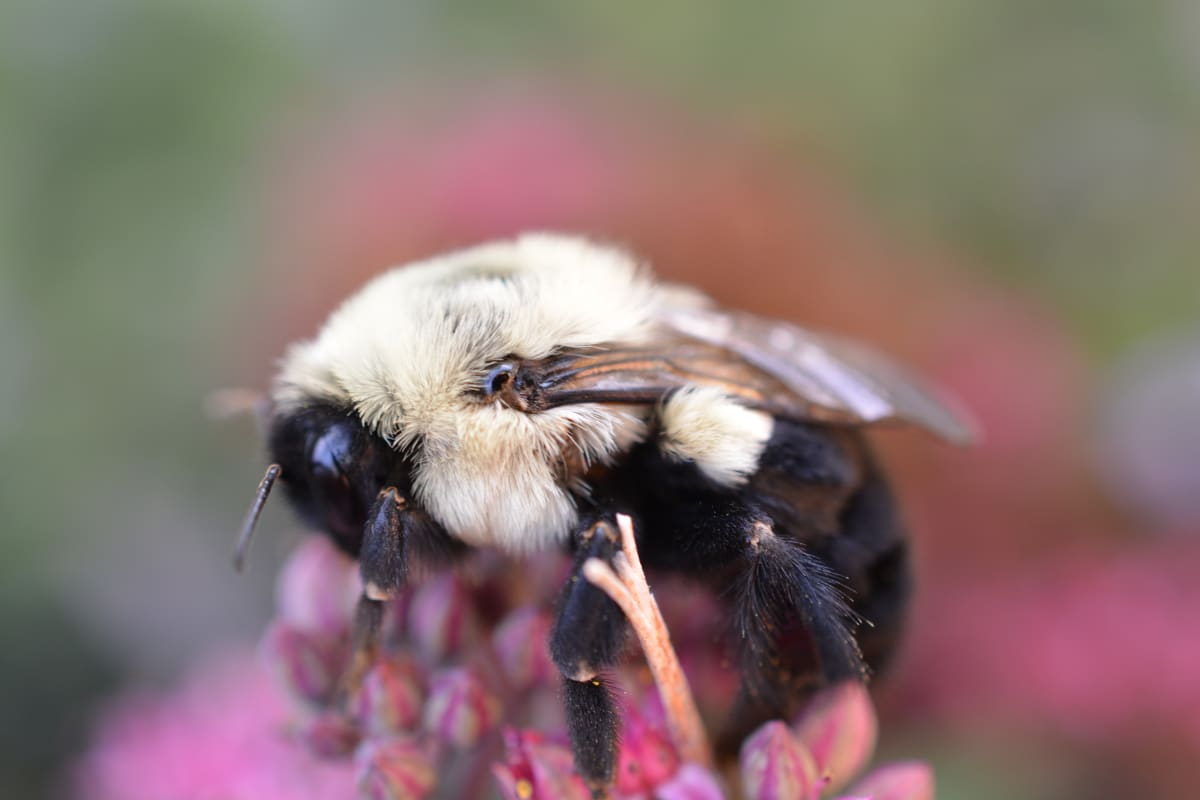
Bumblebee Queens Breathe Underwater for a Week
Scientists accidentally discovered that bumblebee queens can survive underwater for a week by actually breathing beneath the surface. This remarkable adaptation helps protect species that nest underground during winter flooding.
A laboratory mishap just revealed one of nature's most surprising survival tricks: bumblebee queens can breathe underwater.
Conservation biologist Sabrina Rondeau was studying bumblebees at Canada's University of Guelph when her refrigerated samples accidentally flooded with condensation. She opened the fridge expecting to find dead bees, but instead watched them start moving after she pulled them from the water.
That surprise led to a groundbreaking discovery published in Proceedings of the Royal Society B. Rondeau and her colleague Charles Darveau from the University of Ottawa found that common eastern bumblebee queens use actual underwater breathing to survive winter floods.
More than 80 percent of bee species nest underground, where new queens spend winter in a hibernation-like state called diapause. When snow melts and rain falls, these queens face serious drowning risk while waiting to start new colonies in spring.
The research team tested 126 queens by submerging them in water for up to eight days. About 90 percent survived and recovered normally. Oxygen levels in the water dropped by 40 percent in tubes containing queens, while carbon dioxide levels increased steadily, proving the bees were actually breathing.
"To my knowledge, this is the first study that shows a terrestrial insect like a bumblebee being able to get their oxygen out of water," says Jon Harrison, an environmental physiologist at Arizona State University who wasn't involved in the research.
The queens also use a backup plan. Signs of anaerobic metabolism, the same process that kicks in during intense human exercise, helped them survive when oxygen ran low.
Why This Inspires
This accidental discovery matters beyond cool science. More than one-quarter of North America's roughly 50 bumblebee species face extinction risk, with the rusty patched bumblebee becoming the first to be declared endangered in the United States in 2017.
Understanding how these essential pollinators survive harsh conditions could help conservation efforts. The queens' metabolic rate during diapause drops to just 5 percent of normal, meaning they need very little oxygen to stay alive through winter.
What started as a laboratory disaster turned into hope for protecting species that pollinate countless plants we depend on.
More Images
%2Fhttps%3A%2F%2Ftf-cmsv2-smithsonianmag-media.s3.amazonaws.com%2Ffiler_public%2F43%2F11%2F43110f5a-1739-42d2-b6e4-1fbe521e3010%2Fqueentube.jpg)
%2Fhttps%3A%2F%2Ftf-cmsv2-smithsonianmag-media.s3.amazonaws.com%2Faccounts%2Fheadshot%2FAndrea_Lius_headshot-edit.png)
Based on reporting by Smithsonian
This story was written by BrightWire based on verified news reports.
Spread the positivity!
Share this good news with someone who needs it