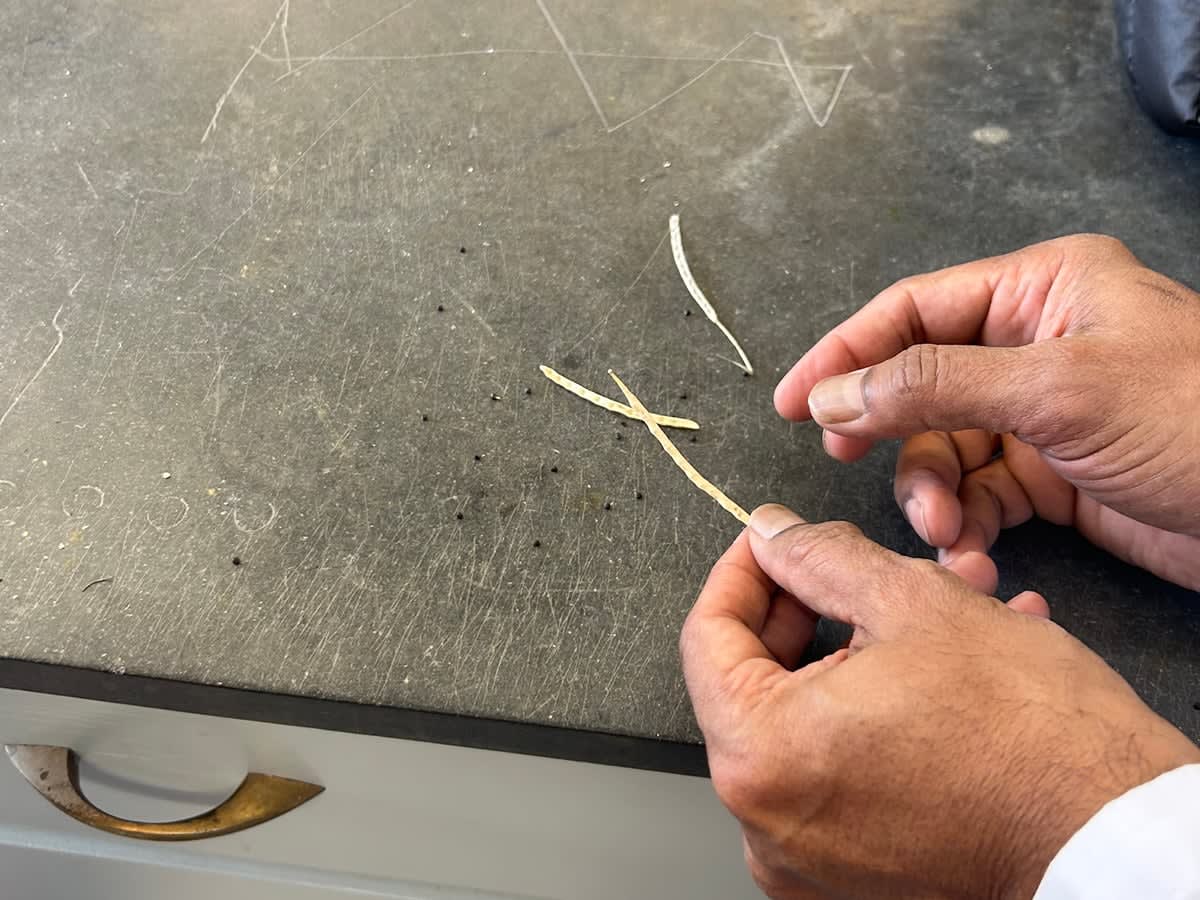
Calgary Scientists Crack $1.3B Canola Loss Problem
University of Calgary researchers just solved a decades-old farming problem that's been costing Canada up to $1.3 billion in lost canola crops. Their breakthrough could let farmers harvest more efficiently while saving over $80 per acre.
Canadian farmers might soon kiss goodbye to a billion-dollar headache, thanks to scientists who just figured out how to stop canola pods from popping open during harvest.
Researchers at the University of Calgary spent nearly a decade developing a technique that prevents canola pods from shattering when farmers cut them. The problem has plagued the industry for years, causing farmers to lose anywhere from 3% to 50% of their crop when weather conditions turn harsh.
Marcus Samuel, a biological sciences professor who led the research team, compared their solution to cementing the pods together just enough to keep them closed during harvest. The secret ingredient is a protein that produces lignin, a natural plant compound that strengthens the pod walls without making them impossible to crack open later.
The results speak for themselves. In the control group, seven out of 10 pods broke during testing. With the new protein technology, only one in 10 shattered.
For Canadian farmers, this could be transformative. Right now, they make two passes over their fields: first using a swather to let canola dry, then combining it once it's ready. With shatter-resistant pods, they could skip straight to combining, cutting their work in half.
The savings add up quickly. Farmers currently spend over $80 per acre just on seed costs for existing shatter-tolerant varieties, not counting the extra fuel and labor for multiple passes. With canola contributing $44 billion annually to Canada's economy, even small improvements make massive ripples.
Samuel and his team published their findings in the Proceedings of the National Academy of Sciences last month. The technology works through genetic modification, but Samuel notes they can achieve the same results using non-GM methods too.
Two former students who worked on the research now run AgGene, a plant biotechnology startup taking the discovery to market. CEO Logan Skori grew up on a grain farm dealing with this exact problem. "To be able to add a little piece of that puzzle is exciting," he said.
The Ripple Effect
This isn't just about canola. The same approach could work for soybeans and field peas, crops that face similar pod-shattering challenges. That means farmers across multiple industries could benefit from technology born in a Calgary laboratory.
Eight to 10 years of careful scientific work has created a solution that's both more effective and potentially more affordable than current options. It's the kind of unglamorous agricultural innovation that quietly feeds the world while helping farmers stay profitable.
Canadian canola just got a whole lot tougher.
Based on reporting by Google News - Canada Breakthrough
This story was written by BrightWire based on verified news reports.
Spread the positivity!
Share this good news with someone who needs it