California Has Enough Water—It Just Needs Better Access
A groundbreaking UC Irvine study reveals California doesn't have a water shortage at all. The state's real crisis is getting existing water supplies to thousands of disconnected residents.
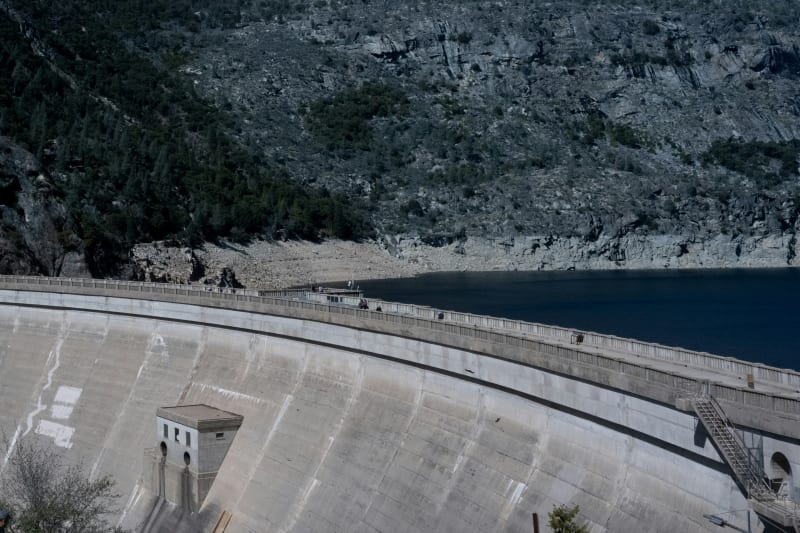
California's water problem isn't what you think it is. According to new research from UC Irvine, the Golden State already collects enough water to sustain every resident through its existing infrastructure.
The real issue? Thousands of Californians can't access it.
Nícola Ulibarrí, an associate professor of urban planning and public policy at UC Irvine, commissioned by UC Berkeley's Possibility Lab, found that California's challenge isn't scarcity but distribution. While most residents enjoy reliable tap water, thousands of households in rural areas remain disconnected from the state's large water infrastructure system.
These isolated residents depend on groundwater wells that frequently run dry during droughts or get depleted by neighboring users. Nearly one million Californians connected to the water system receive water that fails federal Safe Drinking Water Act standards.
The problem extends beyond access to affordability. A growing number of households struggle with water bills as prices climb faster than inflation, turning a basic necessity into a financial burden.
Ulibarrí's vision for "sustainable water abundance" flips traditional thinking on its head. Instead of building new reservoirs or desalination plants, she advocates expanding water recycling technologies, improving infrastructure to reach underserved communities, and redesigning utility rates for better affordability.
The approach represents a fundamental shift in how policymakers tackle California's water challenges. "Water is already abundant for most California residents," Ulibarrí explains. "The question isn't how to create more water. It's how to ensure everyone can access what we already have."
Her research emphasizes a critical point: unlike other essential goods, water cannot simply be produced in greater quantities. The amount of water on Earth today remains essentially the same as billions of years ago, making distribution questions even more urgent.
The Bright Side
This research offers hope because the solution doesn't require extracting more water from California's natural ecosystems. The state doesn't need expensive new water sources or dramatic technological breakthroughs.
Closing the equity gap simply requires investing in infrastructure, workforce development, and smarter utility rate designs. "By investing in the infrastructure and workforce of the water system, and by changing the design of utility rates to make them more affordable, California can sustain water abundance for generations to come," Ulibarrí says.
The research was part of a broader UC Berkeley initiative examining how California can better meet residents' basic needs despite the state's wealth. Two other researchers studying food and public safety reached similar conclusions: California's challenges stem from distribution and allocation failures, not absolute scarcity.
Ulibarrí calls for California to strengthen existing legislation that classifies water as a human right by putting "more teeth" behind enforcement. The findings arrive at a crucial moment as the state faces ongoing drought concerns, growing populations, and increasing demands from agricultural and urban users.
This research proves that abundance isn't always about having more—sometimes it's about sharing better what we already have.
More Images
Based on reporting by Phys.org - Earth
This story was written by BrightWire based on verified news reports.
Spread the positivity!
Share this good news with someone who needs it