California Invests $95M in EV Charging Across State
California is putting $95 million toward building more electric vehicle chargers and hydrogen stations across the state, making it easier for residents to drive clean cars. The investment comes just days after the state launched instant rebates for first-time zero-emission vehicle buyers.
California just made owning an electric car a whole lot easier for millions of residents.
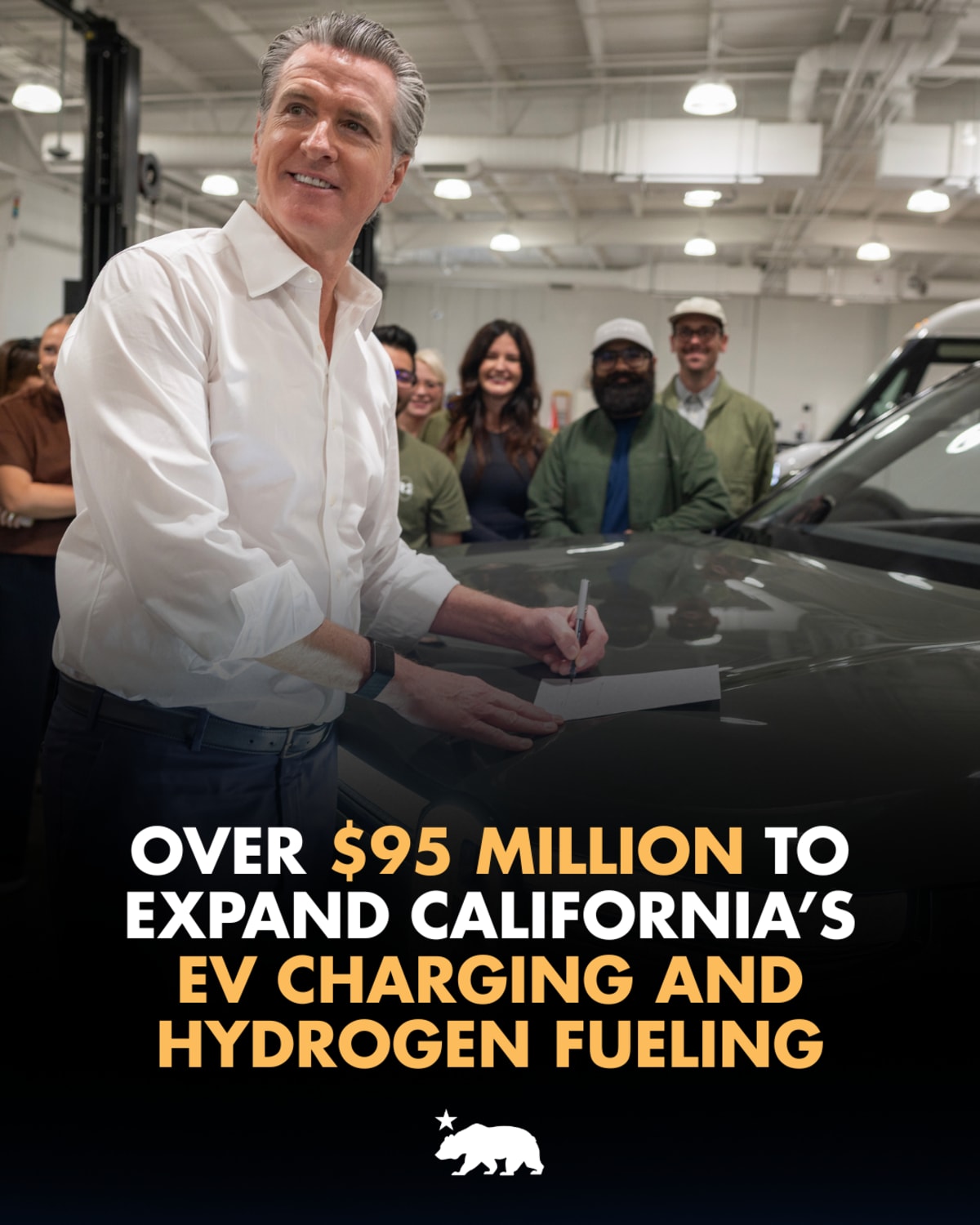
Governor Gavin Newsom announced this week that the state will invest $95.2 million to build more EV charging stations and hydrogen refueling infrastructure across California. The funding, approved Monday by the California Energy Commission, targets places where Californians actually spend their time: near homes, workplaces, and along major highways.
The timing couldn't be better. Just days earlier, California launched instant rebates for first-time zero-emission vehicle buyers through the MyFirstEV program. Together, these moves tackle both sides of the clean car equation: making electric vehicles more affordable to buy and ensuring drivers have convenient places to charge them.
Here's where the money goes. Light-duty electric vehicles get the biggest share with $48 million for DC fast charging and at-home charging stations. Another $30.2 million supports medium and heavy-duty zero-emission infrastructure for freight trucks, port vehicles, public fleets, and school buses. Hydrogen refueling gets $15 million, while $2 million funds workforce training to prepare workers for clean transportation jobs.
At least half the funding must benefit low-income Californians and disadvantaged communities. So far, the program has exceeded that goal, with 62% of funds going to projects in these areas as of March 2026.
The Ripple Effect
California's progress shows what sustained investment can achieve. Since 2008, the state's Clean Transportation Program has invested more than $2.7 billion, installing or planning over 52,000 EV chargers statewide. The state now has 216,445 publicly available charging ports, plus an estimated 800,000 home chargers.
The health benefits extend far beyond convenience. Transportation accounts for roughly 50% of California's air pollution, according to California Energy Commissioner Nancy Skinner. Faster infrastructure buildout means cleaner air and better public health for everyone, especially in communities hit hardest by pollution.
The economic impact reaches beyond charging stations too. The program has funded more than 40 manufacturing projects supporting in-state clean vehicle production and over 30 workforce training projects preparing Californians for good-paying jobs in the clean economy.
California's clean energy momentum keeps building. Last year, clean energy met 100% of the state's electricity needs for at least part of the day on 279 separate occasions. In 2026, that's happened on more than nine out of 10 days during the first half of the year. By the end of 2024, 67% of the state's retail electricity already came from clean sources.
Every new charging station brings California closer to a future where clean air isn't a luxury but a reality for everyone.
More Images
Based on reporting by Google News - Clean Energy
This story was written by BrightWire based on verified news reports.
Spread the positivity!
Share this good news with someone who needs it