California Wetland Becomes Climate Lab After 20-Year Revival
A California marsh that returned from industrial waste to thriving wildlife habitat is now being considered for groundbreaking carbon storage technology. The restored Montezuma Wetlands could help the state capture millions of tons of CO2 while sparking important conversations about climate solutions.
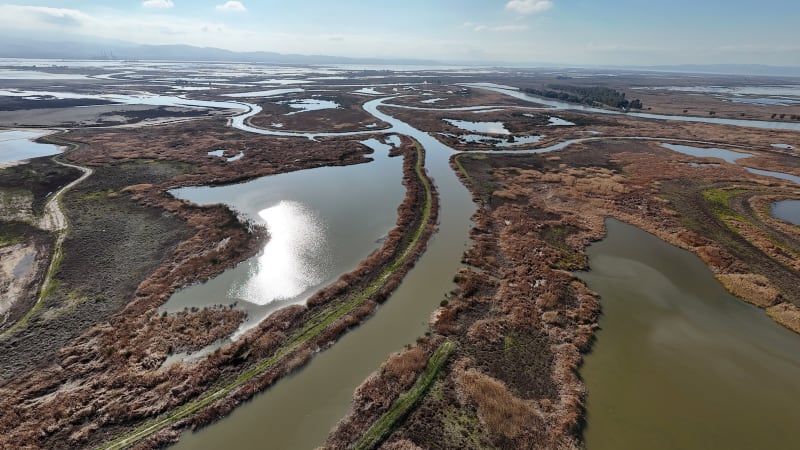
After a century of being drained for farms and used as an industrial dumping ground, the Montezuma Wetlands in California came back to life in 2020 when tidal waters returned for the first time in generations.
The 1,800-acre marsh in Solano County now teams with shorebirds, waterfowl, and wildlife thanks to a two-decade restoration effort led by UC Berkeley environmental scientist Jim Levine. He used sediment from the Port of Oakland to rebuild the wetland, creating a rare success story of large-scale habitat recovery.
Now that same restored land could pioneer a new climate solution. Montezuma Carbon wants to store millions of tons of carbon dioxide in saline aquifers two miles beneath the wetland through a 40-mile pipeline from Bay Area facilities.
The geology beneath the marsh, with its natural layers of compacted mud and clay, could act as a permanent seal to lock away CO2. Scientists from Lawrence Berkeley National Laboratory, Stanford University, and UC Berkeley designed the project to potentially store 100 million tons of carbon over 40 years.
If approved within the next 12 to 18 months, it would become California's first large-scale climate-driven carbon storage site. The project aims to capture up to 8 million tons annually within three years, helping the state reach its goal of storing 13 to 20 million tons by 2030.
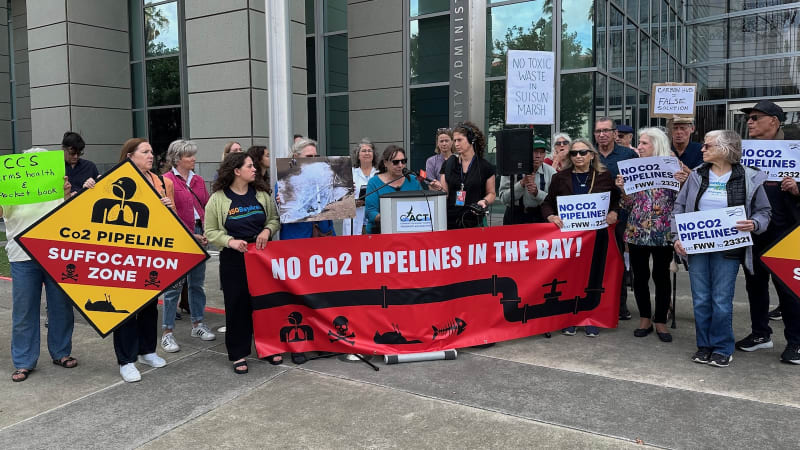
The proposal has sparked meaningful community dialogue about how California approaches climate solutions. Local residents want to ensure any industrial project respects the area's ecological recovery and includes community voices in decision-making.
The Ripple Effect
This project represents a crossroads for climate innovation. If successful, it could demonstrate how restored natural spaces and cutting-edge technology might work together to address carbon emissions.
The conversation happening in Solano County reflects a broader question facing communities everywhere: how do we balance different approaches to fighting climate change while protecting the progress we've already made?
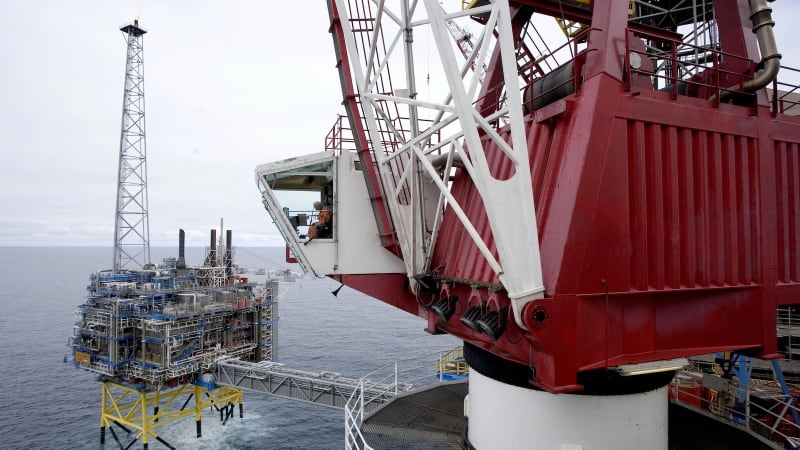
Similar carbon storage projects worldwide, like Norway's Sleipner facility which has successfully stored 20 million tons under the North Sea, show the technology can work at scale. The Montezuma site's proximity to Bay Area industries could make carbon capture more practical and affordable.
Whether this particular project moves forward or not, the restored wetland itself stands as proof that degraded landscapes can recover. The marsh that now hosts thriving bird populations was written off as expendable for more than a century, yet it came back stronger than ever.
That recovery offers hope that we can heal environmental damage while also finding innovative paths forward.
More Images
Based on reporting by Grist
This story was written by BrightWire based on verified news reports.
Spread the positivity!
Share this good news with someone who needs it
%20-%202.png)