Californians Rally to Save Monarchs from Extinction
Monarch butterflies are fighting for survival along California's coast, but conservation groups say everyday people hold the power to save them. Simple actions like planting native flowers and skipping pesticides could help reverse decades of population decline.
Californians have a chance to rescue one of nature's most beloved travelers from disappearing forever.
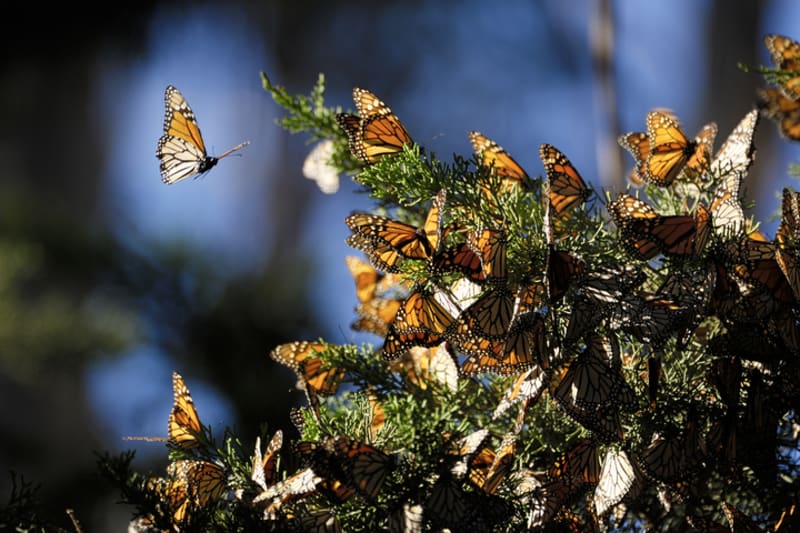
The latest count found just 12,260 monarch butterflies wintering along the California coast this season, the third-lowest number on record. It's a stark contrast to the millions of monarchs that filled the state's trees in the 1980s, but conservation experts say there's still time to turn things around.
"They need some good luck, and they need our action," Isis Howard, a conservation biologist for the Xerces Society for Invertebrate Conservation, told reporters. Her organization coordinates volunteers to count monarchs at 250 sites from Mendocino County to Northern Baja, Mexico every winter.
The butterflies face threats from climate change, habitat loss, and pesticides. Without major changes, western monarchs face a 99% chance of extinction by 2080, according to the U.S. Fish and Wildlife Service.
But here's the hopeful twist: after hitting rock bottom in 2020 with fewer than 2,000 butterflies, populations rebounded to more than 200,000 in the following three years. That dramatic recovery proves monarchs can bounce back when conditions improve.
Natural Bridges State Beach in Santa Cruz recorded the highest monarch numbers this season. Researchers there tried something new, attaching tiny ultralight radio tags to 100 butterflies with eyelash glue to track their winter movements and learn how to better protect them.
The Ripple Effect
Every Californian can become part of the solution, regardless of gardening experience. Planting native milkweed gives monarch caterpillars the only food they can eat to survive. Adding native nectar plants provides energy for adult butterflies. Even photographing monarchs helps scientists understand which flowers they prefer.
Protecting local winter sites makes a real difference too. When communities advocate for these spots, they prevent the destruction that continues to shrink monarch habitat across the state.
Skipping pesticides might be the easiest change with the biggest impact. These chemicals prove extremely toxic to butterflies and other pollinators that ecosystems depend on.
The eastern monarch population, which winters in central Mexico, faces similar struggles with up to a 74% extinction risk by 2080. What happens in California could provide a roadmap for saving monarchs everywhere.
The 2020 crisis showed how quickly monarchs can vanish, but the dramatic rebound that followed proves recovery remains possible when people take action.
More Images




Based on reporting by Google News - Species Saved
This story was written by BrightWire based on verified news reports.
Spread the positivity!
Share this good news with someone who needs it