California's Plant-Covered Levees Fight Floods and Save Wildlife
A new type of levee in Palo Alto uses native plants instead of concrete to prevent flooding while creating homes for endangered mice. The innovative design cleans wastewater and could protect California's Bay Area as sea levels rise.
Northern California just built a levee that looks nothing like a levee, and that's exactly the point.
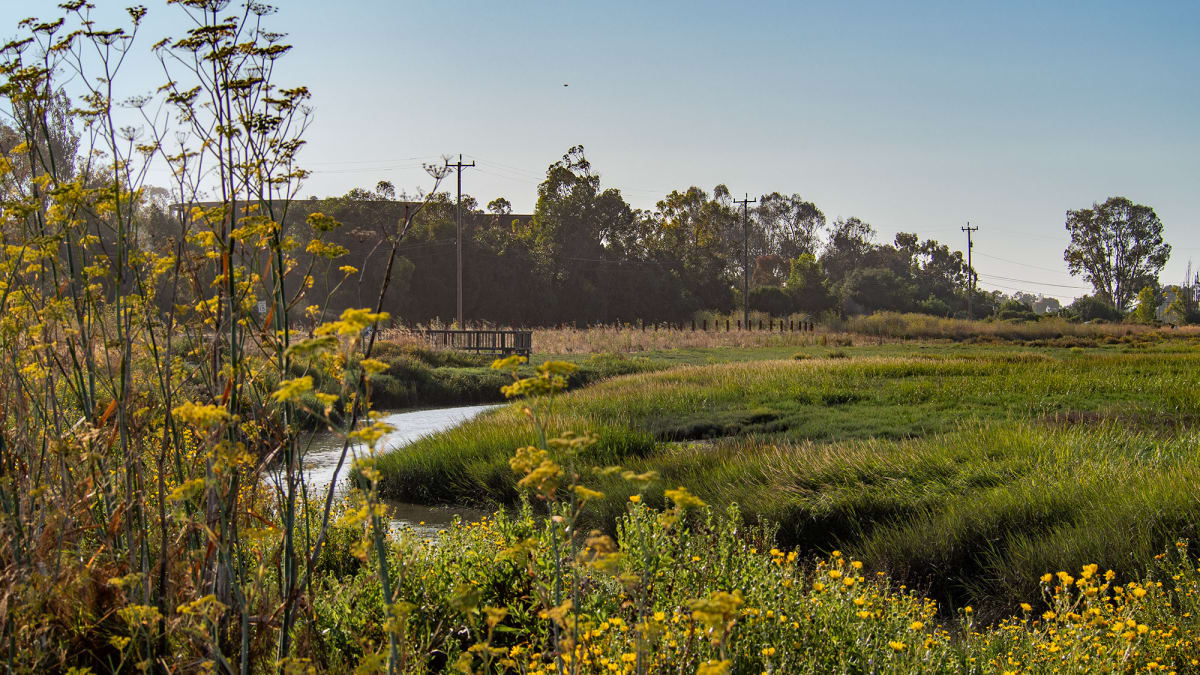
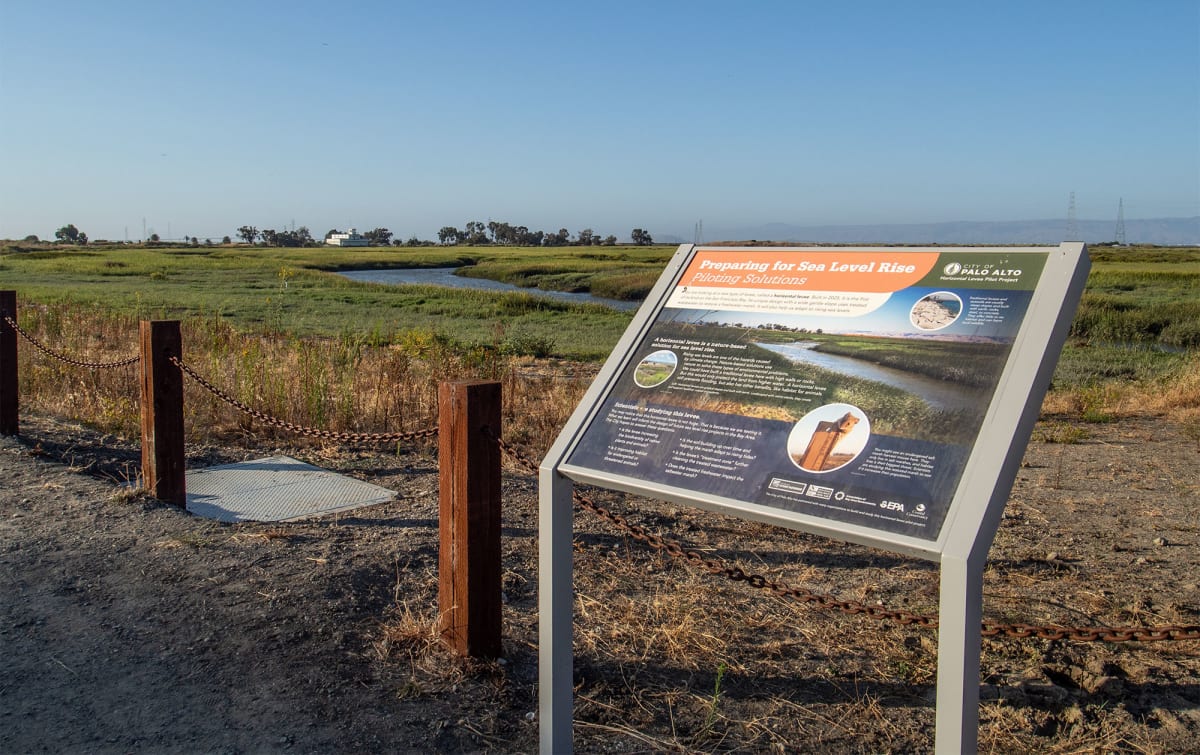
At the Palo Alto Baylands Nature Preserve, visitors might miss the newest flood barrier entirely. Instead of steep concrete walls and giant rocks, this levee features 35 species of native plants spreading across a gentle slope that blends right into the marsh.
Engineers call it a horizontal levee, and it works by mimicking nature. When waves hit traditional levees, they crash against hard surfaces and erode the barrier over time. This living version lets waves break gradually across vegetation-covered slopes, just like on a natural beach.
"By having this flat, gradual slope with really dense vegetation on it instead of having rock, the waves break on that slope like they do on a beach," explained Mark Lindley, the project's lead engineer.
The design does double duty for the environment. Beneath the plants, pipes connect the levee to the Palo Alto Wastewater Treatment Center across the street. Treated wastewater irrigates the slope, and as it flows through, the plants remove excess nitrogen before the water enters the Bay.
That nitrogen removal helps prevent harmful algal blooms, giving the Bay an extra boost in water quality beyond what regulations require.
The Ripple Effect
The levee's biggest fans might be the salt-marsh harvest mice. These cinnamon-colored rodents, small enough to fit in your palm, have been endangered for decades as development destroyed their marsh habitat.
The mice climb vegetation daily to escape rising tides, making them especially vulnerable to climate change and severe storms. The horizontal levee's design creates exactly the habitat they need to survive.
"All you need is a couple of really, really bad storm and tide events to knock out a population," said wildlife biologist Katie Smith. She believes the levee creates the "optimal potential option for salt-marsh harvest mice."
Around a dozen similar projects are now in development across the Bay Area. The Palo Alto pilot, completed in 2017, stretches 500 feet and is the first to connect directly to Bay waters. Over the next five years, researchers will track its effects on biodiversity, water quality, and recreation to help justify the higher costs of green infrastructure.
The timing matters more than ever. Sea levels in the Bay Area could rise three to six feet by 2100, and the forecasted El Niño system might bring a preview with six inches of temporary rise.
"Twenty years from now, what we see at king tides is just going to be a normal high tide," Lindley said.
The gentle slope is already breaking waves and protecting the shoreline, proving that fighting floods doesn't mean fighting nature.
More Images


Based on reporting by Grist
This story was written by BrightWire based on verified news reports.
Spread the positivity!
Share this good news with someone who needs it