California's "Sasquatch of the Sea" Found After 99% Died Off
Scientists discovered 18 surviving sunflower sea stars off California's coast, offering hope for the state's devastated kelp forests. The 24-armed predators, thought nearly extinct after disease and heat killed 99% of them in 2013, could restore underwater forests by controlling purple sea urchins.
📺 Watch the full story above
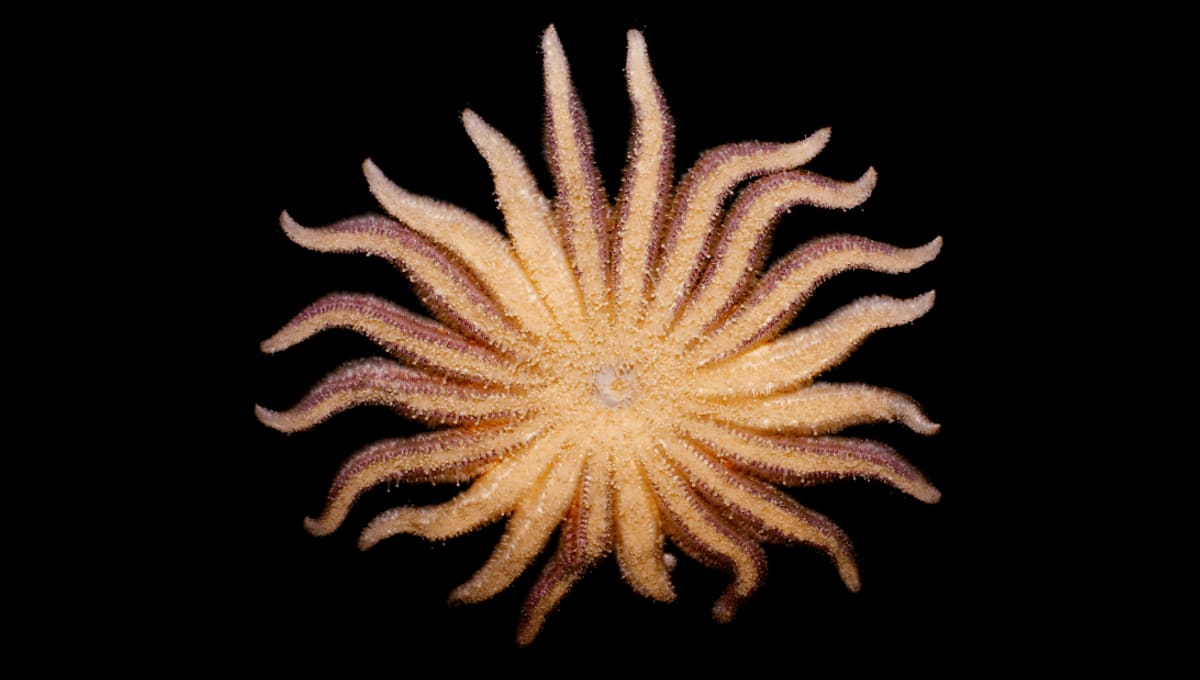
A researcher literally screamed underwater when she spotted something that shouldn't exist: a sunflower sea star alive off the California coast.
These 24-armed ocean predators earned the nickname "seasquatch" because scientists couldn't find them anymore. In 2013, a perfect storm of ocean heatwaves and disease wiped out 99% of California's sunflower sea stars, and the ocean has been suffering ever since.
When the sea stars vanished, purple sea urchin populations exploded by over 10,000%. By 2017, these voracious urchins had destroyed more than 90% of kelp forests along the West Coast, stripping the underwater landscape to bare rock.
The loss was catastrophic. Kelp forests absorb 20 times more carbon dioxide than the same area of land forest, provide nurseries for countless marine species, and protect coastal communities from erosion by absorbing wave energy.
Purple sea urchins are nearly impossible to control manually. They form dense "zombie" mats on the seafloor, lying dormant until food appears, then spring back to life and devour everything in sight.
But last year, Rachael Karm, a research technician at Sonoma State University, made the discovery of her career. "The moment I saw my first sunflower star underwater, I was so excited that I literally screamed through my regulator," she told National Geographic.
Karm and her team later identified 18 sunflower sea stars in one location, the largest southern population documented since the mass die-off. While 18 might not sound like much, it's enough for the population to reproduce.
The Ripple Effect
These survivors could hold the secret to saving California's kelp forests. Scientists are studying their DNA to understand what enabled them to survive when millions of others died, which could inform conservation and breeding programs.
The discovery suggests more sunflower sea stars might be hiding just out of sight along the coast. Each one is a natural urchin-eating machine, capable of restoring balance to the ecosystem simply by doing what it evolved to do.
From San Francisco to Oregon, 96% of kelp forests have vanished over the past decade, putting this critical ecosystem on the verge of collapse. The return of even a small population of sunflower sea stars offers the first real hope for recovery in years.
One screaming researcher and 18 hungry sea stars might just be the beginning of an underwater comeback story.
More Images



Based on reporting by Google News - Scientists Discover
This story was written by BrightWire based on verified news reports.
Spread the positivity!
Share this good news with someone who needs it