Caltech Chip Matches Fiber Optic Speed on Silicon Wafer
Scientists have created computer chips that transmit light with almost zero loss, matching the performance of fiber optic cables. This breakthrough could revolutionize quantum computing, AI data centers, and precision timekeeping.
Scientists just made computer chips that work like the fiber optic cables powering the internet, opening doors to faster quantum computers and more efficient AI systems.
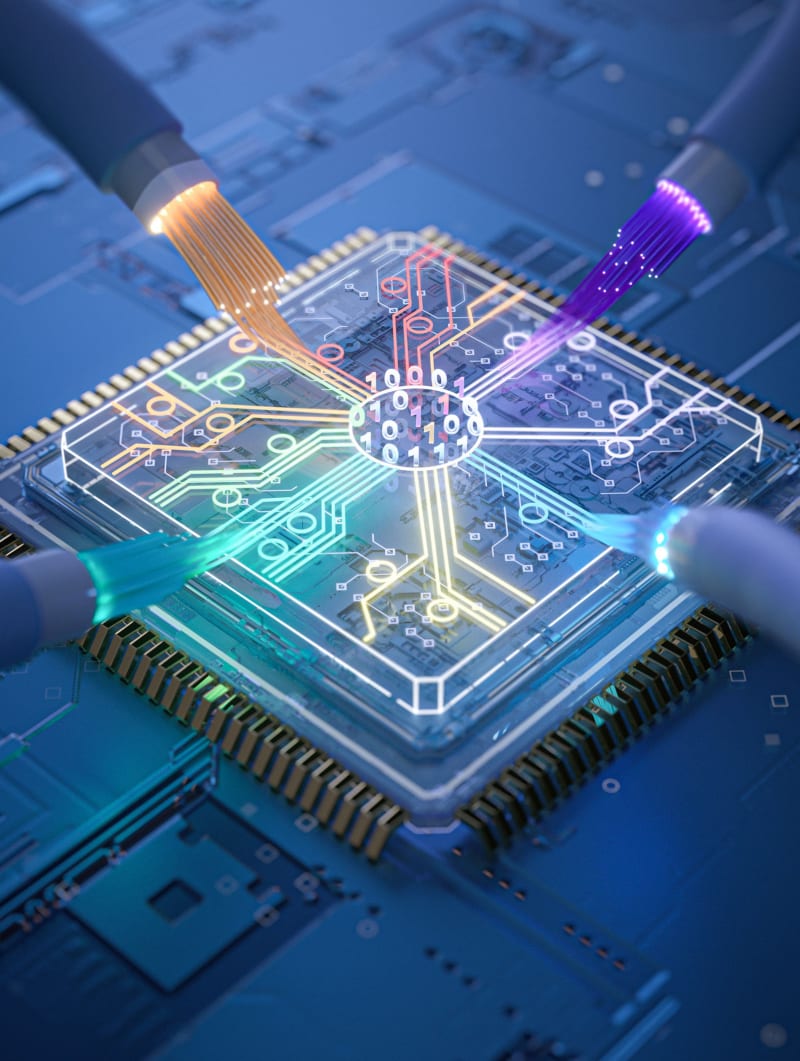
Researchers at Caltech developed a technique that lets light travel across silicon wafers with barely any signal loss, even at visible wavelengths. This matches the performance of optical fiber, which carries internet data around the world almost instantly.
The team, led by Professor Kerry Vahala, used the same glass found in optical fiber cables and shaped it into tiny spirals on standard computer chip wafers. These nanoscale pathways, called waveguides, guide light across the chip just like fiber optic cables guide light across continents.
The secret lies in heating the devices in a furnace to smooth their surfaces down to individual atoms. This smoothing process reduces scattering and keeps light coherent for 100 times longer than previous chip designs.
At visible wavelengths, the new platform performs 20 times better than silicon nitride, the current industry standard. Postdoctoral scholar Hao-Jing Chen says the team has room to improve even further.
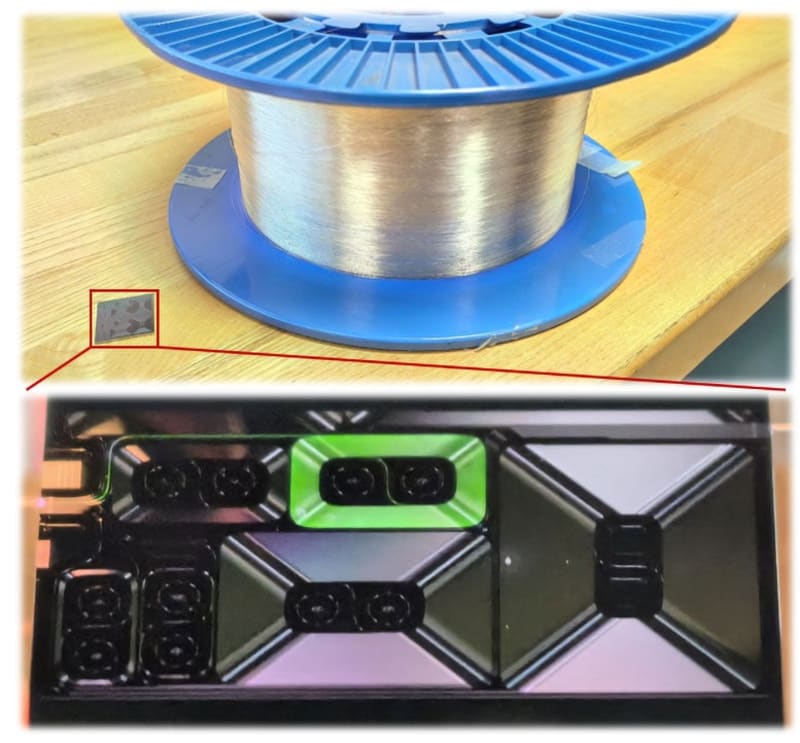
These chips measure only 2 centimeters across, but light can effectively travel kilometers through their circular pathways. The longer light circulates without losing energy, the better the device performs.
The technology could transform several fields at once. Optical clocks could keep more precise time. Gyroscopes could measure rotation with greater accuracy. AI data centers could communicate faster while using less energy.
The Ripple Effect
The breakthrough extends beyond faster computing. Quantum computing systems need chips that maintain light coherence over long periods, and these new platforms deliver exactly that capability.
The visible wavelength performance opens possibilities for atomic sensors and ion trap systems, technologies that could advance scientific research and medical diagnostics. Every tenfold reduction in energy loss dramatically improves laser coherence and device performance.
Henry Blauvelt, chief technology officer at Emcore, notes that the waveguides efficiently transfer light between optical fibers and semiconductor lasers. This compatibility could reduce the overall energy costs of server infrastructure, making the internet more sustainable.
Graduate student Kellan Colburn explains that in ring resonators, small circular components used in telecommunications, light circulates repeatedly to amplify specific frequencies. Low loss over long distances means light can circulate longer, producing higher performing devices.
The research team published their findings in Nature, detailing how they adapted fiber optic manufacturing for standard 8 and 12 inch wafers used in computer chip production. This compatibility with existing manufacturing processes could speed adoption across the tech industry.
The future looks bright for technologies that depend on maintaining light coherence while minimizing energy waste.
More Images
Based on reporting by Google News - Tech Breakthrough
This story was written by BrightWire based on verified news reports.
Spread the positivity!
Share this good news with someone who needs it