Cambridge Lab Mistake Unlocks Cleaner Drug Development
A failed experiment at Cambridge led to a breakthrough that could transform how medicines are made. Scientists discovered a light-powered method to modify drug molecules faster, cleaner, and without toxic chemicals.
Sometimes the best discoveries happen when experiments go wrong. Cambridge researchers stumbled onto a game-changing way to develop new medicines while trying something completely different in their lab.
The team created a technique that uses simple LED light instead of harsh chemicals to modify complex drug molecules. Published in Nature Synthesis this March, the method could make designing new medicines faster, cheaper, and far better for the environment.
Traditional drug development has a major problem. When chemists need to make even tiny changes to a potential medicine, they often have to tear apart the entire molecule and rebuild it piece by piece. That process can take months and requires toxic chemicals, expensive metal catalysts, and extreme laboratory conditions.
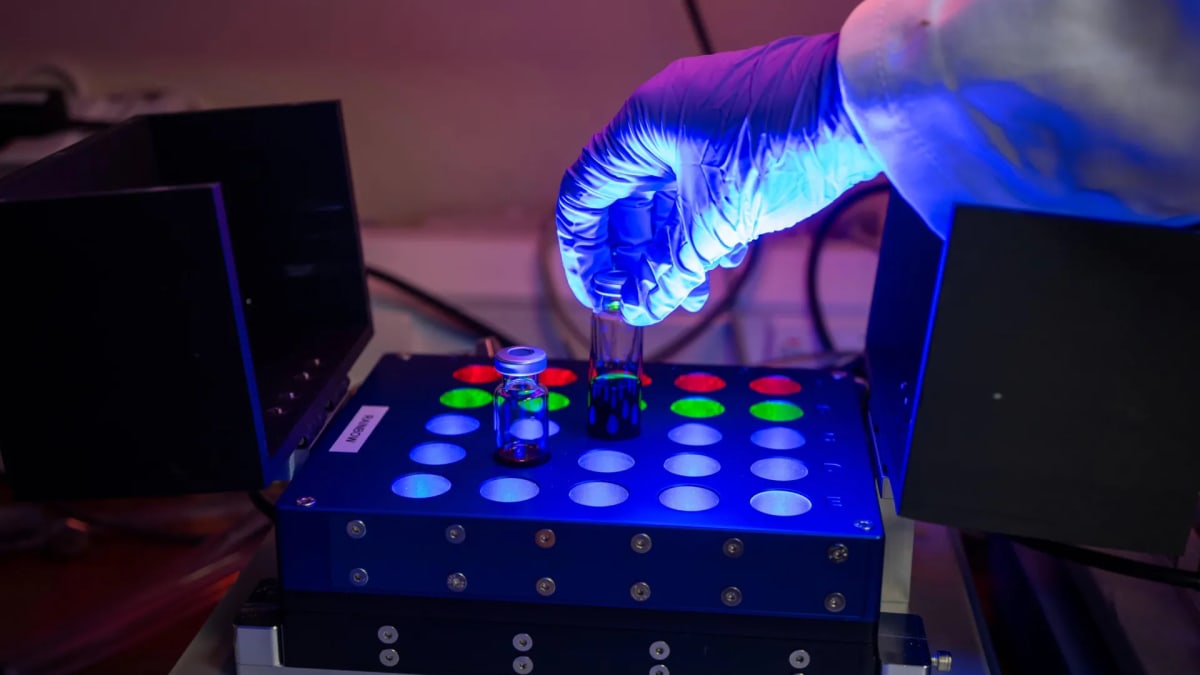
The new approach flips that process on its head. Scientists can now make precise tweaks to drug molecules in the final stages of development, not at the beginning. An LED lamp triggers a chain reaction that forms crucial carbon-carbon bonds at room temperature without any toxic reagents.
"Scientists can spend months rebuilding large parts of a molecule just to test one small change," said David Vahey, the PhD researcher who led the study at St John's College. Now chemists can start with a promising drug candidate and fine tune it later without starting from scratch.
The reaction is remarkably precise. It can change one specific spot on a molecule while leaving other sensitive areas completely untouched. That matters because even the smallest structural shift can determine whether a medicine works properly, causes side effects, or helps patients at all.
The Ripple Effect
This breakthrough reaches far beyond Cambridge's labs. Fewer synthesis steps means less chemical waste, lower energy use, and a smaller environmental footprint for the entire pharmaceutical industry.
The researchers tested their method on dozens of drug-like molecules and found it works in continuous flow systems that factories already use. Collaboration with AstraZeneca confirmed the technique meets the practical demands of large-scale manufacturing.
Professor Erwin Reisner, who leads the Cambridge team known for developing chemistry inspired by photosynthesis, emphasized the fundamental nature of the discovery. Creating carbon-carbon bonds is essential to making countless substances, from medicines to plastics to fuels.
By avoiding heavy metals and harsh conditions while opening new possibilities for drug design, the technique addresses both scientific and environmental challenges facing the chemical industry. What started as a laboratory mistake might help create the next generation of medicines while protecting the planet at the same time.
The future of drug discovery just got brighter, and it runs on light.
Based on reporting by Google: scientific discovery
This story was written by BrightWire based on verified news reports.
Spread the positivity!
Share this good news with someone who needs it