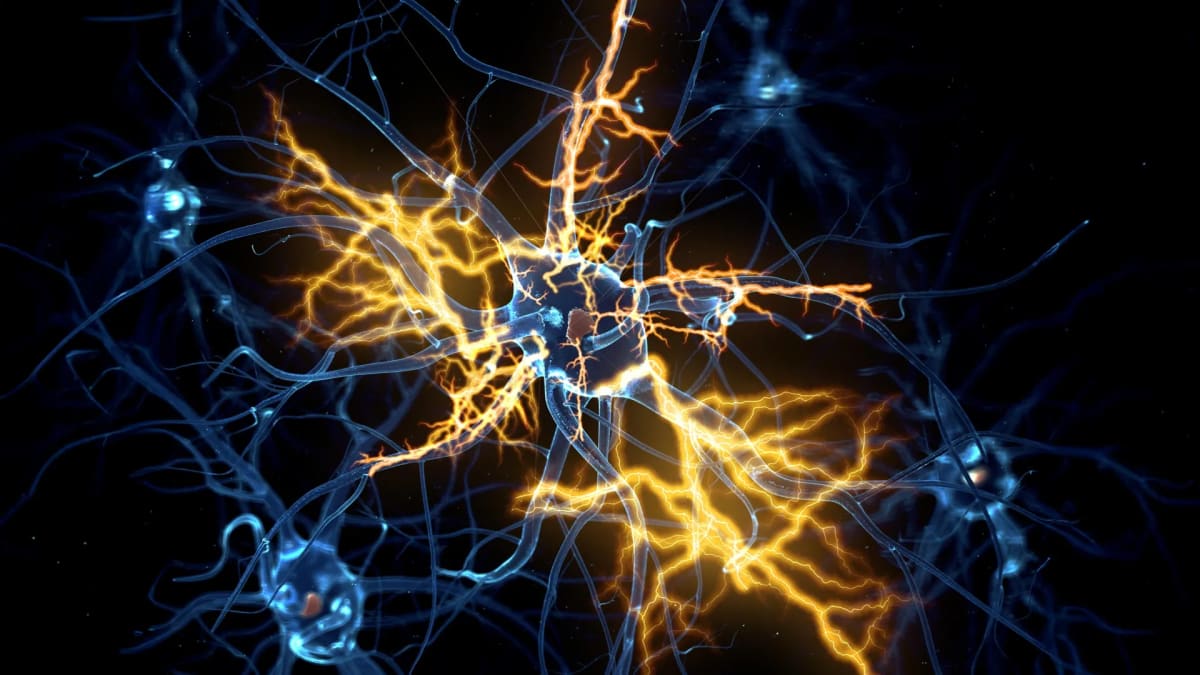
Cambridge Lab Reverses "Permanent" Nerve Damage in Study
Scientists grew miniature brain and spinal cord systems in a lab and discovered that supposedly permanent nerve damage can be switched back on. An existing hormone drug dramatically boosted nerve regrowth in damaged neurons.
Scientists at Cambridge University may have just cracked the code on reversing nerve damage doctors long believed was impossible to fix.
Using stem cells from patients, Dr. András Lakatos and his team built tiny working models of the human brain and spinal cord, keeping them alive for over a year. These pea-sized systems actually functioned like the real thing. Nerve fibers grew from the brain tissue to connect with spinal cord tissue, creating circuits that could trigger muscle contractions.
The breakthrough came when researchers discovered exactly when our nervous system loses its healing powers. Until about day 150 of development (roughly mid-pregnancy), damaged nerve fibers could still regrow. After that point, something switches off that ability.
"Poor regeneration is built into human neurons as they mature in the central nervous system," explained George Gibbons, the study's first author. The team identified a network of genes acting like a biological off switch for nerve regrowth.
Here's where it gets exciting. When scientists blocked key parts of this gene network, the neurons started regrowing again. Even better, they found an existing drug that does exactly that.
The Bright Side
The drug lynestrenol is already approved for menstrual disorders and contraception. When tested on damaged neurons in the lab, it significantly boosted nerve fiber regrowth.
This matters because spinal cord injuries usually cause permanent paralysis. The nerve fibers carrying movement signals from brain to spinal cord rarely grow back on their own. Understanding why this happens during development opens the door to reversing it.
Dr. Lakatos cautioned that lynestrenol itself may not be the final solution for spinal cord repair. The team still needs to prove that regrowing nerve fibers can form proper connections between brain and spinal cord. But the principle works, and that's huge.
The miniature brain systems also solve another problem. Most nerve regeneration research relies on mice and rats, whose neurons behave differently than human ones. These human organoid models bridge the gap between animal experiments and real patient outcomes, making future treatments more likely to succeed.
The study, published in Cell Reports, gives real hope that conditions once labeled untreatable might one day be reversible.
Based on reporting by Health Daily
This story was written by BrightWire based on verified news reports.
Spread the positivity!
Share this good news with someone who needs it