Cambridge Turns Plastic Bottles and Battery Acid Into Fuel
Scientists have figured out how to use old car battery acid to break down plastic waste into clean hydrogen fuel. The best part? The system actually turns a profit while cleaning up two pollution problems at once.
What if the acid from your dead car battery could help turn plastic bottles into clean fuel?
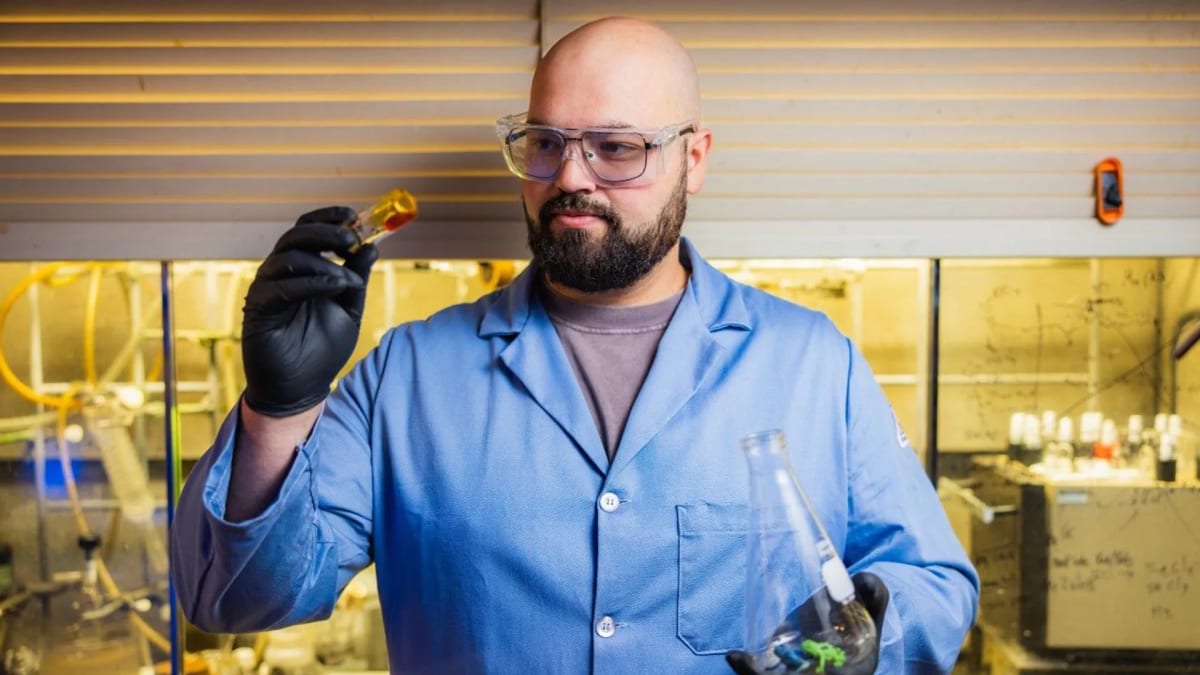
Scientists at the University of Cambridge just cracked a problem that seemed impossible. They created a reactor that uses discarded battery acid to transform plastic waste into hydrogen, all powered by sunlight. The discovery happened almost by accident when researchers realized their new catalyst could survive in acid conditions that would destroy most others.
Here's how it works. First, sulphuric acid from old car batteries breaks down plastic bottles into simpler chemical building blocks. Then a specially designed powder catalyst gets added to the mix. When sunlight hits the system, it converts those building blocks into clean hydrogen gas and acetic acid (the main ingredient in vinegar).
The catalyst itself is surprisingly simple. It combines carbon nitride, a yellow powder that absorbs light, with molybdenum disulfide (found in some greases) and a small amount of cobalt. No expensive precious metals required, which means the whole system can scale up affordably.
In lab tests, the reactor ran continuously for 260 hours without losing any performance. That's nearly 11 days straight of turning trash into fuel.
The Ripple Effect
The timing couldn't be better. Global plastic production has exploded to 450 million tonnes per year, up from just 2 million tonnes in 1950. Most of it ends up in landfills, with only 18% actually getting recycled.
Traditional mechanical recycling often produces inferior plastic that's really more downcycled than recycled. This new approach is different because it breaks plastics down to their chemical building blocks, allowing them to become something entirely new and useful.
The battery acid angle solves another headache too. Car batteries contain 20 to 40% acid by volume, which normally has to be neutralized before disposal. That neutralization process is expensive and resource intensive. Now that acid can be reused repeatedly to break down plastics instead.
Lead researcher Erwin Reisner says the discovery opens up "a whole new world of reactions" that scientists previously thought impossible with solar powered systems.
The economics look promising as well. A commercial plant would cost about £7.3 million to build and operate over 20 years. According to the team's financial modeling, the system would actually generate profit while cleaning up waste.
Cambridge Enterprise, the university's innovation division, is now supporting efforts to commercialize the technology. PhD candidate Kay Kwarteng, who developed the photocatalyst, calls battery acid "an untapped resource" that can work again and again.
Right now the hydrogen output is modest, so this is still a proof of concept. But the researchers are already working on scaling it up for real world deployment.
It's a rare triple win: less plastic pollution, productive use of battery waste, and clean fuel production that pays for itself.
More Images


Based on reporting by New Atlas
This story was written by BrightWire based on verified news reports.
Spread the positivity!
Share this good news with someone who needs it