Cambridge Turns Plastic Waste Into Hydrogen With Battery Acid
Scientists at Cambridge University created a solar-powered reactor that transforms hard-to-recycle plastics into clean hydrogen fuel using acid from old car batteries. The breakthrough tackles two waste problems at once while producing valuable resources.
Two of the world's toughest waste problems just found an elegant solution in a single university laboratory.
Researchers at the University of Cambridge developed a solar-powered reactor that breaks down plastics like drink bottles, nylon, and polyurethane foam into clean hydrogen fuel and useful chemicals. The secret ingredient? Acid recovered from discarded car batteries that would otherwise be neutralized and thrown away.
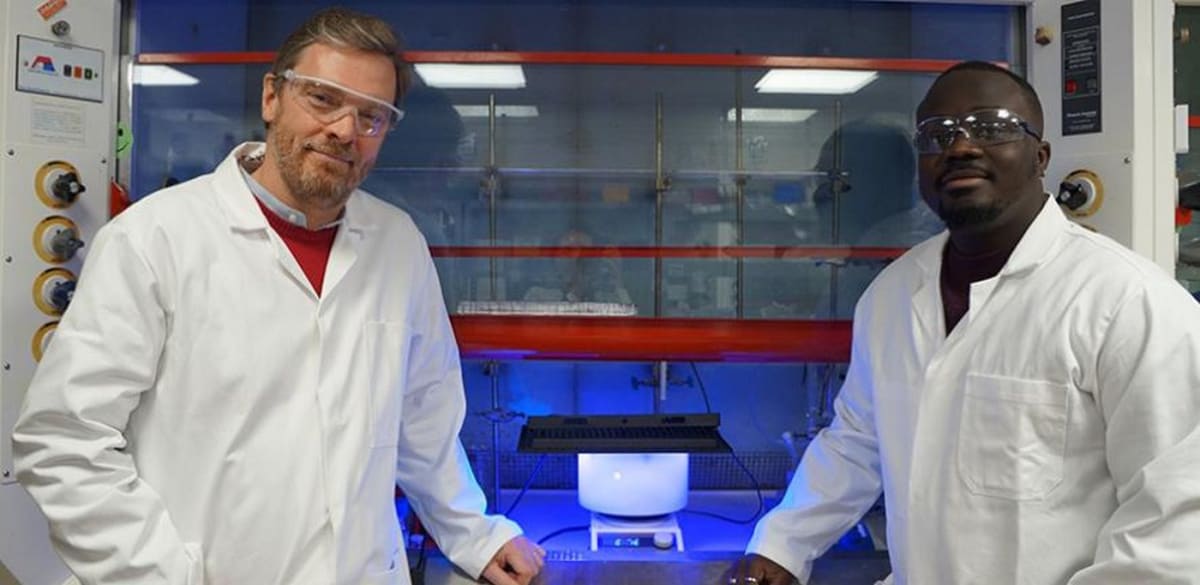
Professor Erwin Reisner and PhD student Kay Kwarteng stumbled onto the breakthrough almost by accident. They had assumed acid would destroy their solar-powered system, but their new photocatalyst proved tough enough to withstand the corrosive environment.
"We used to think acid was completely off limits in these solar-powered systems, because it would simply dissolve everything," said Reisner. "But our catalyst didn't, and suddenly a whole new world of reactions opened up."
The process works by first treating plastic waste with battery acid to break down long polymer chains into simpler building blocks. When exposed to sunlight, the photocatalyst converts these materials into hydrogen gas and acetic acid, the main ingredient in vinegar. In lab tests, the reactor ran for over 260 hours without losing performance.
The timing couldn't be better. Global plastic production tops 400 million tonnes yearly, yet only 18 percent gets recycled. The rest ends up in landfills, incinerators, or our ecosystems.
Current recycling methods struggle with materials like nylon and polyurethane, but this new approach handles them easily. It also works with real battery acid, not just the clean stuff made in laboratories.
Car batteries worldwide get replaced in huge numbers every year. Each one contains 20 to 40 percent acid by volume that typically becomes waste after the lead gets extracted for resale.
The Ripple Effect
This discovery creates a circular system where one waste stream solves another. Instead of spending energy and money to neutralize battery acid, industries could use it repeatedly to break down plastics while generating clean fuel.
The cost advantages look promising too. The research team estimates their method could reduce expenses by an order of magnitude compared to other photoreforming approaches, largely because the acid boosts hydrogen production rates and can be reused.
Kwarteng acknowledges challenges remain in scaling up the technology. Engineers need to design reactors that can run continuously with real-world waste while handling corrosive conditions. But he notes that industries already manage these acids safely every day.
"We're not promising to fix the global plastics problem," said Reisner. "But this shows how waste can become a resource."
The team plans to commercialize the process with support from Cambridge Enterprise, the university's innovation arm.
Two waste streams, one sunny solution, and a glimpse of how innovation turns our biggest problems into tomorrow's resources.
More Images


Based on reporting by Good News Network
This story was written by BrightWire based on verified news reports.
Spread the positivity!
Share this good news with someone who needs it