Canada Adds 3,600km of Bike Paths in Two Years
Canada's cycling network just grew by the distance between Toronto and Edmonton, giving more people safer ways to bike to work, school, and everyday destinations. A new study shows the country added 3,600 kilometers of cycling infrastructure between 2022 and 2024, with smaller cities leading the charge.
Canada just built enough new bike paths to stretch from coast to coast, and researchers say it's making cycling safer and more accessible for millions of people.
Between 2022 and 2024, nearly 3,600 kilometers of cycling infrastructure appeared across the country. That's roughly the same distance as driving from Toronto to Edmonton, all dedicated to making bike rides safer and more comfortable.
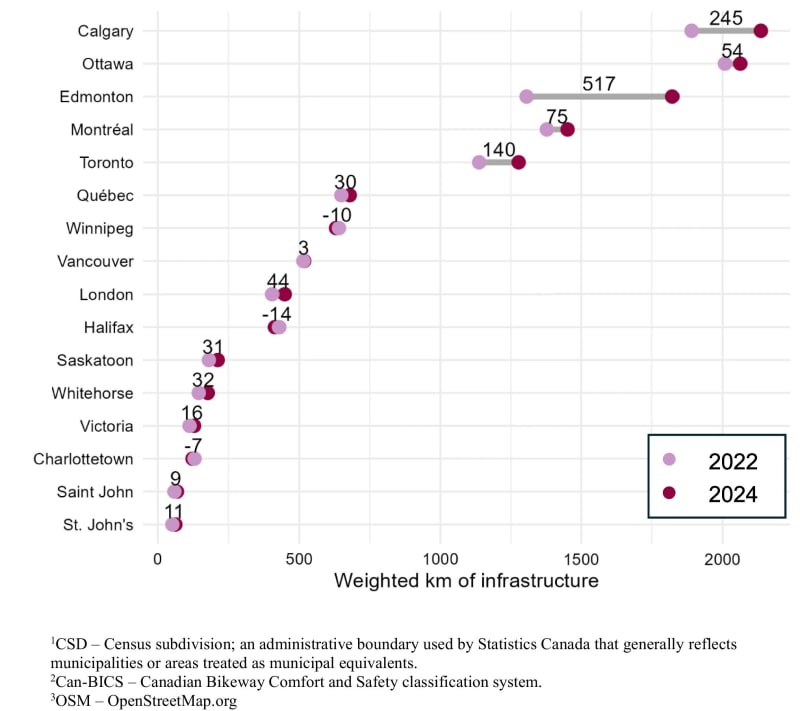
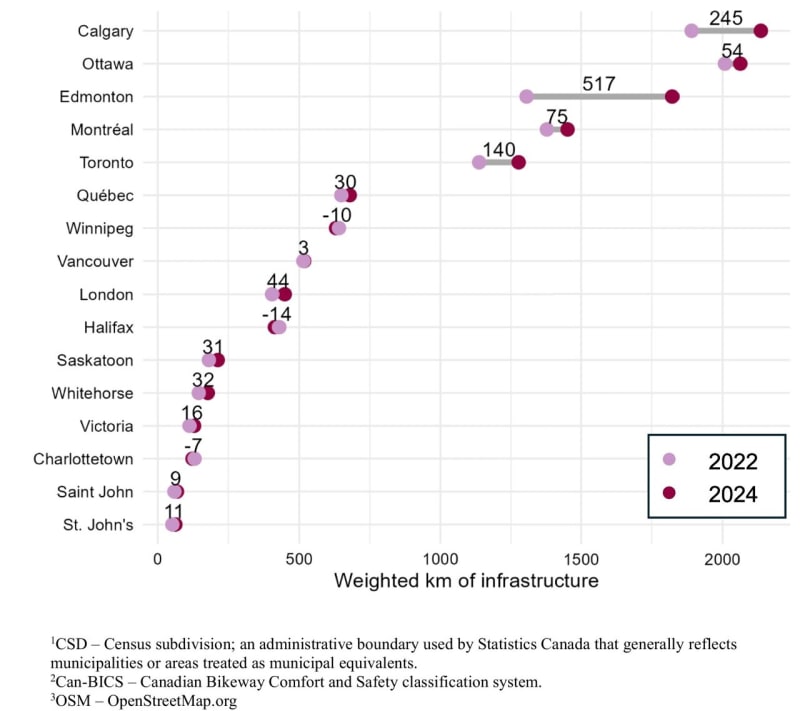
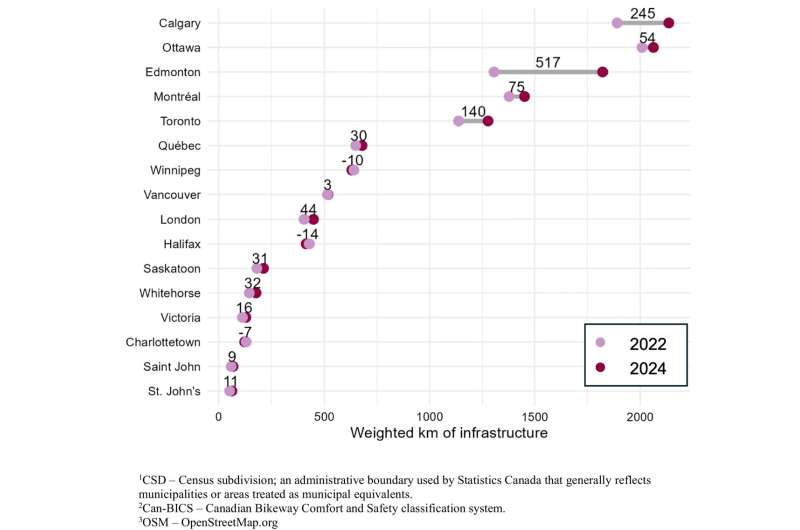
The growth happened everywhere, but smaller cities led the way with the biggest proportional increases. Edmonton, Calgary, and Toronto added the most total distance, while places like Montreal pushed infrastructure beyond downtown cores into suburban neighborhoods where families live.
"When environments are supportive, cycling can be a healthy, fun, environmentally friendly and low-cost way to get around," says Meghan Winters, a health sciences professor at Simon Fraser University who led the study. She helped create Canada's first nationwide cycling map in 2022 and tracked changes through 2024 using open-source data.
The new infrastructure isn't just painted lines on busy streets. Multi-use paths accounted for 2,725 kilometers of the additions, offering medium comfort routes separated from traffic. High-comfort bike-only paths grew by nearly 47%, though they started from a smaller base.
The research, published in the Canadian Journal of Public Health, reveals cycling infrastructure now stretches 27,098 kilometers across Canada. That represents a 15% increase in just two years.
The Ripple Effect
The benefits extend far beyond recreation. Winters points out that work commutes represent only about a quarter of all trips people make. The rest are everyday journeys to schools, grocery stores, cafés, and visits with friends and family.
Better cycling infrastructure means cleaner air, less traffic congestion, and more affordable transportation options for families. When safe bike routes connect neighborhoods to essential destinations, people gain independence without needing a car.
Montreal stands out as a success story. The city already had strong cycling networks but recently expanded farther into different neighborhoods through the REV project, creating real connectivity for residents. Vancouver, despite having extensive infrastructure, saw fewer new investments during this period.
The study did find gaps worth addressing. Areas with more children and older adults tend to have less cycling infrastructure, even though these groups would benefit greatly from safe, car-free routes. Downtown cores typically get priority to support commuters, but researchers emphasize the importance of neighborhood connections.
Small and medium-sized cities are proving that rapid change is possible, showing larger urban centers that expanding beyond the downtown core creates opportunities for everyone to pedal safely through their daily lives.
More Images


Based on reporting by Phys.org - Earth
This story was written by BrightWire based on verified news reports.
Spread the positivity!
Share this good news with someone who needs it