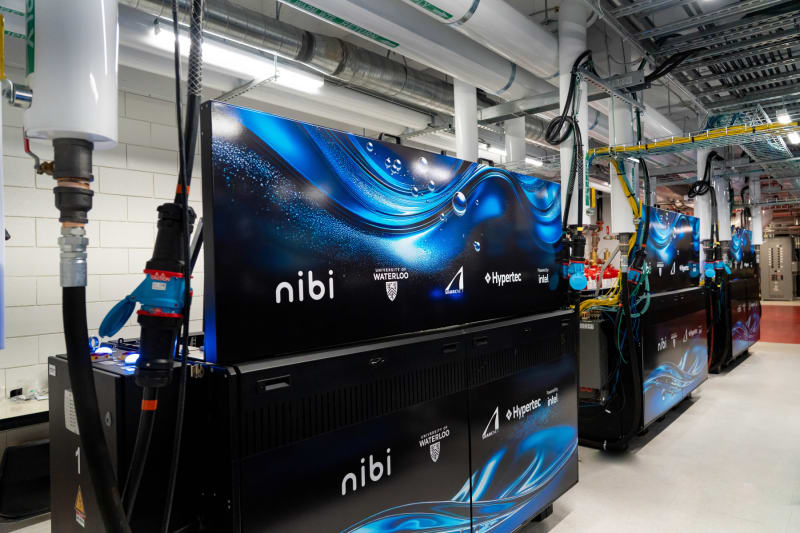
Canada's Nibi Supercomputer Powers 4,000 Researchers Yearly
A powerful new supercomputer at the University of Waterloo will help 4,000 researchers each year tackle breakthrough challenges in health, climate science, and artificial intelligence. The Nibi system marks a major win for Canadian-built research infrastructure.
Over 4,000 researchers across Canada now have access to world-class computing power that could accelerate discoveries in medicine, climate solutions, and artificial intelligence.
The Nibi supercomputer, deployed at the University of Waterloo through SHARCNET (Shared Hierarchical Academic Research Network), represents a major leap forward for Canadian research capacity. Nokia and Hypertec Group collaborated to build the advanced system, which serves 19 academic institutions nationwide.
What makes this project special is that it's entirely Canadian-designed and operated. Hypertec acted as system architect and prime integrator, while Nokia provided cutting-edge networking technology. Together, they proved Canada can build AI and high-performance computing infrastructure that competes at the highest global level.
The system uses innovative immersion-cooling technology paired with high-performance Ethernet networking. This combination gives researchers the speed and reliability they need for demanding computational work, from modeling disease progression to predicting climate patterns.
For students, faculty, and postdocs at Canadian universities, Nibi removes a major barrier to advanced research. Computing power that once required international partnerships or expensive private access is now available to any qualified Canadian academic researcher.
John Morton, Director of Technology at SHARCNET, emphasized how the system's scalability and performance will support diverse research needs. The switch to Ethernet-based interconnect makes the supercomputer flexible enough to handle everything from engineering simulations to machine learning projects.
The Ripple Effect
The impact extends far beyond one university campus. When researchers gain access to powerful computing tools, their discoveries can touch millions of lives. Health breakthroughs move faster from lab to treatment. Climate models become more accurate, helping communities prepare for environmental changes. AI innovations developed on Canadian soil stay rooted in Canadian values and priorities.
This project also strengthens Canada's tech ecosystem. By demonstrating domestic capability in advanced computing infrastructure, it opens doors for future collaborations and attracts global attention to Canadian innovation. The University of Waterloo, already known for computational leadership, now has tools to maintain that reputation into the AI era.
Nokia's investment in Canada continues growing, with a new 750,000-square-foot Ottawa campus designed to advance AI-powered networks and quantum-safe infrastructure. These foundations ensure the next generation of Canadian researchers will have world-class resources at their fingertips.
Thousands of minds now have the computational power to chase ambitious solutions to humanity's toughest challenges.
More Images


Based on reporting by Google News - Health Breakthrough
This story was written by BrightWire based on verified news reports.
Spread the positivity!
Share this good news with someone who needs it