Canadian Team Builds Light Computer That Solves Big Problems
Researchers at Queen's University created a powerful computer that uses light pulses instead of electricity to tackle complex challenges like drug discovery and package routing. The best part? It runs on off-the-shelf parts at room temperature.
A new computer that thinks with light instead of electricity just made solving incredibly hard problems much easier and cheaper.
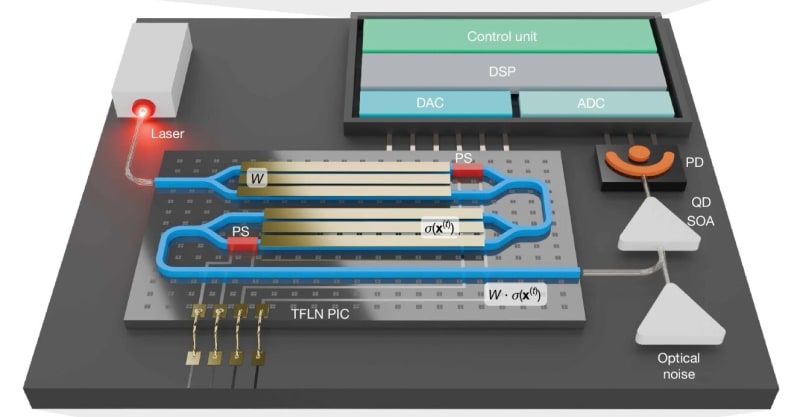
Researchers at Queen's University in Ontario built a machine that uses light pulses flowing through fiber optic cables to crack optimization problems that would take traditional computers longer than the age of the universe to solve. The breakthrough, published in Nature, shows these machines can finally work in the real world without exotic requirements.
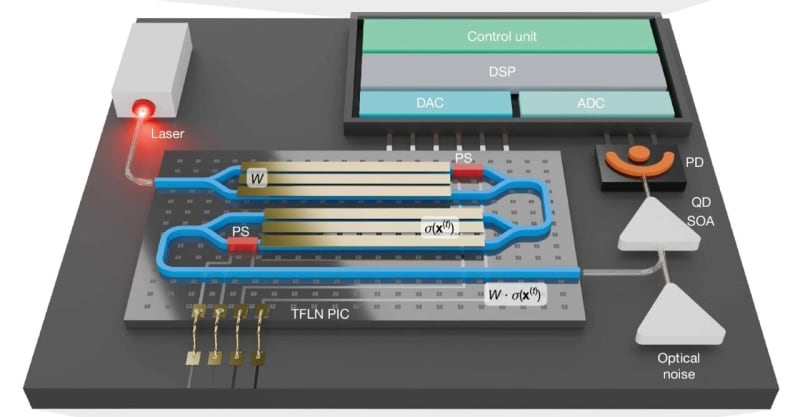
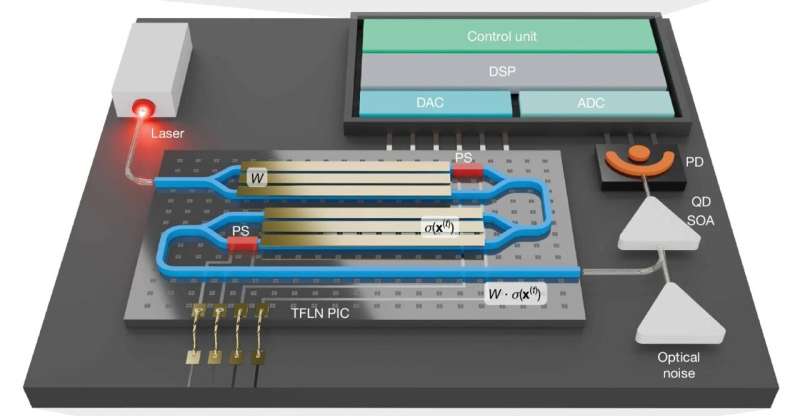
Professor Bhavin Shastri and his graduate students assembled the system using the same lasers, fiber optics, and modulators that already power internet infrastructure. No specialized materials. No extreme cooling. Just commercially available parts working together at room temperature.
The machine tackles problems like finding the best delivery route among millions of possibilities. With just five stops, there are 12 possible routes. Jump to 50 stops, and checking every option would literally take longer than the universe has existed.
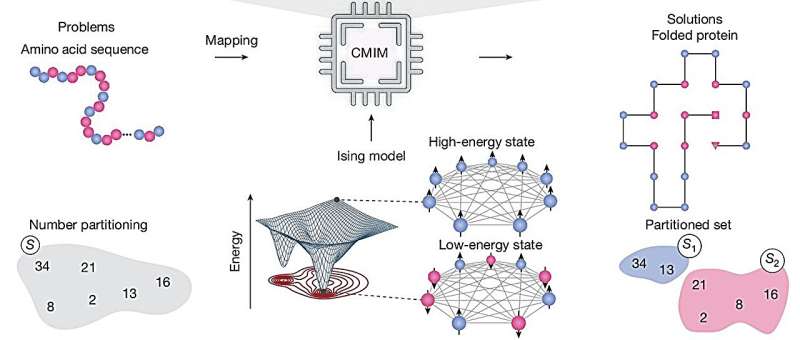
The system uses pulses of light that interact and settle into patterns representing solutions, similar to how a group reaches consensus through quick exchanges. Instead of checking every possibility one by one, the light pulses work together to find good answers in seconds.
What makes this different from previous attempts is its remarkable stability. Earlier optical computers could only operate for milliseconds before their calculations fell apart. The Queen's machine runs for hours at a time, performing billions of operations per second while staying accurate.
The team achieved 256 spins using just five basic components, matching or beating commercial efforts backed by billions of dollars. The simplicity matters because it means the technology can actually scale up and spread to real applications.
The Ripple Effect
This breakthrough reaches far beyond the lab. Online retailers could optimize millions of package deliveries in real time, saving fuel and getting orders to customers faster. Drug researchers could model how proteins fold, speeding up the search for new medicines. City planners could design better traffic systems. Cybersecurity experts could strengthen encryption methods.
The energy savings alone could prove transformative. Because the machine runs at room temperature instead of requiring extreme cooling like quantum computers, it consumes far less power while tackling the same types of complex problems.
Shastri and his team are now focused on scaling up the system, increasing the number of spins it can handle, and improving cost efficiency. They're also seeking industry partners for pilot projects to test the technology in real-world situations.
The researchers essentially proved that practical, powerful computers don't need to be impossibly complex or expensive to build, opening the door for wider adoption of this problem-solving approach.
More Images

Based on reporting by Google News - Technology
This story was written by BrightWire based on verified news reports.
Spread the positivity!
Share this good news with someone who needs it