Cancer Protein Could Reverse Alzheimer's Brain Damage
Scientists discovered that tumors release a protein that actually clears Alzheimer's plaques from the brain, explaining why cancer survivors rarely develop dementia. This breakthrough could lead to treatments that reverse existing damage instead of just slowing it down.
For years, doctors noticed something strange: people who beat cancer almost never develop Alzheimer's disease. Now scientists in China have figured out why, and it could change how we treat dementia forever.
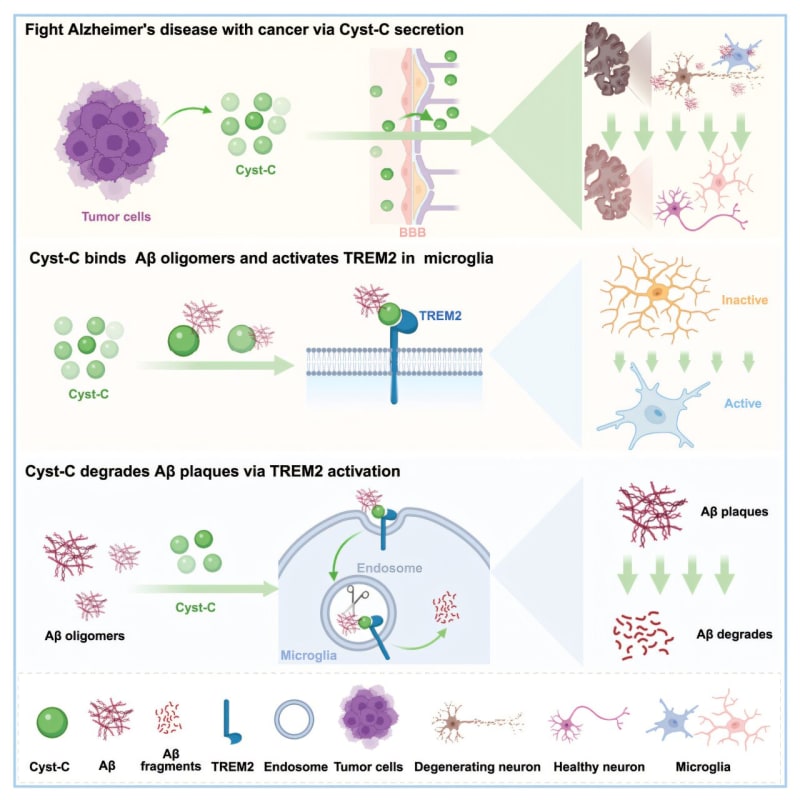
Researchers at Huazhong University of Science and Technology gave mice with Alzheimer's three different types of tumors. Within weeks, the toxic protein clumps clogging their brains started shrinking.
The secret turned out to be a protein called Cystatin-C that tumors pump into the bloodstream. This protein crosses into the brain and wakes up sleeping immune cells called microglia, essentially activating the brain's natural cleaning crew.
Once activated, these cells start breaking down the sticky amyloid plaques that kill brain cells and destroy memory in Alzheimer's patients. It's like the cancer accidentally turned on the brain's garbage disposal system.
To test whether this actually helped, researchers put the mice through a water maze where they had to remember the location of an escape platform. Alzheimer's mice normally struggle badly with this task.
But after treatment with purified Cystatin-C, the sick mice performed dramatically better. They remembered where to find the platform and escaped the water much faster than before.
The Bright Side
What makes this discovery so exciting is that it doesn't just slow down Alzheimer's. Most current treatments only try to prevent new damage from forming.
Cystatin-C actually reverses existing damage by clearing out plaques that are already there. That means patients who already have symptoms might see real improvement, not just a slower decline.
The research team published their findings in the journal Cell. Senior author Youming Lu says this opens up entirely new treatment possibilities that work differently from anything doctors have tried before.
Of course, scientists aren't suggesting people get cancer to prevent Alzheimer's. Instead, they can now develop drugs that mimic what the tumor protein does without any of cancer's dangers.
The next step is confirming these results work the same way in human brains as they do in mice. If they do, millions of families facing dementia could finally have hope for treatments that actually bring their loved ones back.
More Images
Based on reporting by Medical Xpress
This story was written by BrightWire based on verified news reports.
Spread the positivity!
Share this good news with someone who needs it