Canopy Bridges Give Sloths and Monkeys Safe Highway Crossings
Scientists in Peru are using rope bridges suspended high in the Amazon canopy to help monkeys, sloths, and porcupines safely cross fragmented forests. Their camera trap research is revolutionizing how we protect tree-dwelling wildlife threatened by roads and deforestation.
Deep in the Peruvian Amazon, researchers just proved that a simple idea can save lives: build bridges where animals need them most.
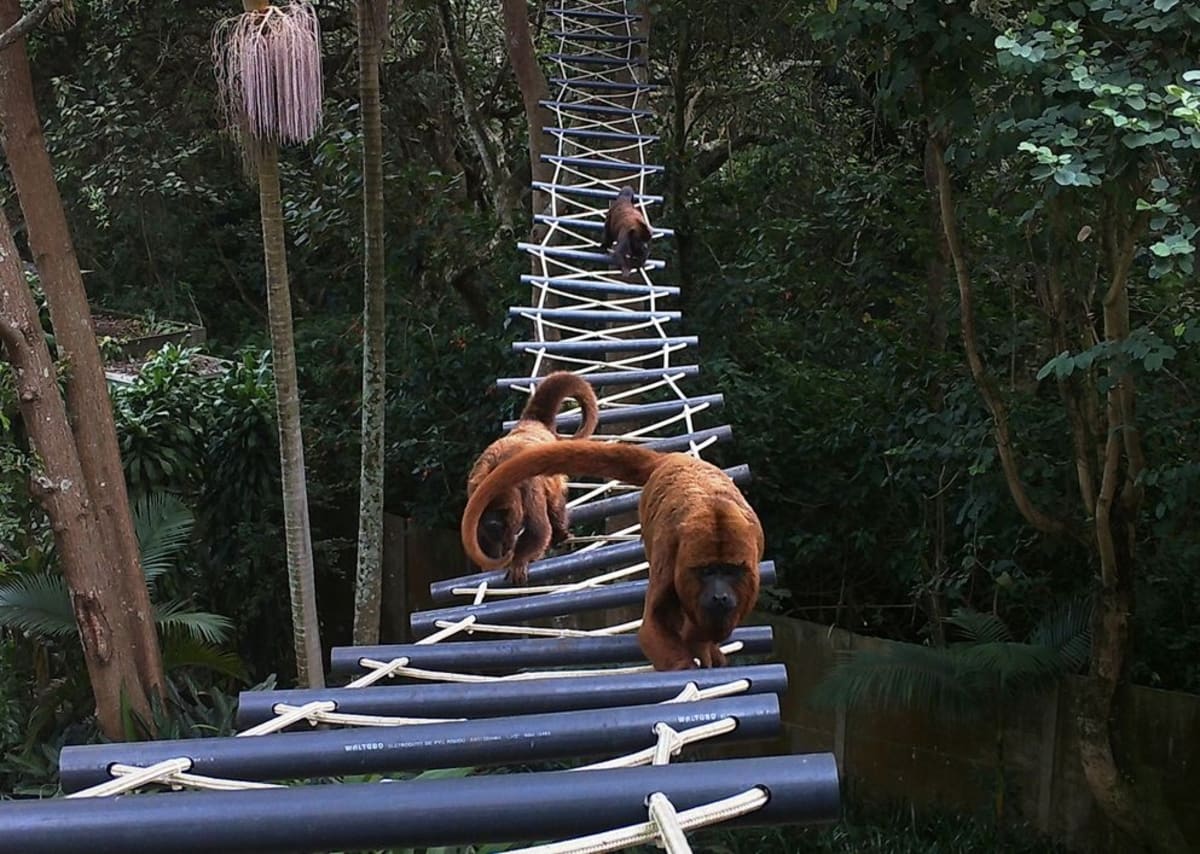
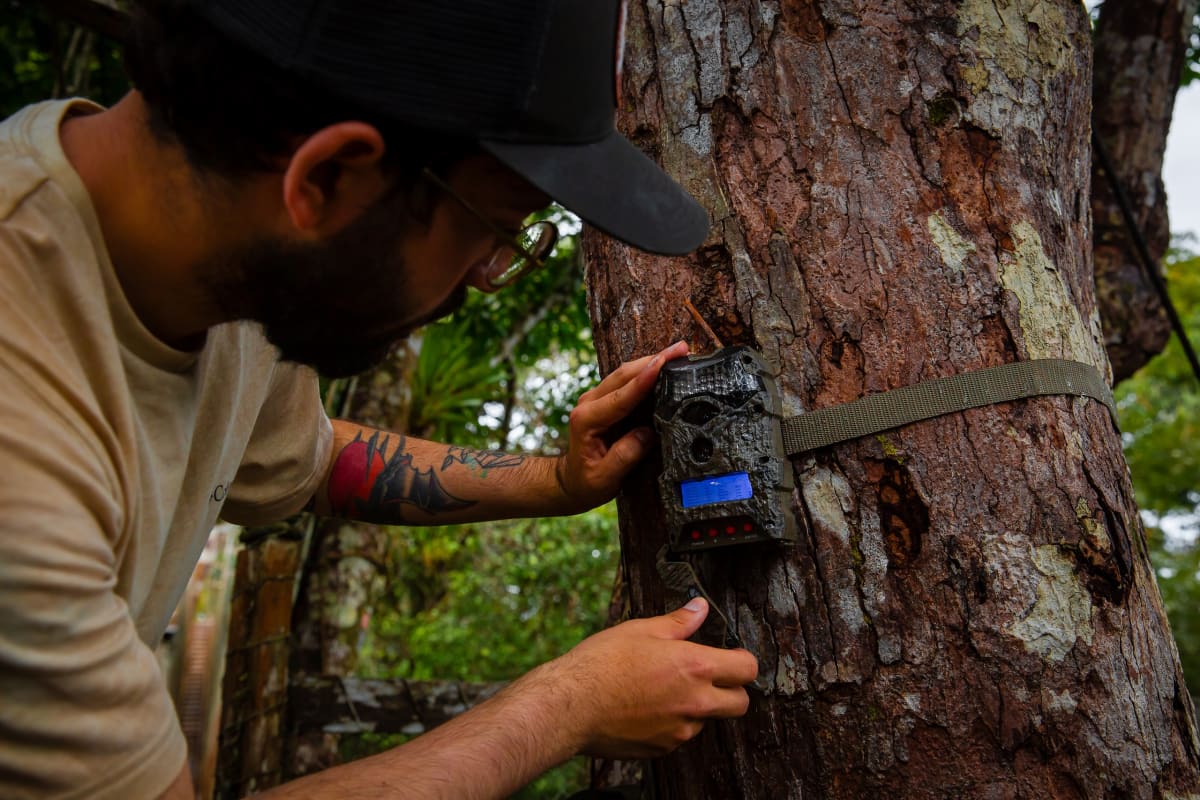
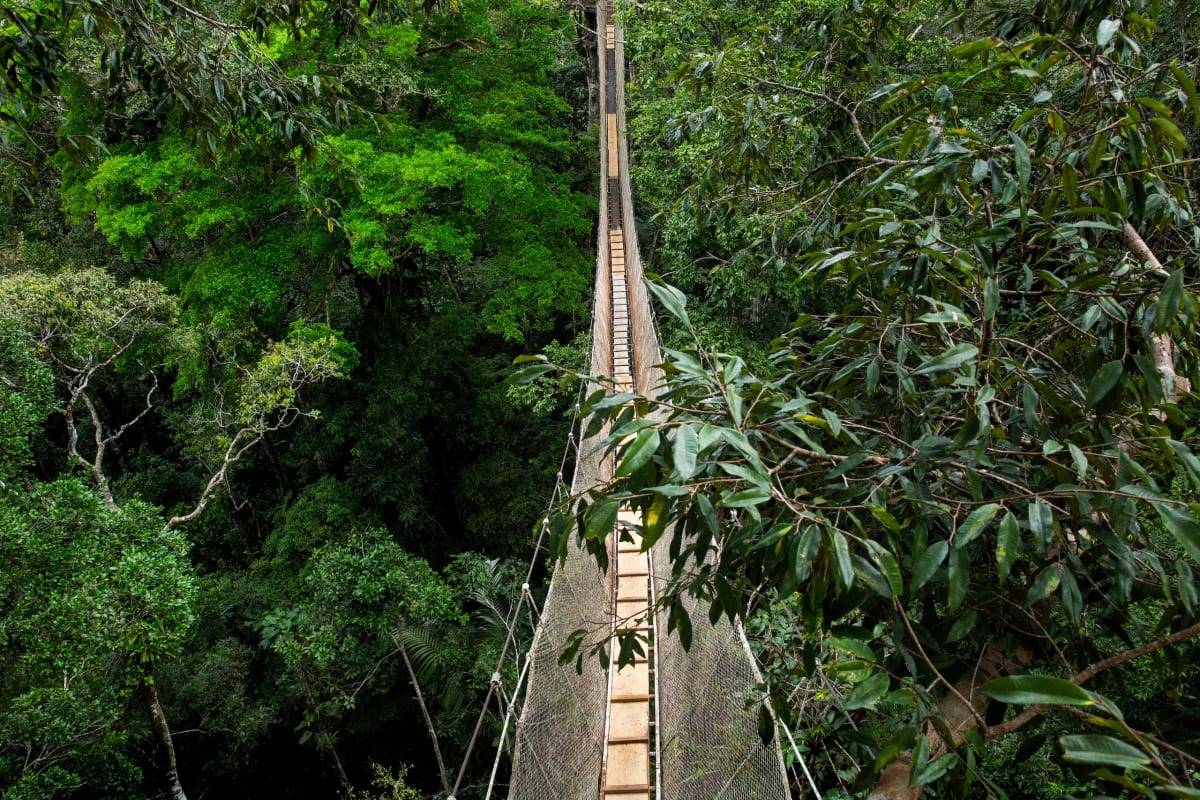
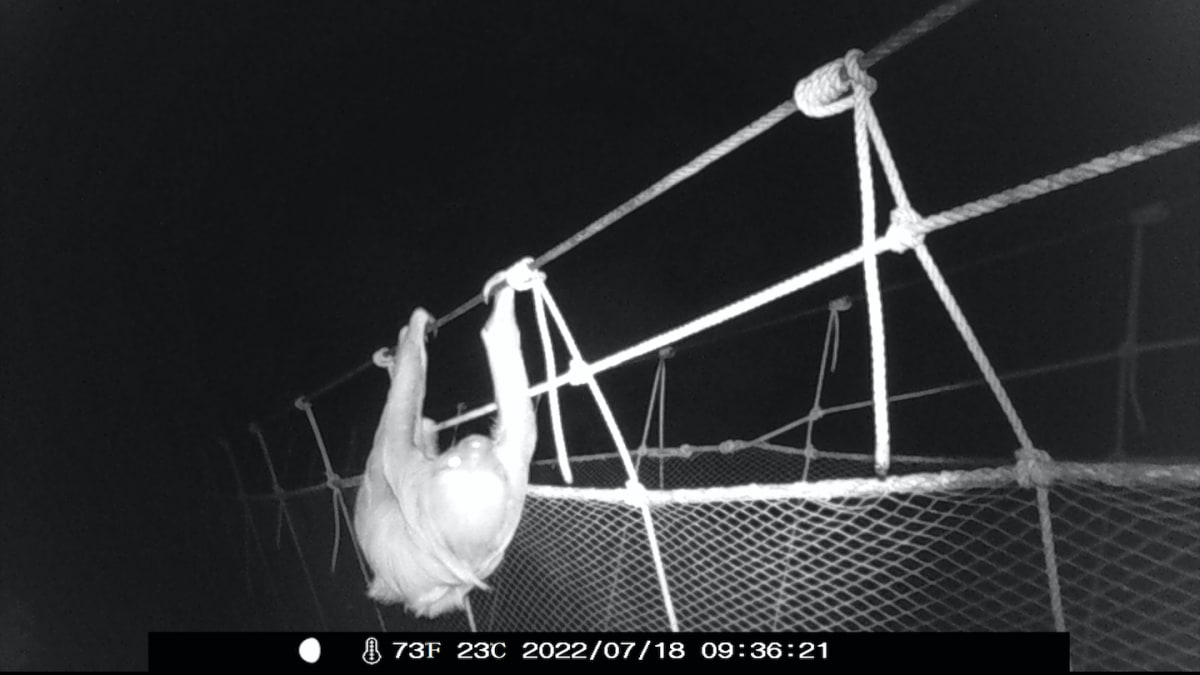
Biologists Justin Santiago and Lindsey Swierk from the State University of New York installed a network of rope bridges, nets, and platforms high in the forest canopy near Iquitos. For 21 days, their camera traps captured something remarkable: sloths, monkeys, and rare porcupines confidently using these artificial pathways to travel between treetops.
The timing couldn't be more critical. Across South America, highways and development projects slice through rainforests, leaving tree-dwelling animals stranded on isolated patches of forest. Without canopy connections, primates and sloths face a deadly choice: risk crossing roads at ground level or stay confined to shrinking habitat.
The cameras revealed behaviors scientists had never documented before. Saki monkeys, considered extremely sensitive to human interference, crossed the bridges repeatedly. Two-toed sloths navigated the ropes with ease. Even the Amazonian long-tailed porcupine, a species only formally identified in 2021, found the structures useful.
"Previously, studies were conducted through field surveys and with the help of tree climbers," Santiago told researchers. The bridge system allows scientists to study animal behavior far more effectively than ever before.
Wildlife specialist Fernanda Abra, who wasn't involved in the study but won international recognition for her own bridge work in Brazil, called the saki monkey findings groundbreaking. "Saki monkeys have never been recorded using man-made canopy bridges before this research," she said.
The Ripple Effect
The Peru study is transforming how conservationists protect wildlife across fragmented landscapes. By understanding which bridge designs work best in pristine forests, scientists can now build more effective crossings in areas where animals face the highest danger from roads and power lines.
Different monkey species move differently through trees. Some swing branch to branch, others jump, and some prefer walking along thick limbs. The camera data shows which rope thicknesses, platform heights, and net designs work for each species, giving engineers precise blueprints for future installations.
Abra's own project on the BR-174 highway through Indigenous territory in Brazil has already put these lessons into practice. The bridges reduce roadkill while maintaining genetic diversity by allowing isolated animal populations to reconnect and breed.
The approach is spreading across South America as countries expand infrastructure through rainforests. Each new bridge becomes both a lifeline for wildlife and a research opportunity, creating a growing database of what works where.
Santiago emphasized that international research shows consistent success: suspension bridges increase genetic flow for endangered species, reduce mortality near highways, and maintain connectivity between habitats.
For animals that have spent millions of years perfecting life in the treetops, these simple rope structures offer something priceless: a path forward in a rapidly changing world.
More Images
Based on reporting by Mongabay
This story was written by BrightWire based on verified news reports.
Spread the positivity!
Share this good news with someone who needs it