Carbon Blocks Store Wind Power for South Dakota Biofuel Plant
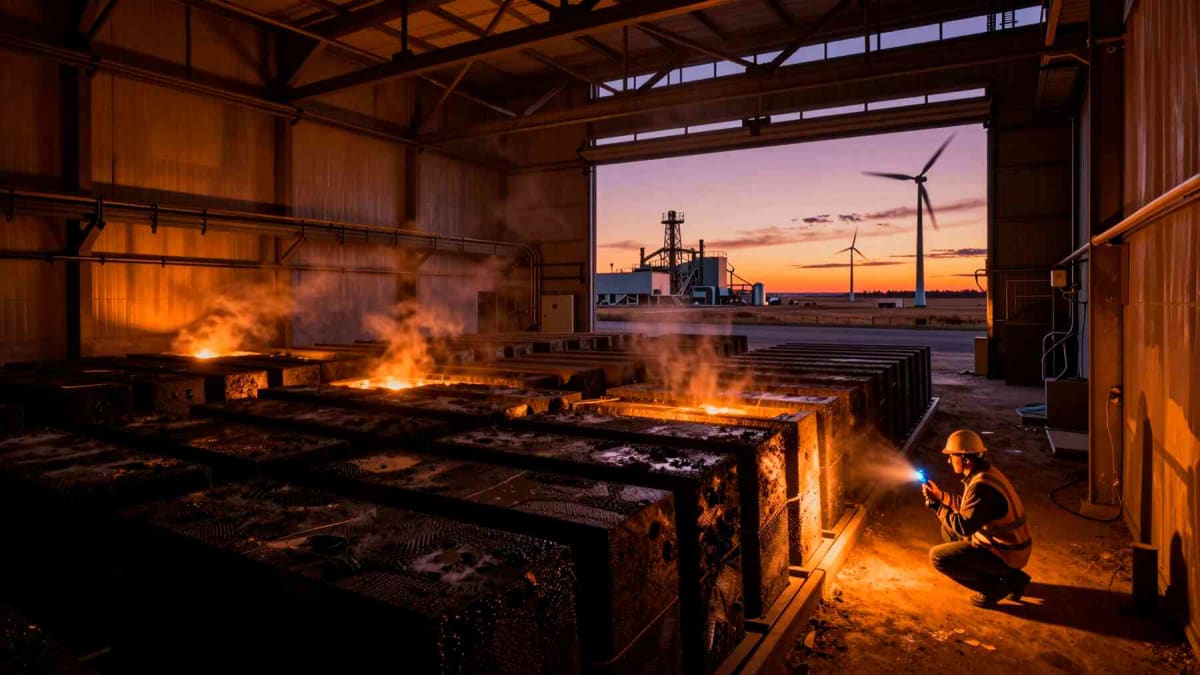
Solid carbon blocks are now storing wind energy as heat and powering a major biofuel facility in South Dakota—and the entire system went from construction to operation in under 12 months. This breakthrough could transform how American factories use renewable energy.
A biofuel plant in Big Stone City, South Dakota, is now running on wind energy stored inside solid carbon blocks—no lithium, no chemicals, just captured heat waiting to work.
The system is a 5 gigawatt-hour thermal battery built by Antora Energy, one of the largest energy storage projects operating anywhere in the world. It takes surplus electricity from nearby wind turbines and converts it into intense heat that dense carbon blocks absorb and hold for days.
That stored heat now flows directly into POET's bioprocessing plant next door, providing the continuous thermal energy needed to produce bioethanol around the clock. Industrial heating is one of the most energy-intensive parts of biofuel production, and having a reliable heat source changes the economics completely.
What makes this project remarkable isn't just the technology. The entire system went from breaking ground to delivering live energy in under 12 months—unusually fast for energy infrastructure at this scale.
The system isn't fully operational yet, with complete commissioning expected later in 2026. But energy is already flowing, and the speed suggests thermal storage has reached an engineering maturity that makes rapid scaling genuinely possible.
POET and Antora signed a long-term heat purchase agreement, giving Antora the revenue certainty to justify the investment while providing POET with stable energy costs. The arrangement also involved designing a special electric rate with Otter Tail Power that allows the battery to charge during surplus energy periods without raising costs for other customers.
The South Dakota Public Utilities Commission approved the structure last year. Local communities aren't paying more so this factory can run cleaner.
The Ripple Effect
This project arrives as the United States works to expand domestic energy production and reduce reliance on imported fuels. Industrial facilities that can absorb surplus renewable energy and store it for continuous use fit directly into that goal.
Antora CEO Andrew Ponec calls it "reindustrialization"—American innovation supporting domestic supply chains across a dozen states and creating jobs from factory floors to construction sites. Senator Mike Rounds pointed to the project's economic impact and contribution to energy independence, showing its bipartisan appeal.
If a 5 gigawatt-hour thermal battery can deploy this quickly without raising community costs, it becomes a template. Other industrial facilities with high heat demand and access to surplus renewable electricity could follow the same path.
The question isn't whether thermal storage can work at industrial scale anymore—in South Dakota, it already does.
More Images


Based on reporting by Google News - Wind Energy
This story was written by BrightWire based on verified news reports.
Spread the positivity!
Share this good news with someone who needs it