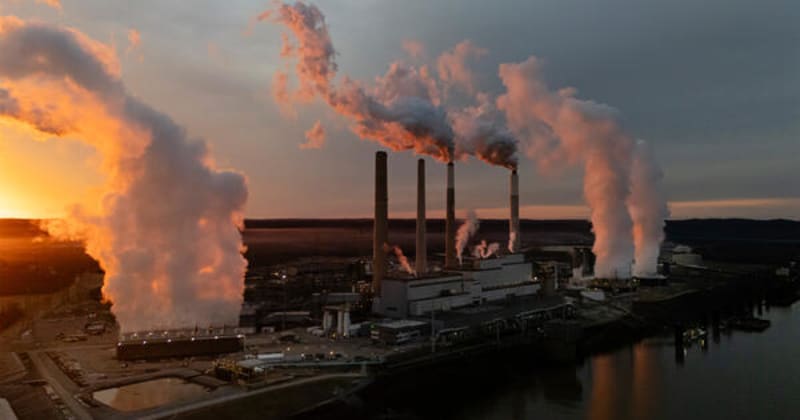
Carbon Disclosure Law Sparked 3% Jump in New Businesses
A federal emissions reporting program designed to cut pollution had an unexpected bonus: it fueled a wave of new business creation. Yale researchers found the rule sparked entrepreneurship while still benefiting the economy.
When the government started making big polluters report their carbon emissions in 2010, something surprising happened beyond cleaner air. Thousands of new businesses sprang up across America.
Yale researchers discovered that the Greenhouse Gas Reporting Program increased new business formation by 3% in regulated industries. The finding challenges recent claims that environmental transparency rules only hurt the economy.
The program requires any facility emitting more than 25,000 metric tons of carbon dioxide annually to publicly report those numbers. That's roughly equivalent to the emissions from 5,400 cars driven for a year.
Professors Raphael Duguay and Frank Zhang, along with researcher Chenchen Li, analyzed county-level business data from 2009 to 2014. They compared regulated industries like manufacturing to low-emission sectors like arts and entertainment.
Two forces drove the entrepreneurial boom. First, established companies facing public scrutiny cut production to reduce emissions, creating market opportunities for newcomers. When supply dropped and prices rose, entrepreneurs stepped in to fill the gap.
Second, the disclosure rules accidentally handed competitors valuable intel. Because chemical manufacturing follows fixed equations, savvy entrepreneurs could reverse-engineer production methods and output levels from emission reports. Information that once cost millions in market research became publicly available.
The Bright Side
The economic benefits run deeper than just new storefronts. More businesses mean fiercer competition, which typically translates to better prices for consumers and increased productivity across the board.
"Business entry ties into competition, and more competition usually means more productivity and better prices for consumers," Duguay explains. The research suggests environmental transparency can strengthen markets rather than weaken them.
The findings arrive as debate intensifies over such programs. EPA Administrator Lee Zeldin announced plans in 2025 to repeal the reporting requirement, claiming it "costs American businesses and manufacturing billions of dollars."
The Yale study reveals a more nuanced picture. While established firms invested in cleaner technology and R&D, emerging businesses operated below the reporting threshold for roughly 16 years after going public. Their emissions remained invisible, potentially offsetting some environmental gains.
Still, the data contradicts claims of economic harm. The program didn't stifle American entrepreneurship. It ignited it.
The research demonstrates how transparency rules can create unexpected economic opportunities while pursuing environmental goals.
Based on reporting by Google News - Researchers Find
This story was written by BrightWire based on verified news reports.
Spread the positivity!
Share this good news with someone who needs it