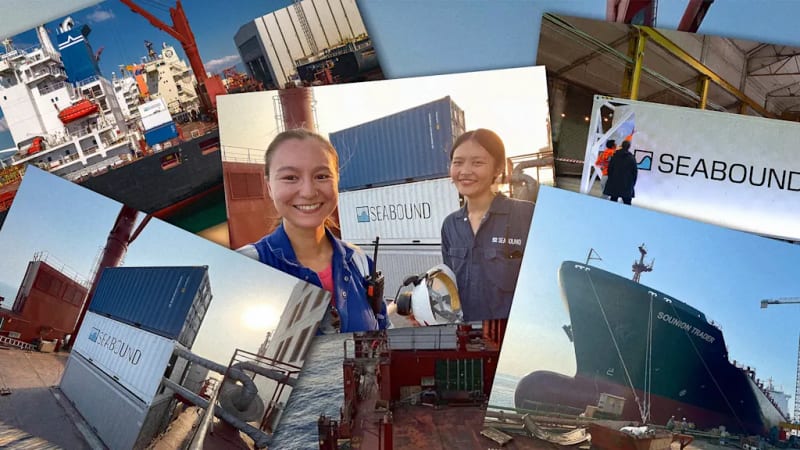
Cargo Ships Now Turn Pollution Into Limestone Building Block
A London startup just solved one of shipping's toughest environmental challenges by capturing CO2 from cargo ship exhaust and turning it into usable limestone. The technology could clean up pollution from tens of thousands of ships already on the ocean.
Cargo ships pump out 973 million metric tons of CO2 every year, but a simple metal box might change that. London startup Seabound has created technology that captures 95% of the carbon pollution from ship exhaust and transforms it into something useful: limestone.
The innovation comes at a critical moment for the shipping industry. Clean fuels exist but remain scarce and expensive, costing two to three times more than conventional options. Meanwhile, cargo ships built to last decades can't easily switch to new fuel systems.
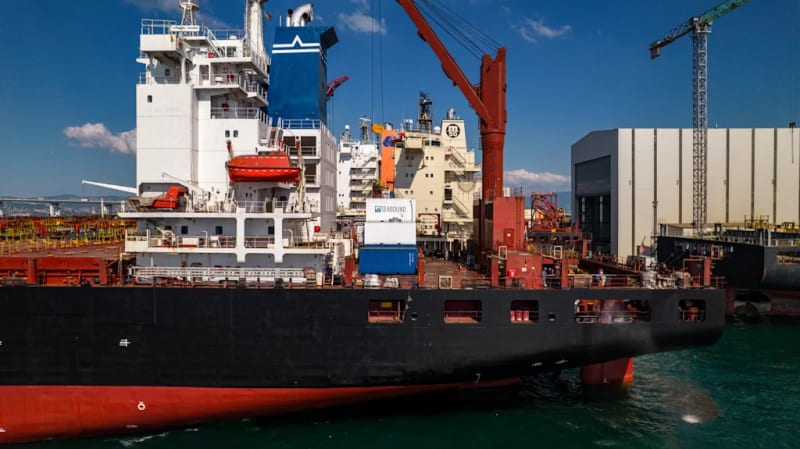
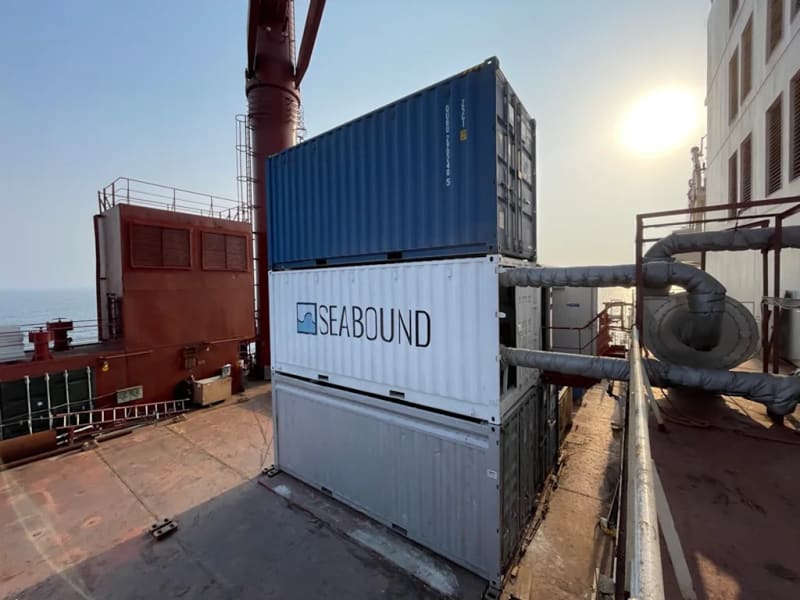
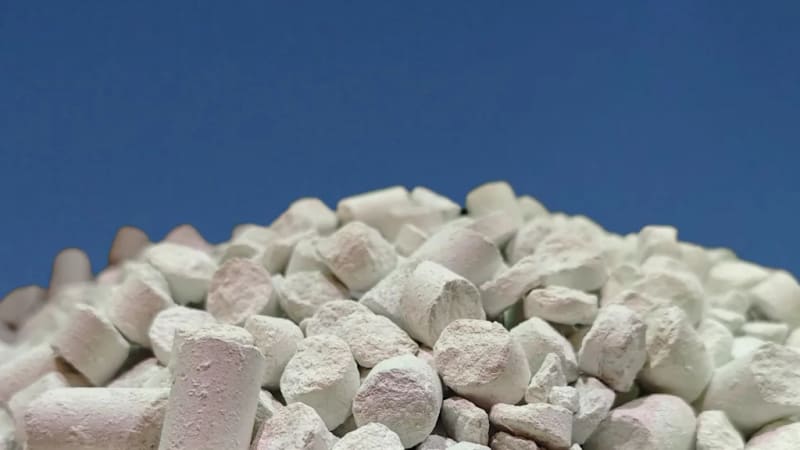
That's where Seabound's modular containers come in. Each standard shipping container holds millions of marble-sized pellets of calcium hydroxide, commonly known as lime. When exhaust from the ship's engine flows through these pellets, the CO2 reacts with the lime to create limestone.
The pellets shift from white to off-white as they capture carbon and soot from the exhaust. Multiple containers connect together to capture pollution during an entire voyage. When the ship reaches port, a crane simply lifts off the containers full of limestone.
What happens to all that captured carbon? The limestone becomes a valuable building material. Alternatively, Seabound can reverse the chemical reaction to pull the CO2 back out for permanent storage or use in making fuels and chemicals, then reload the lime for another voyage.
The first real-world test begins later this year with Heidelberg Materials. A cement ship traveling Norway's coast will use the containers to capture CO2, and Heidelberg will use that limestone in its kiln to make cement. The company's kilns also capture carbon for permanent storage, creating a double environmental benefit.
The Ripple Effect
The timing matters because cargo ships account for 2.5% of global emissions, and the transition to clean fuels will take years. Seabound's 30-year-old CEO Alisha Fredriksson recognized this gap after working as a consultant in the space. She cofounded the company in 2021 to address the tens of thousands of ships already on the ocean, not just future vessels.
The beauty of the solution lies in its simplicity. Ships don't need engine retrofits or expensive fuel system overhauls. The containers connect to existing exhaust systems and work with current operations. Ports already have the cranes needed to swap containers.
As other technologies like wind power slowly enter the shipping industry, Seabound tackles the immediate problem of today's fleet. The startup spent years developing and testing the technology before preparing for commercial deployment. Now that preparation is paying off with a solution that turns a pollution problem into a building material resource.
Clean shipping just got a whole lot more achievable.
More Images

Based on reporting by Fast Company - Innovation
This story was written by BrightWire based on verified news reports.
Spread the positivity!
Share this good news with someone who needs it