Carnegie Mellon Opens 150,000-Sq-Ft Robotics Innovation Hub
Carnegie Mellon University just opened a massive new robotics facility that could change how we develop autonomous systems for everything from disaster response to space exploration. After 40 years of pioneering real-world robotics, the school is scaling up with specialized environments to test land, air, and water-based robots.
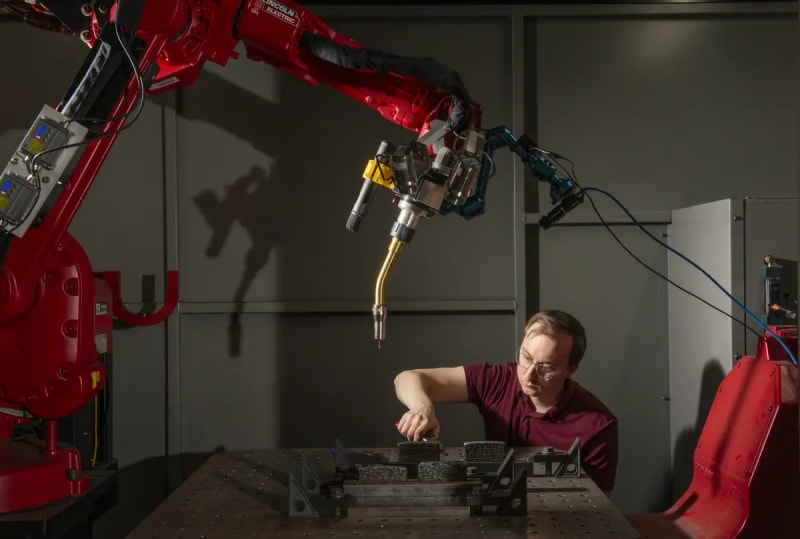
Carnegie Mellon University just opened a 150,000-square-foot robotics facility that represents the next giant leap in autonomous technology. The Robotics Innovation Center, opening February 27 at the redeveloped Hazelwood Green steel mill site, gives researchers specialized environments to test robots designed for Earth's most extreme conditions and beyond.
The new center marks a milestone for a university that literally invented academic robotics. In 1979, CMU launched the world's first Robotics Institute with a radical idea: robots needed to do more than move parts around in factories.
"Since the beginning, the Robotics Institute was built to bring together the full range of capabilities required for autonomous systems," said Raj Reddy, founding director and computer science professor. The approach meant building machines that could see, think, and act on their own in unpredictable real-world settings.
That vision led to breakthrough after breakthrough. After the 1979 Three Mile Island nuclear disaster, CMU researchers developed the Remote Reconnaissance Vehicle to explore areas too dangerous for humans. Their space exploration robots learned to make decisions when human controllers were too far away to help in real time.
CMU teams dominated DARPA's autonomous vehicle challenges, laying groundwork for today's self-driving car technology. Other projects explored how robots could work safely alongside people in hospitals and offices, solving problems that labs alone couldn't address.
The university attracted early support from the Office of Naval Research and companies like Westinghouse precisely because it focused on complete robotic systems, not just individual mechanical components. That full-system thinking created robots that descended into volcanic craters, won autonomous driving competitions, and eventually journeyed to space.
The Ripple Effect
The new facility does more than expand research capacity. It's transforming a former steel mill into what officials call "a nexus for Pittsburgh's new industrial revolution," bringing cutting-edge technology jobs to a historic manufacturing site.
The center will accelerate work on autonomous systems for manufacturing, healthcare, disaster response, and exploration. With specialized testing environments under one roof, researchers can move faster from concept to real-world deployment.
Carnegie Mellon's approach shows what happens when institutions think decades ahead and a 40-year investment in robotics research is now powering solutions for challenges we're only beginning to face.
Based on reporting by Google: robotics innovation
This story was written by BrightWire based on verified news reports.
Spread the positivity!
Share this good news with someone who needs it