China Tests Flying Wind Turbines at 6,500 Feet
A Chinese company just launched a balloon-supported wind farm that floats two kilometers above ground, tapping into stronger, steadier winds than traditional turbines. The prototype is already feeding clean electricity into the grid.
Imagine a wind farm that floats higher than most mountains, catching winds that never stop blowing.
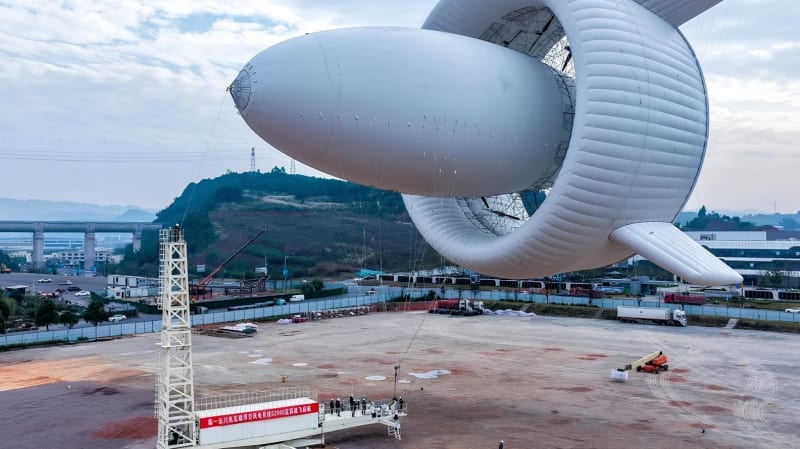
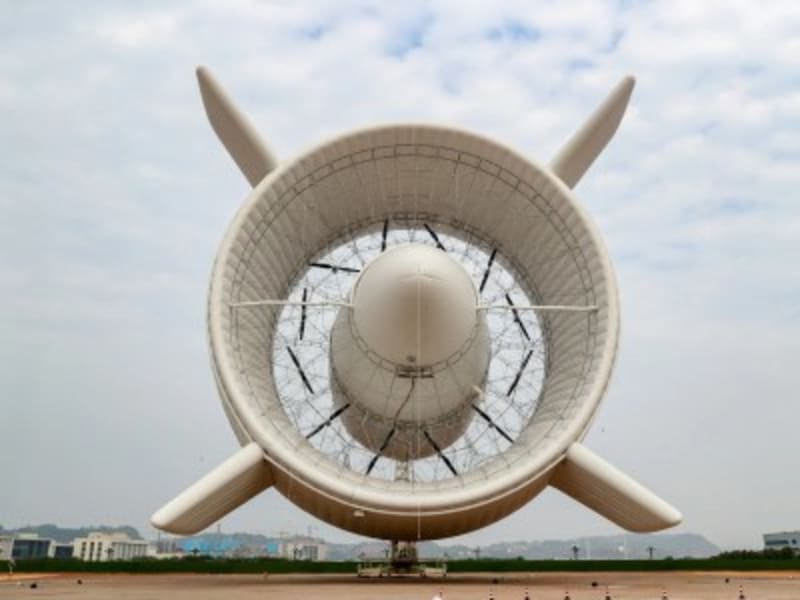
That's exactly what Beijing Lanyi Yuncharan Energy Technology Co. just demonstrated in Yibin, China. Their Stratosphere Airborne Wind Energy System recently completed its first test flight at 2,000 meters above ground, generating power from winds that surface turbines can never reach.
The system looks like something from science fiction: a massive double-hulled aerostat (think blimp) measuring 60 meters long and 40 meters wide. Twelve turbines sit inside the ring-shaped structure, with the outer balloon apparently funneling wind directly into them.
During its January 2026 test flight, the floating power plant generated 385 kilowatt-hours in just 30 minutes. That's enough electricity to power an average home for about two weeks, and the prototype was running at only 25% capacity during this cautious first run.
The location matters too. Yibin sits well inland, protected from typhoons and ocean storms that could threaten the floating system. It's the perfect testing ground for technology that needs calm conditions to prove itself.
Wind energy faces a fundamental problem: the closer you get to Earth's surface, the more turbulent and inconsistent the wind becomes. Mountains, buildings, and even trees create chaos in the air. Traditional wind turbines solve this by building taller towers, but there's only so high you can go with steel and concrete.
Why This Inspires
This floating approach sidesteps the tower problem entirely. At 2,000 meters up, winds blow stronger and steadier almost all the time. The system's three-megawatt peak capacity matches some ground-based turbines, but with massive room to scale up since aerostats can be built much larger than what's floating over Yibin today.
The engineering challenges are real. The company chose helium over hydrogen for safety, even though helium costs more. They built a double-hull design that might naturally accelerate wind into the turbines, though engineers will need more testing to understand the airflow fully.
Other companies and inventors have tried flying wind turbines before, from homemade kite generators to professional prototypes. What makes this different is the scale and the milestone: it's actually feeding electricity into a real power grid right now, not just generating proof-of-concept power.
The technology isn't perfect yet, and questions remain about long-term durability, helium costs, and how to keep aircraft from hitting the tethers. But every revolutionary technology starts with a working prototype that proves the concept can move from paper to reality.
Clean energy just got a lot more creative.
More Images


Based on reporting by Google News - Wind Energy
This story was written by BrightWire based on verified news reports.
Spread the positivity!
Share this good news with someone who needs it