Caterpillars Use Secret Rhythm to Trick Ants Into Care
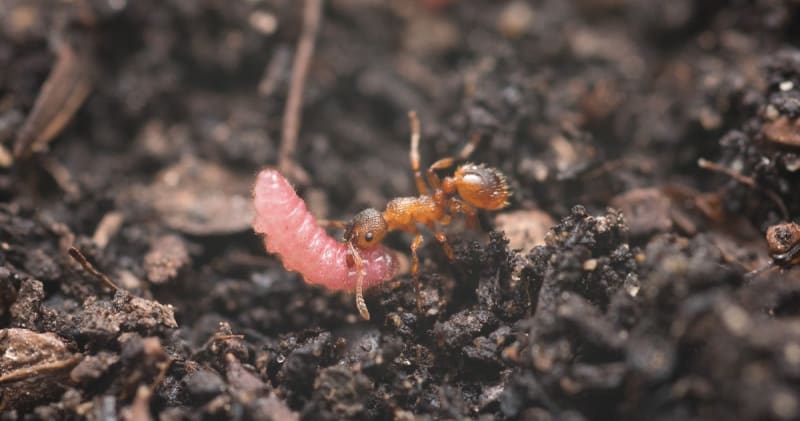
Scientists discovered caterpillars produce complex rhythms previously only found in primates to convince ants to adopt them. The tiny insects mastered a rare "double meter" beat that mimics queen ant vibrations.
Some caterpillars have learned to speak the secret language of ants, and it's changing what we know about rhythm in the animal kingdom.
Researchers at the University of Warwick found that certain butterfly caterpillars create complex rhythmic vibrations to trick ants into carrying them home and caring for them. The discovery, published in Annals of the New York Academy of Sciences, reveals these tiny creatures use a rare rhythm called double meter that scientists have only documented in a handful of primates.
Chiara De Gregorio, who studies animal behavior, couldn't believe what her team found. The caterpillars weren't just making random sounds to get attention.
They were keeping precise, sophisticated beats that matched the vibrations of queen ants. When ants rub hardened parts of their abdomens together, they create vibrations to communicate with their colony.
The clever caterpillars somehow learned to mimic both the pitch and rhythm of these royal signals. Scientists still aren't sure exactly how the caterpillars produce these vibrations, but the effect is unmistakable: ants hear what sounds like their queen and dutifully carry the caterpillar into their nest.
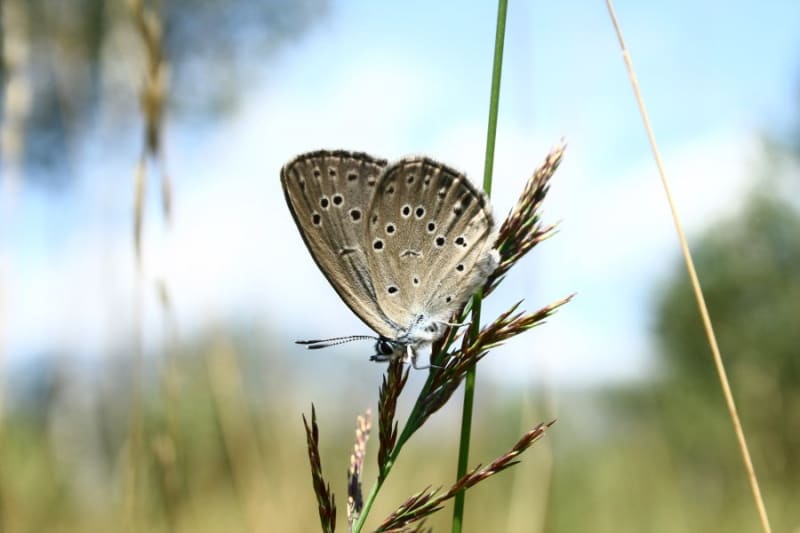
The research team traveled to northern Italy to collect ant nests and caterpillars from nine related butterfly species. Some of these caterpillars absolutely depend on ant care to survive, while others can manage on their own or have no connection to ants at all.
Using acoustic analysis software, the researchers recorded and analyzed the vibrations from each insect. To human ears, the sounds just seemed like noise, but the patterns revealed something remarkable.
All the insects could produce a steady, pulsing beat called isochrony. "We were already shocked when we found really regular metronomic isochronous signal," De Gregorio said.
But the caterpillars who required ant care took it further. They produced double meter, where one beat lasts either twice or half as long as the following beat.
Birds don't use this rhythm at all. Only a couple of primate species have been observed creating it in their vocalizations, until now.
Why This Inspires
This discovery shows that evolution finds creative solutions in the most unexpected places. These tiny caterpillars developed a communication skill so sophisticated that scientists assumed only our closest animal relatives could master it.
The finding also reminds us how much we still have to learn about the natural world. Every time researchers look closer at insects, plants, or other creatures we might overlook, they find new wonders.
De Gregorio and her team plan to continue studying how ants respond to different caterpillar rhythms. They want to understand exactly what makes the secret knock work so well.
"The more we study rhythm, the more we see it in so many different animal species," De Gregorio explained. "Evolution works in very weird and funny ways."
Sometimes the smallest creatures teach us the biggest lessons about communication and survival.
More Images

Based on reporting by Scientific American
This story was written by BrightWire based on verified news reports.
Spread the positivity!
Share this good news with someone who needs it