Cave Microbes Expand Search for Life Beyond Earth
Scientists discovered glowing green bacteria thriving in complete darkness inside New Mexico caves, photosynthesizing with invisible light. This breakthrough suggests life could exist in dark environments across the universe we never thought possible.
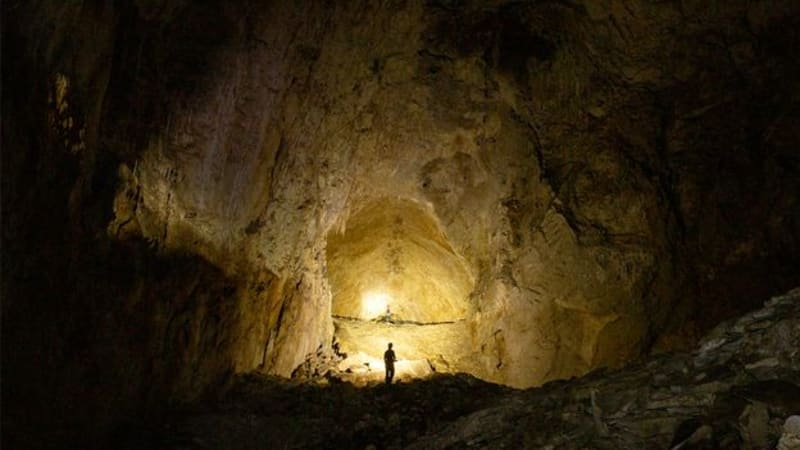
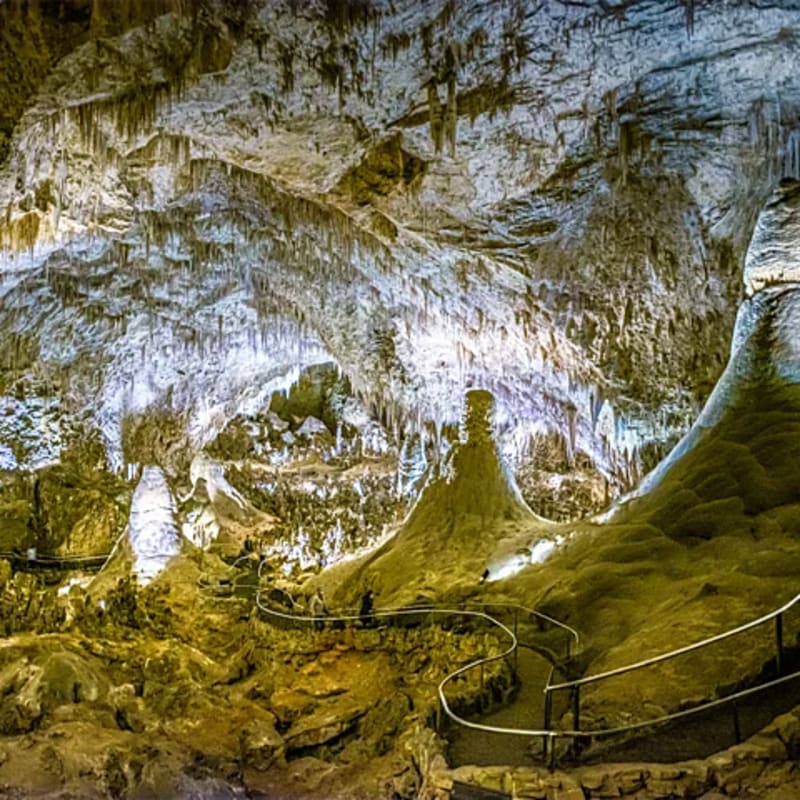
Deep inside New Mexico's Carlsbad Caverns, scientists stumbled upon glowing green microbes living where no light should reach, and the discovery just rewrote the rules for finding alien life.
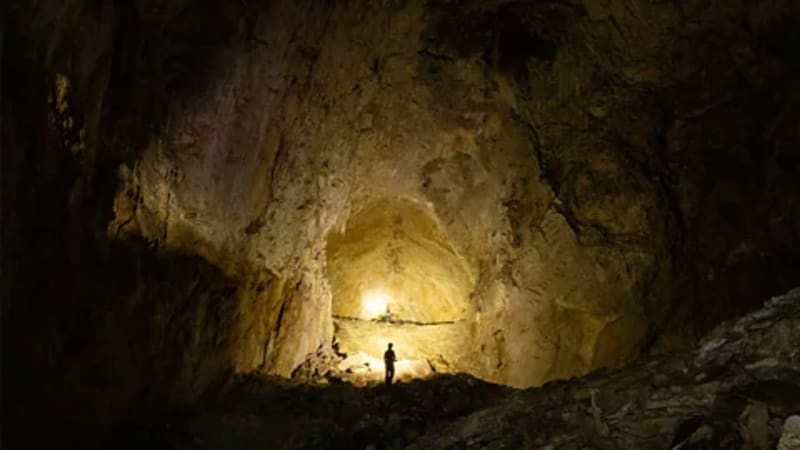
When cave biologist Hazel Barton ventured into a pitch-black alcove inside the 4 million year old cave system, she spotted something impossible. Thick blankets of iridescent green bacteria covered the walls, thriving in total darkness where even flashlights were needed to see.
The green organisms turned out to be cyanobacteria, the same single-celled creatures that normally need sunlight to survive. But these cave dwellers had adapted something remarkable: they were photosynthesizing using near-infrared light, a wavelength completely invisible to human eyes.
While visible sunlight only penetrates a few hundred feet into caves, near-infrared light bounces much deeper thanks to the reflective limestone walls. "To near-infrared light, caves are pretty much a hall of mirrors," explains Barton, a professor at the University of Alabama.
The team measured light levels in the darkest depths and found near-infrared concentrations 695 times higher than at the cave entrance. The bacteria use special versions of chlorophyll that can capture this invisible light for energy, allowing them to thrive where scientists thought photosynthesis was impossible.
Researcher Lars Behrendt from Uppsala University tested other remote caves in the Carlsbad network and found the same photosynthesizing microbes everywhere. The bacteria have likely lived undisturbed in these conditions for 49 million years.
Why This Inspires
This discovery means life could flourish in dark places throughout our solar system and beyond that we previously dismissed as uninhabitable. Mars caves, underground oceans on icy moons, or shadowy crevices on distant planets might harbor similar organisms using invisible light wavelengths.
The findings challenge our Earth-centric assumptions about where to look for life. If bacteria can photosynthesize in near-total darkness here, similar processes might sustain ecosystems in the shadowy corners of other worlds.
Nearly 350,000 tourists walk past these hidden microbes each year in Carlsbad Caverns without realizing they're standing next to one of the decade's most important astrobiology discoveries. The cave system is so accessible that parts are wheelchair-friendly, yet it holds secrets that could guide humanity's search among the stars.
The glowing green walls in the darkness remind us that life finds ways to thrive in the most unexpected places, both here and potentially across the cosmos.
More Images

Based on reporting by Google News - Researchers Find
This story was written by BrightWire based on verified news reports.
Spread the positivity!
Share this good news with someone who needs it