Central Asia Tackles Climate With Action Over Talk
Kazakhstan and Central Asian nations are ditching endless climate discussions for real solutions that are already cutting emissions and improving lives. From slashing gas flaring by 75% to planning major water security reforms, the region is proving climate action can deliver both environmental wins and economic gains.
📺 Watch the full story above
When Kazakhstan banned routine gas flaring in 2012, the country didn't just make a promise. It cut emissions from over 4 billion cubic meters to under 1 billion in just over a decade, proving that rapid climate progress is possible when nations stop talking and start doing.
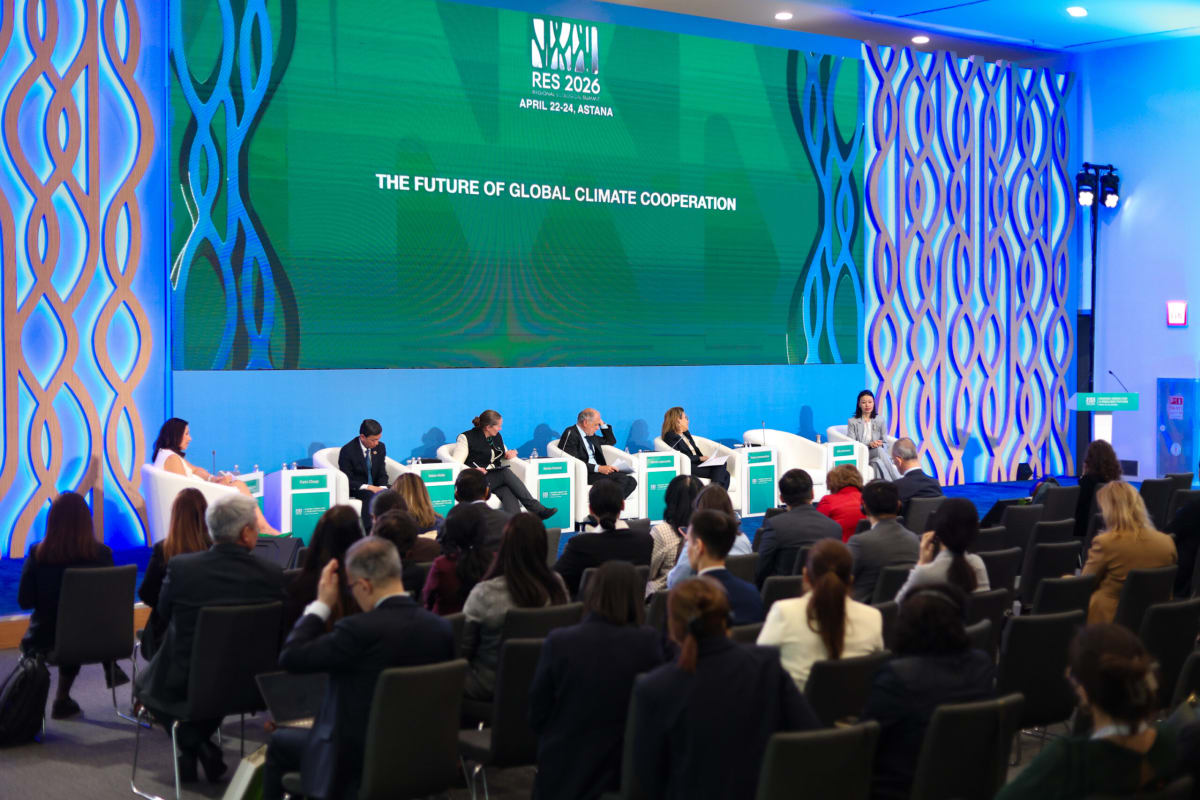
That action-first mindset took center stage this week at the Regional Ecological Summit in Astana, where leaders from across Central Asia gathered with a refreshingly clear message. "We don't want to discuss the problems. We know what the problems are. We want to discuss the solutions," said Zulfiya Suleimenova, Kazakhstan's ambassador-at-large for the Foreign Ministry.
The shift comes as research shows humanity has already crossed seven of nine planetary boundaries, making the need for tangible results more urgent than ever. But instead of dwelling on doom, Central Asian nations are rolling up their sleeves with initiatives that are already working.
Kazakhstan is now pursuing similar legislation to eliminate routine venting, which could generate an additional $300 million annually by capturing gas that's currently wasted. The country is also preparing to host discussions for a proposed international water organization within the UN, addressing water scarcity that's now affecting even countries never considered at risk.
Valerie Hickey, director for environment at the World Bank Group, framed the moment as an economic opportunity rather than just an environmental challenge. "We're in the midst of a new industrial revolution, driven by new climate technologies, which are shifting how we think about energy and water," she explained.
The World Bank has already committed around $1 billion across Central Asia to modernize energy systems, improve regional trade, and ensure reliable power supply. These aren't distant promises but active investments reshaping infrastructure today.
Why This Inspires
What makes Central Asia's approach powerful is its focus on people's quality of life. Suleimenova emphasized that when communities see tangible improvements through climate action, like cleaner air, reliable energy, and economic gains, public support deepens naturally. It's climate policy that doesn't ask people to sacrifice but instead delivers better living conditions while protecting the planet.
The region is backing up its commitment with a wave of upcoming environmental events, including the 8th Global Environment Facility Assembly in Uzbekistan, a World Urban Forum in Azerbaijan, and a biodiversity conference in Armenia. These gatherings aim not for more summits but for outcomes that communities can feel in their daily lives.
Hickey noted that most climate action is already financed domestically through public budgets and private investment, showing that solutions don't require waiting for global agreements. "It is time to move away from platforms that are not delivering results and scale those that are working," she said.
Central Asia's message to the world is simple: the time for climate debate is over, and the era of measurable climate solutions has begun.
Based on reporting by Google News - Climate Solution
This story was written by BrightWire based on verified news reports.
Spread the positivity!
Share this good news with someone who needs it