Cereal Box-Sized Satellite Maps Stars for Habitable Worlds
NASA's tiny SPARCS spacecraft just sent home its first images from space, proving it can hunt for habitable planets around the galaxy's most common stars. The shoebox-sized telescope uses breakthrough technology to watch distant suns in ultraviolet light, helping scientists answer which alien worlds might support life.
A spacecraft smaller than a cereal box just took its first step toward answering one of humanity's biggest questions: where else in the galaxy could life exist?
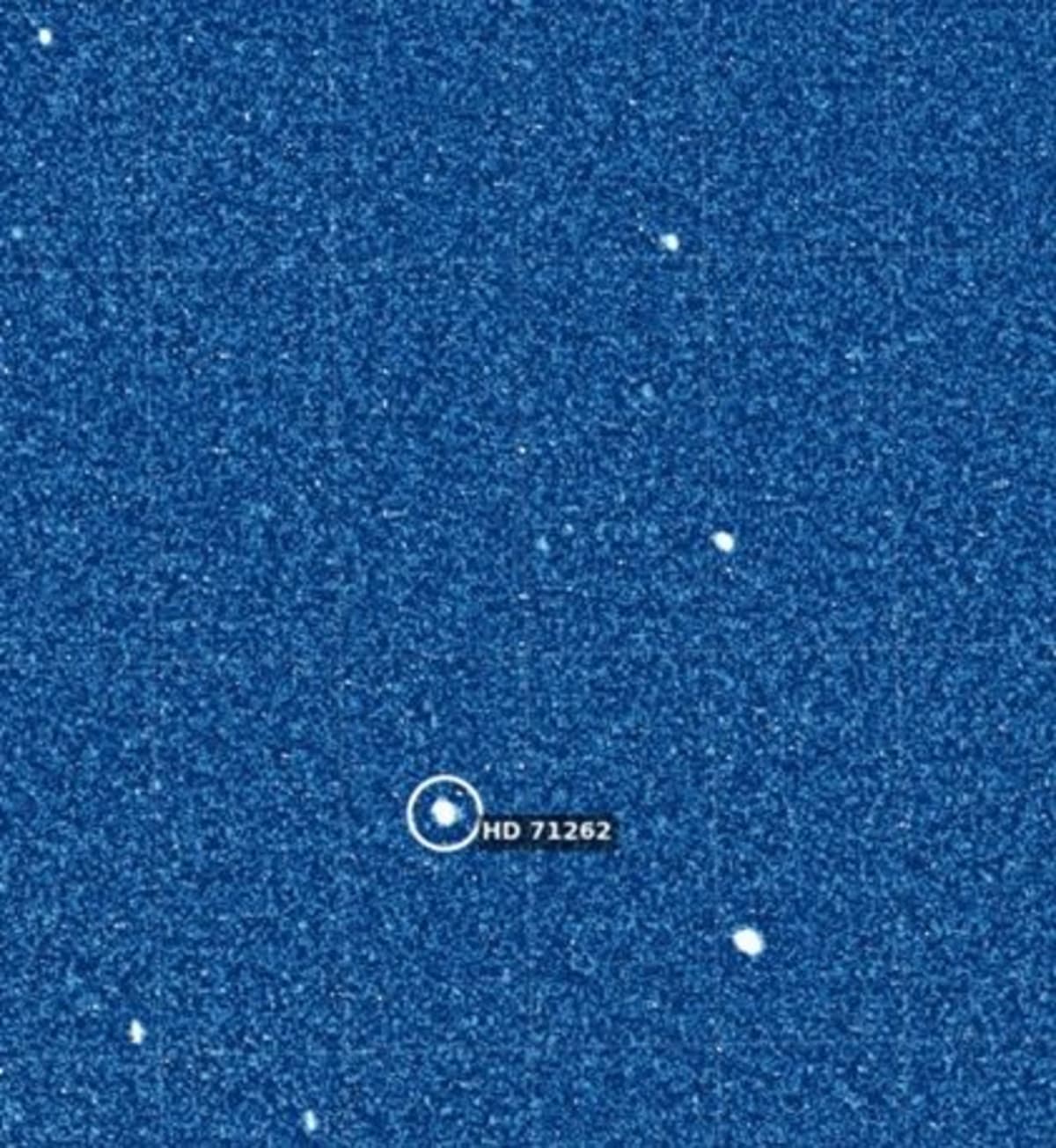
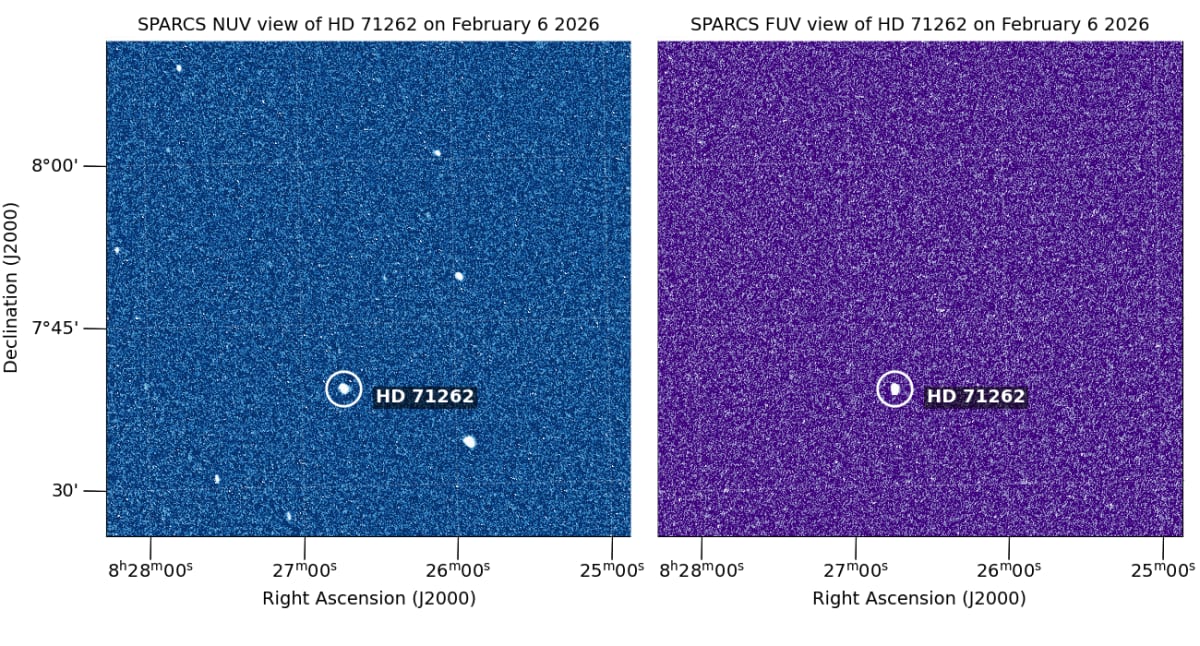
NASA's Star-Planet Activity Research CubeSat, nicknamed SPARCS, beamed down its first ultraviolet images in February after launching in January 2026. The tiny telescope works perfectly, confirming it's ready to study the temperamental stars that host most potentially habitable planets in our galaxy.
SPARCS has a specialized job. It watches low-mass stars, which are only 30% to 70% the size of our Sun but make up most stars in the Milky Way. These smaller, cooler stars host roughly 50 billion rocky planets in the "Goldilocks zone" where temperatures could allow liquid water and possibly life.
But there's a catch. These stars throw frequent tantrums in the form of massive flares and UV radiation bursts that can strip away a planet's atmosphere. Understanding whether a distant world could support life means understanding its star first.
"Seeing SPARCS' first ultraviolet images from orbit is incredibly exciting," said Evgenya Shkolnik, the mission's principal investigator at Arizona State University. The images prove the spacecraft and its instruments are performing exactly as hoped.
Over the next year, SPARCS will continuously monitor about 20 stars for five to 45 days each. It's the first mission dedicated to watching both far-ultraviolet and near-ultraviolet light from these stars simultaneously for extended periods, giving scientists an unprecedented view of their behavior.
The mission packs groundbreaking technology into its small frame. Scientists at NASA's Jet Propulsion Laboratory developed special UV-sensitive detectors using the same silicon technology found in smartphone cameras, then deposited ultraviolet filters directly onto them. This eliminated bulky separate filter components, creating one of the most sensitive UV imaging systems ever flown in space.
An onboard computer adds another innovation by intelligently adjusting observation settings in real time as it detects flares developing. This smart processing means SPARCS captures the most useful data without waiting for instructions from Earth.
The Ripple Effect
SPARCS may be small, but its impact reaches far beyond its one-year mission. The detector technology it's demonstrating will help design NASA's Habitable Worlds Observatory, a future flagship mission specifically created to search for signs of life on distant planets. A closer follow-up mission called UVEX is already in development.
The mission also proves that cutting-edge space science doesn't always require massive, expensive satellites. By combining focused scientific goals with miniaturized technology and intelligent processing, SPARCS shows how small spacecraft can tackle profound questions about our place in the universe.
Every flare and UV burst SPARCS observes helps scientists understand which of those 50 billion potentially habitable planets might actually be habitable. Each data point sharpens the picture of what makes a star system friendly to life.
The tiny telescope is now watching the galaxy's most common stars, gathering clues about which distant worlds might one day reveal we're not alone.
More Images



Based on reporting by NASA
This story was written by BrightWire based on verified news reports.
Spread the positivity!
Share this good news with someone who needs it