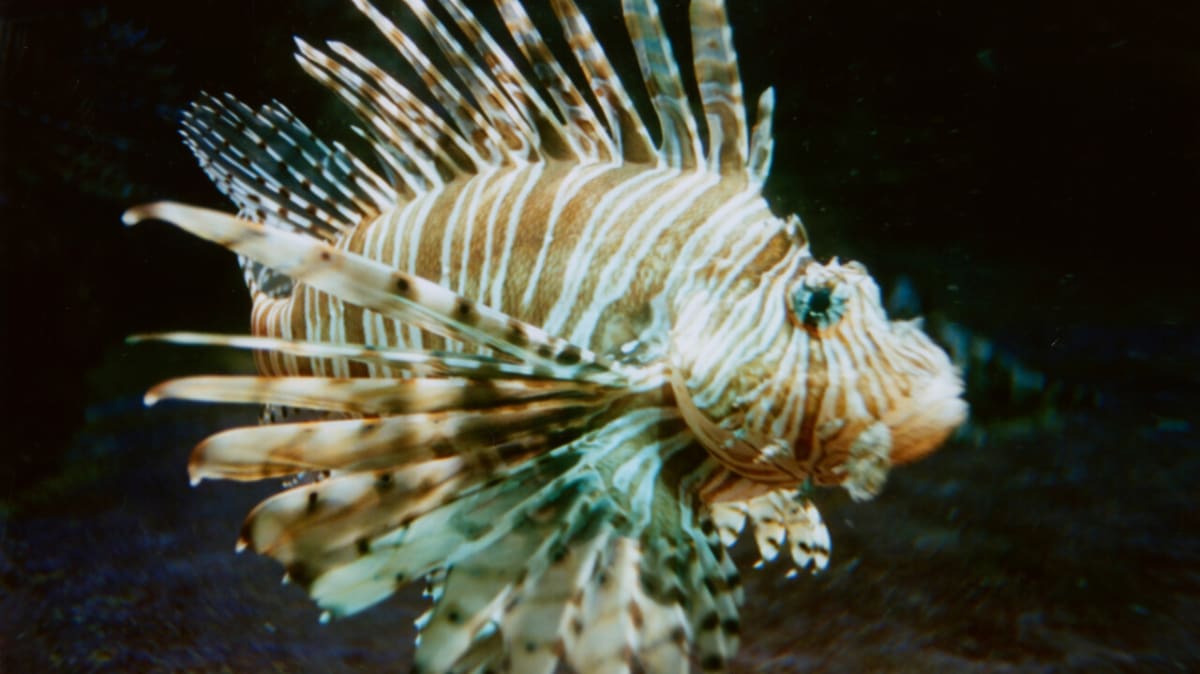
Chefs Turn Invasive Lionfish Into Fine Dining Victory
Divers and chefs in Bermuda are hunting invasive lionfish and serving them at restaurants, creating a delicious solution to a devastating ecological threat. The approach is spreading across the Atlantic as communities discover you can fight marine invaders one dinner plate at a time.
When freediver Natalie Price spears a striped lionfish off the coast of Bermuda and hands it to Chef Lourence Godinho waiting on the beach, she's doing more than catching dinner. She's fighting one of the worst marine invasions on record.
Lionfish don't belong in the Atlantic Ocean. Native to the Indo-Pacific, they first appeared in U.S. waters off Florida in 1985 and reached Bermuda by 2000.
Since then, they've become ecological nightmares. A single lionfish can lay 2 million eggs a year and wipe out 80% of juvenile reef fish in just weeks.
Today, these venomous predators span nearly 7% of the Atlantic and Caribbean, from Rhode Island to Brazil. Traditional eradication isn't possible anymore, so coastal communities are getting creative.
Enter "invasivorism," the surprisingly effective idea of eating your way through an environmental problem. Conservation biologist Joe Roman first explored the concept in the late 1990s while studying invasive green crabs.
His logic was simple: humans have proven remarkably good at depleting animal populations we enjoy eating. Why not apply that appetite to species we actually want to reduce?
Chef Godinho was the first in Bermuda to serve lionfish year-round at his boutique hotel, The Loren at Pink Beach. He prepares the fresh catch as ceviche, tartare, and tiradito, describing the flaky white meat as delicate and buttery, similar to small grouper.
At $12.50 per pound set by local regulations, it's one of the pricier fish on the market. But Godinho believes building relationships with hunters like Price is worth it.
The Ripple Effect
The movement is gaining momentum across invaded waters. Chefs are partnering with divers, anglers, and spearfishers to transform ecological threats into culinary opportunities.
While tens of thousands of lionfish still breed in depths beyond human reach, every fish removed helps native populations recover. The approach addresses a $423 billion annual global problem caused by invasive species.
Similar strategies are emerging for other marine invaders. European green crabs in New England and Pacific oysters crowding Denmark's coastlines could become the next targets for creative conservation through cuisine.
The strategy won't eliminate lionfish completely, but it's proving that communities can adapt to unwanted arrivals while protecting fragile ecosystems. Sometimes the best way to fight an invasion is to make it delicious.
Based on reporting by Google News - Climate Solution
This story was written by BrightWire based on verified news reports.
Spread the positivity!
Share this good news with someone who needs it