Chennai Beats Water Crisis, Now Teaches India to Save Rain
The Indian city that queued for water tankers in 2019 has transformed itself into a national model for rainwater harvesting. Chennai now captures monsoon rain through rooftop systems and underground sponge parks, rebuilding an ancient water wisdom for modern cities.
In 2019, Chennai ran out of water so badly that offices sent employees home because the toilets stopped working.
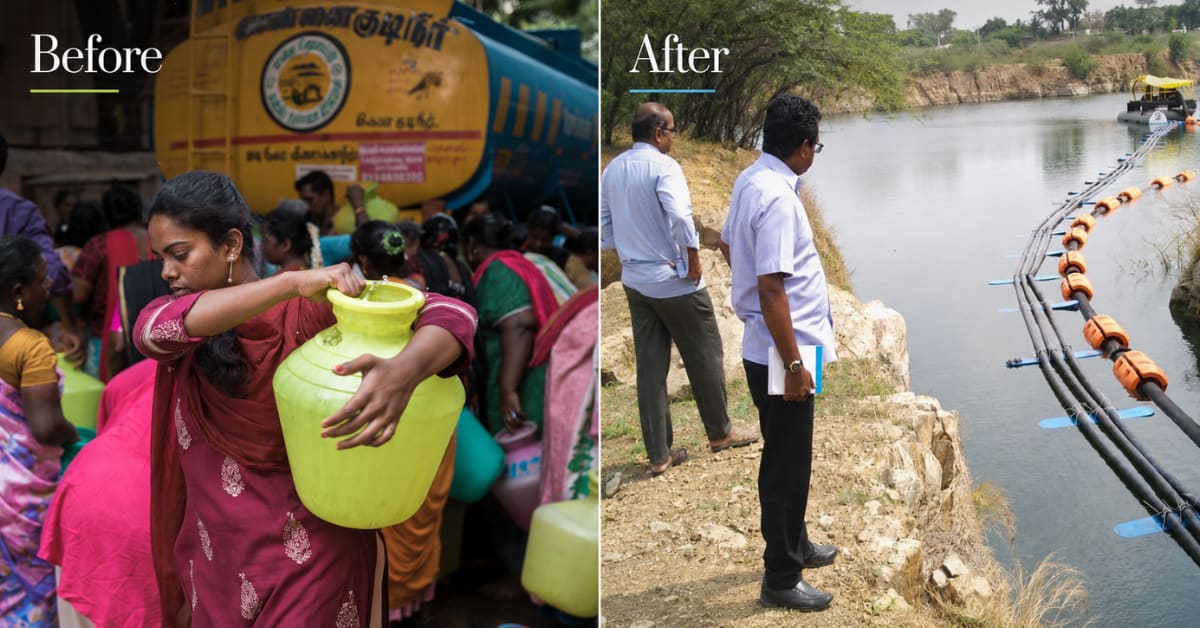
The coastal Indian city of 10 million people watched its four major reservoirs dry up. Plastic pots lined street corners waiting for tanker trucks. Hotels stopped doing laundry. Restaurants cut their hours.
But Chennai's story didn't end there. Today, the city that faced "Day Zero" is teaching the rest of India how to save water.
The crisis had been building since the 1990s, when Chennai's population exploded and thousands of families drilled wells faster than rain could refill them. Seawater crept into underground reserves. Residents brushed their teeth with water that tasted like the ocean.
Then water conservationist Sekhar Raghavan discovered something powerful in old land records. Villages around Chennai had once used interconnected tanks and ponds to capture monsoon rain and slowly return it underground.
He adapted that ancient system for modern rooftops. Rain falling on buildings could flow through pipes and filters back into the earth or storage tanks.
In 2003, Tamil Nadu made it law. Every building in Chennai needed a working rainwater harvesting system or risk losing water connections and property approvals.
The first test came in 2005 when Chennai received double its normal rainfall. This time the water didn't wash away. Wells recovered. Groundwater levels rose 20 feet in several neighborhoods. The underground buffer lasted nearly a decade.
By 2019, though, many systems had failed from poor maintenance. Over 41,000 buildings lacked working systems. When the reservoirs dried up again, the city felt the full impact.
The Ripple Effect
Chennai's second response goes beyond rooftops. The city is now restoring over 80 ponds by clearing silt and removing illegal construction. New "sponge parks" use German technology to install modular underground systems that store and filter rainwater faster than traditional wells.
The approach combines ancient wisdom with modern engineering. Every raindrop becomes precious. Every roof becomes infrastructure. Every restored pond adds resilience.
Chennai proved that urban water crises often aren't about scarcity but about storage. When cities learn to hold onto their rain, they can survive both floods and droughts.
From water lines to water leadership, Chennai shows how quickly cities can turn crisis into hope.
More Images
%2Fenglish-betterindia%2Fmedia%2Fmedia_files%2F2026%2F07%2F06%2Fchennai-2026-07-06-17-41-45.png)
%2Ffilters%3Aformat(webp)%2Fenglish-betterindia%2Fmedia%2Fmedia_files%2F2026%2F07%2F06%2Fchennai-1-2026-07-06-18-08-27.png)
%2Ffilters%3Aformat(webp)%2Fenglish-betterindia%2Fmedia%2Fmedia_files%2F2026%2F07%2F06%2Fchennai-2-2026-07-06-18-13-13.png)
Based on reporting by The Better India
This story was written by BrightWire based on verified news reports.
Spread the positivity!
Share this good news with someone who needs it