Chennai Startup Builds Robots That Transform for Ocean Work
A Chennai robotics company has created underwater robots that swap tools like a Swiss Army knife, making ocean inspection affordable for dams, ports, and pipelines. Their modular design means one machine can do dozens of different jobs.
Inspecting a dam wall costs thousands of dollars, and so does checking a ship's hull or monitoring a coral reef. Until now, each job needed its own specialized robot, putting the work out of reach for most organizations.
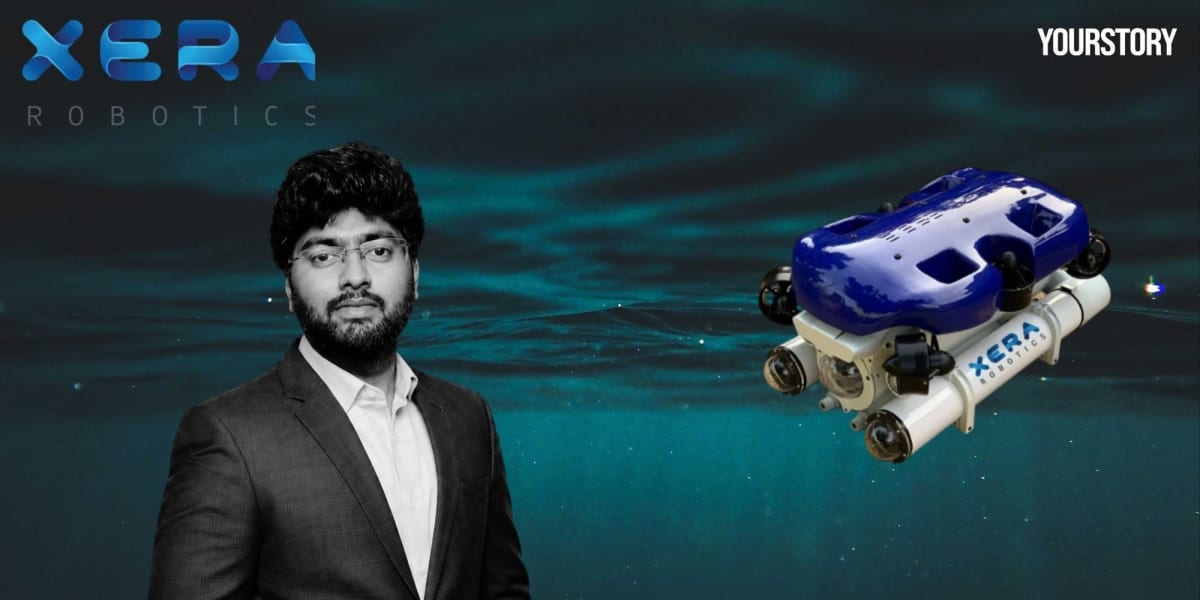
Xera Robotics in Chennai has solved that problem with a robot that transforms. Their DeepDive ROMAR system works like an underwater Swiss Army knife, swapping sensors and tools to handle different tasks with the same core machine.
Founded in 2018 by Mohana Krishnan Ethirajulu and Muni Venkata Krishna Gopinath, the company builds remotely operated marine robots that can inspect bridge piers one week and monitor underwater pipelines the next. The key innovation is modularity: different payloads attach to the same vehicle, dramatically cutting costs for buyers who only need occasional inspections.
The robots include a crucial feature called position hold, which keeps the machine perfectly still in moving water. Without it, currents push the camera around, making it impossible to spot cracks or damage. This stability transforms the robot from a floating camera into a precision inspection tool.
The company tackles work across infrastructure, environmental monitoring, and defense. They inspect storage tanks, a confined and hazardous space where sending human divers is dangerous. They check harbour security, monitor coral reefs for damage, and examine oil and gas facilities.
Chennai has emerged as an unexpected hub for marine robotics. The coastal city sits near major ports, shipyards, and offshore infrastructure, giving local companies real-world testing grounds. Several startups now compete for the same inspection contracts in the region.
Xera also builds electric propulsion systems for boats, using the same underwater motor technology. This gives them a second revenue stream from expertise they've already developed for the robots.
The startup has raised two funding rounds: a grant from StartupTN, the Tamil Nadu government's startup agency, in November 2022, and a seed round in July 2025. Backers include the incubator at IIM Kozhikode and Cochin Shipyard. Tamil Nadu has actively supported hardware startups through direct grants and government programs.
The Ripple Effect
Making underwater inspection affordable opens doors for smaller organizations that need the work but couldn't justify the cost. Municipal water departments can check dam safety more often. Environmental groups can monitor reef health without breaking budgets. Port authorities in developing regions can maintain infrastructure that keeps commerce flowing.
The modular approach also reduces waste: instead of multiple specialized machines sitting idle between jobs, one adaptable robot stays busy year-round.
One machine that does the work of many means safer infrastructure and healthier oceans for everyone.
More Images


Based on reporting by YourStory India
This story was written by BrightWire based on verified news reports.
Spread the positivity!
Share this good news with someone who needs it