Cherokee Phoenix: 198 Years of Native American Journalism
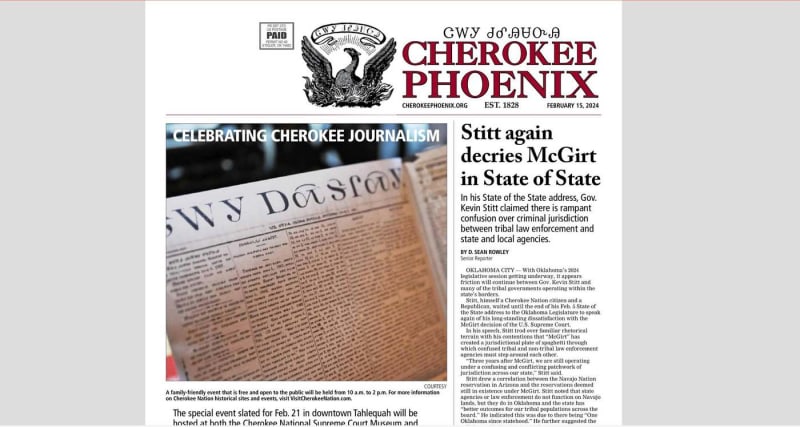
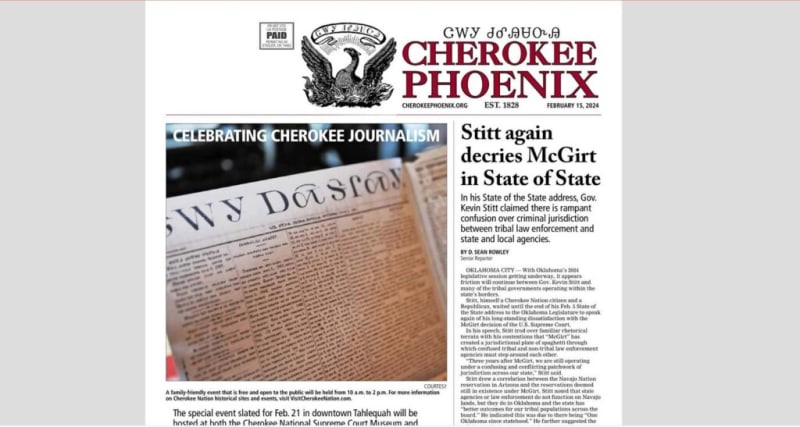
The first Native American newspaper launched 198 years ago today using an ingenious writing system invented just years earlier. The Cherokee Phoenix still publishes today, making it one of America's most enduring journalistic achievements.
On February 21, 1828, something revolutionary happened in the world of journalism: the first newspaper published by Native Americans rolled off the press in both English and Cherokee.
The Cherokee Phoenix was groundbreaking not just for who published it, but how. It used the Cherokee syllabary, a writing system invented by Sequoyah just years earlier. Sequoyah, also known as George Gist, accomplished something remarkable in human history: he created a written language for his pre-literate people from scratch.
The newspaper's business model reflected its mission of cultural preservation. Cherokee speakers who could only read their native language received the paper for free. English readers paid $2.50 annually. Each four-page issue contained five columns, with editor Elias Boudinot initially dedicating three columns weekly to Cherokee language content.
That first issue tackled important topics head-on. Samuel Worcester praised Sequoyah's syllabary invention, while Boudinot's editorial criticized white settlers eyeing Cherokee land. The paper quickly became a voice for the Cherokee Nation during one of its darkest periods.
As pressure mounted to remove the Cherokee from their Georgia homeland, the Phoenix organized fundraising and publicity tours. Subscriptions poured in from across the United States and Europe. But when the government stopped paying annuities to the Cherokee in their conspiracy to seize tribal lands, the paper ceased publication in 1835.
The story doesn't end there. The Cherokee Phoenix was revived in the 20th century from the nation's exile in Oklahoma, proving that a free press, like a people's culture, cannot be permanently silenced.
The Ripple Effect goes beyond survival. In 2013, artists Jeff Marley and Frank Brannon completed a powerful project at New Echota, Georgia, the original Cherokee capital. They printed using Cherokee syllabary type for the first time at that location since 1835. The act connected past to present, showing how Sequoyah's invention continues bridging generations.
Today, nearly 200 years after that first issue, both Sequoyah's Cherokee language and the Phoenix remain in use. The newspaper stands as a testament to cultural resilience and the power of the written word to preserve identity across centuries.
A free press and a determined people can outlast any attempt to silence them.
More Images



Based on reporting by Good News Network
This story was written by BrightWire based on verified news reports.
Spread the positivity!
Share this good news with someone who needs it