Chicago Exhibit Honors Genocide Survivors' Treasured Items
Sixty genocide survivors are sharing their most precious possessions in a Chicago exhibit that reveals how simple objects carried across oceans can hold entire family stories. From a toy train shipped ahead to safety to dresses that identified lost children, each item tells a story of resilience.
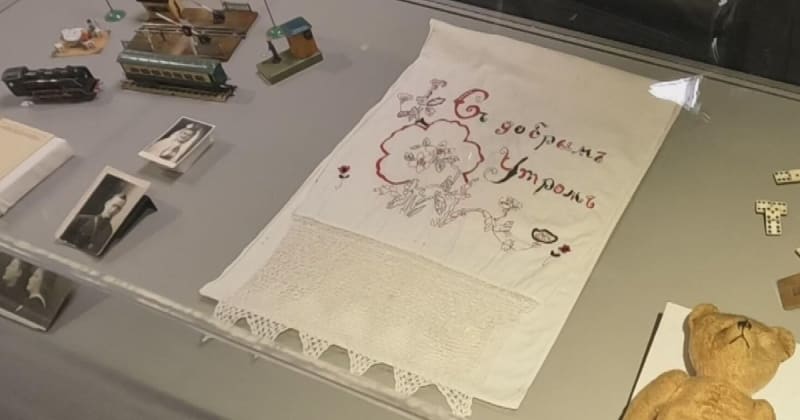
A toy train set bought in 1938 Germany has now been played with by three generations of the Rehbock family, but its journey to America tells a story far bigger than childhood memories.
Ralph Rehbock was just four years old when his father purchased the electric train set and shipped it to relatives in Chicago. The Nuremberg Laws had stripped German Jews of their citizenship, and the family knew they had to flee. That train set, waiting for young Ralph when he arrived in America, became a symbol of survival and hope that his children and grandchildren would later cherish.
Now 91, Rehbock is one of 60 genocide survivors featured in "Stories of Survival: Object, Image, Memory" at the Illinois Holocaust Museum in Chicago. The exhibit runs through June and showcases both actual objects and photographs of items survivors brought to America or later recovered.
The collection includes everyday items that carried extraordinary significance. Teacups, a teddy bear, and wedding announcements sit alongside more haunting artifacts. One Armenian genocide survivor sewed a coin into the seam of her dress to smuggle it out. Prisoners during the Bosnian war wrote secret recipes, imagining food to ease their hunger.
Some possessions survived thanks to remarkable acts of kindness. One Jewish family turned their belongings over to non-Jewish neighbors, who buried them during the Holocaust. When the family miraculously survived, they returned to retrieve their treasured items, including that teddy bear.
A wedding announcement tells another hopeful story. After fleeing Austria to escape the Nazis, a man married a Chicago woman in 1948. Years later, they added the handprints of their children and grandchildren to the announcement, a visual celebration of the generations that followed.
Not all stories end in joy. Dresses on display belonged to the daughters of Immaculee, who survived the Rwandan genocide. Her husband and daughters did not, and she could only identify her young girls by their clothing.
Why This Inspires
Kelley Szany, the museum's VP of education and exhibitions, sees these objects as bridges between past trauma and present unity. "No matter our background, no matter our religion or our race, whatever our story is, there is still something that unites us as human beings," she explains. That common thread is love, hope, and the human need to remember and share our stories.
Each display includes handwritten narratives from survivors or their family members, transforming simple objects into powerful testimonies of the human spirit's ability to endure.
These treasured possessions remind us that even in humanity's darkest moments, people found ways to carry forward pieces of home, identity, and hope for better days ahead.
Based on reporting by Google: survivor story
This story was written by BrightWire based on verified news reports.
Spread the positivity!
Share this good news with someone who needs it