Childhood Promise Becomes Real Robotic Arm in Mexico
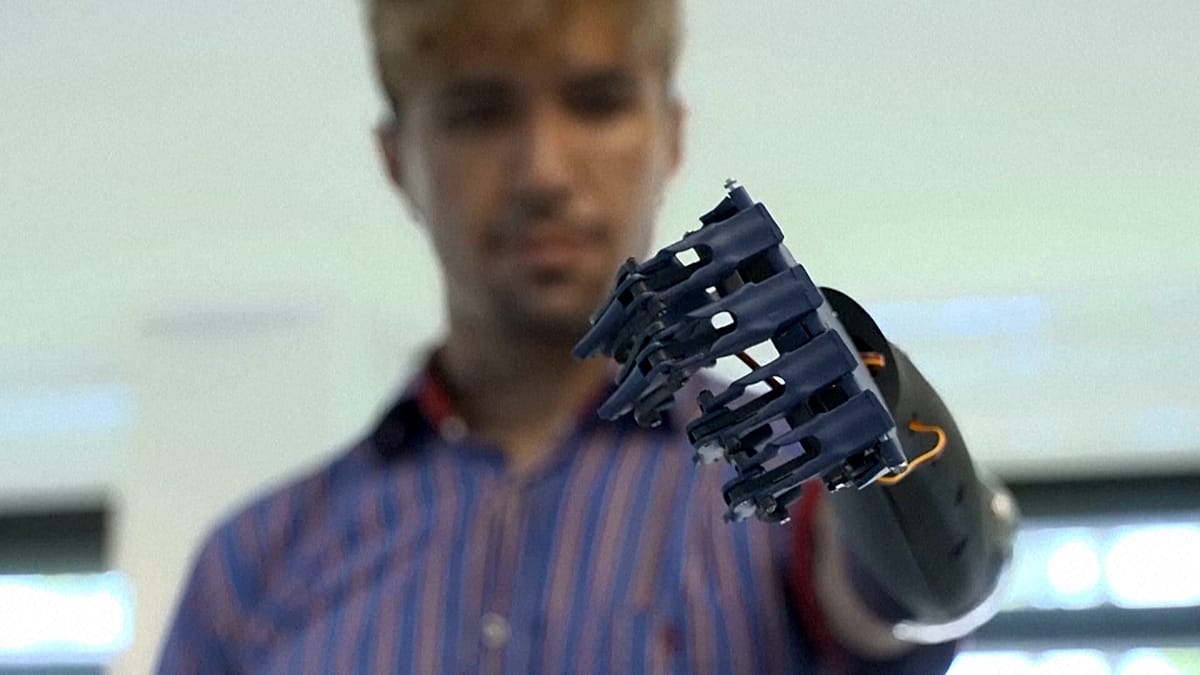
A Mexican engineer kept his childhood promise to his best friend, creating a simplified robotic arm that could make prosthetics accessible to thousands. The device uses just one muscle sensor to control multiple hand movements.
When Jorge Velazco was ten years old, he promised his friend Alberto Orozco that one day he'd build him a bionic arm. Two decades later, that playground promise became a groundbreaking prosthetic device.
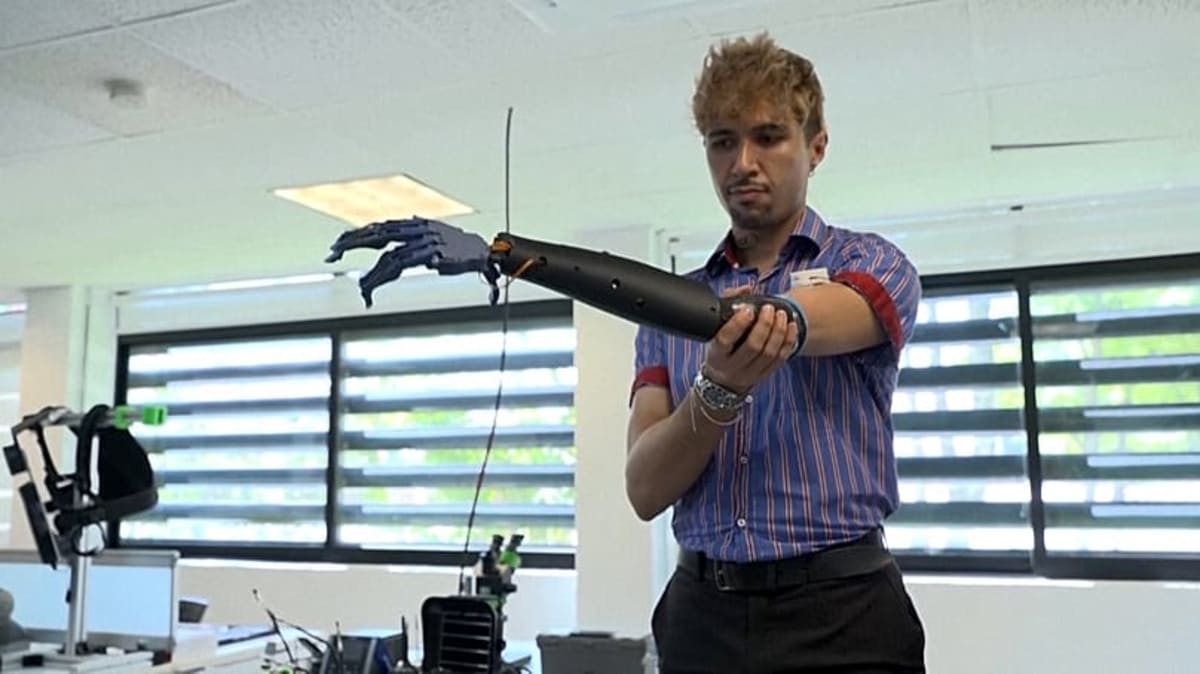
Researchers at the University of Guadalajara have developed E-Redi, a robotic arm that solves one of prosthetics' biggest problems: complexity. Traditional prosthetic devices often overwhelm users with difficult controls, leading many to abandon them entirely.
E-Redi changes that with elegant simplicity. The device uses a single muscle sensor to control different hand movements, making it far easier to learn and adapt to than conventional prosthetics.
Orozco, born with meromelia (a rare condition causing partial limb absence), became the first person to test the prototype. He met Velazco at a summer course as teenagers, where their friendship began with a joke about shark attacks and grew into a bond that would change both their lives.
"We got to the point where we were watching movies like Star Wars or Robocop," Velazco recalls. "Then there was a moment when, maybe jokingly, we said that one day I'm going to make you an arm."
Years later, Velazco turned that promise into his university thesis project. With guidance from Dr. Erick Guzmán, the childhood dream became reality.
The team designed E-Redi specifically to reduce adaptation time. Where traditional prosthetics can take months to master, E-Redi aims to get users comfortable within days or weeks.
Future versions will combine muscle signals with voice commands, adding another layer of intuitive control. The researchers are already working on integrating this technology into the next prototype.
Why This Inspires
This story shows how the deepest innovations often spring from the simplest human motivations: keeping a promise to a friend. Velazco didn't set out to revolutionize prosthetics. He just wanted to help someone he cared about.
That personal connection drove him to think differently about the problem. Instead of adding more sensors and complexity like other researchers, he asked how to make prosthetics simpler and more human.
Orozco has witnessed the dramatic improvements firsthand. "Any prosthesis now I find truly impressive, especially coming from my best friend who made it with so much love and dedication," he says.
The simplified design could help thousands of people who've given up on prosthetics due to their complexity. By making the technology more accessible and easier to learn, E-Redi opens doors that were previously closed.
A childhood promise kept is now helping others reach for new possibilities.
More Images



Based on reporting by Euronews
This story was written by BrightWire based on verified news reports.
Spread the positivity!
Share this good news with someone who needs it