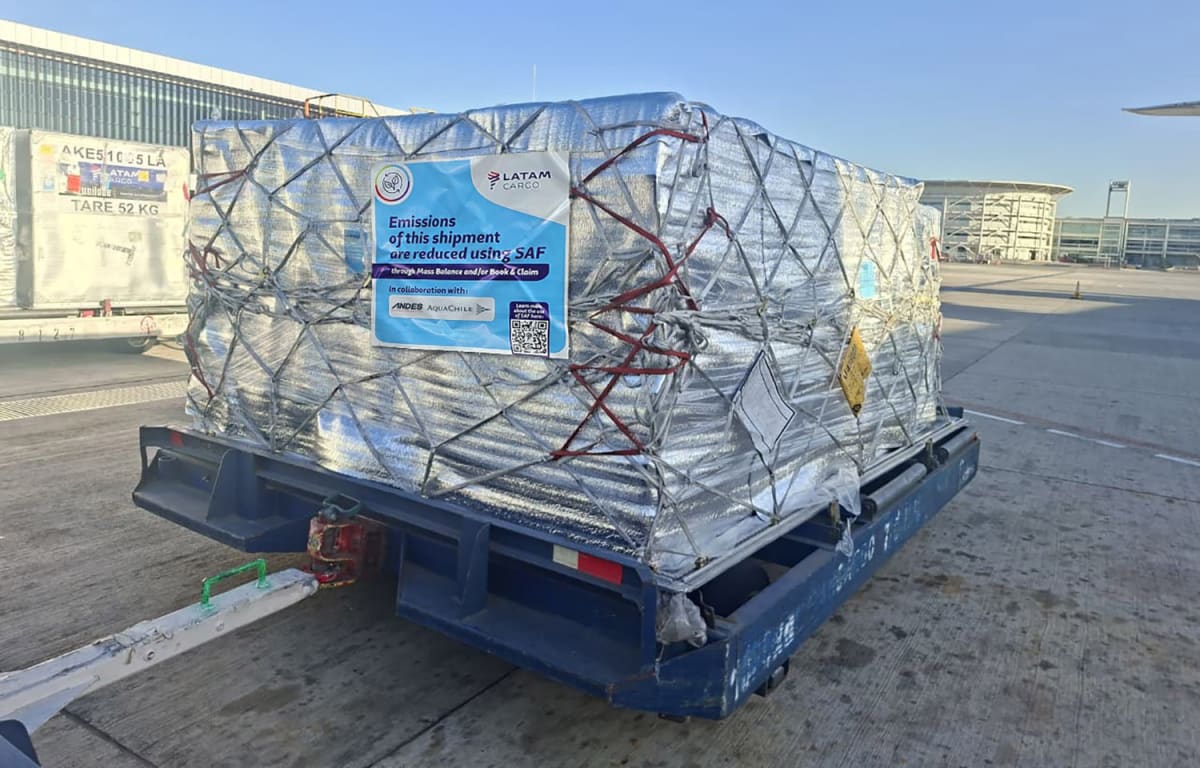
Chilean Salmon Flies to US on Sustainable Jet Fuel
A Chilean salmon farm just flew 3 tons of fish to America using sustainable aviation fuel, cutting emissions by 10%. It's a first for the seafood industry and could transform how fresh food travels the globe. #
Fresh salmon is flying across continents with a much smaller carbon footprint, and the seafood industry is taking notes.
AquaChile, one of Chile's largest salmon producers, just shipped 3 metric tons of salmon to the United States on a plane powered by sustainable aviation fuel. The flight cut carbon emissions by 10% compared to traditional jet fuel, saving about 0.6 metric tons of CO2 from entering the atmosphere.
This marks the first time a seafood company has used SAF for international shipping. The move signals that even industries dependent on fast air transport can find cleaner solutions without sacrificing quality or speed.
Sustainable aviation fuel works like regular jet fuel but comes from used cooking oil, animal fats, agricultural waste, and even municipal trash. Because these materials already absorbed carbon dioxide while growing or being used, burning them releases far less new carbon into the atmosphere than fossil fuels do.
The project used a "book and claim" system through LATAM airlines. AquaChile reserved a specific amount of sustainable fuel and earned credits for the emissions reduction, even though the exact fuel blend wasn't physically in their plane's tank.
The Ripple Effect
Fresh seafood depends on speed. Salmon caught in Chile needs to reach American dinner tables quickly, making air freight essential. For years, that meant accepting high emissions as the cost of freshness.
This flight proves there's another way. AquaChile called it a "strategic milestone" that demonstrates emissions can drop without affecting service quality or delivery times.
Other salmon producers are watching closely. The company specifically noted this sends a powerful message to the entire industry about making sustainable aviation fuel standard practice, not just a one-time experiment.
The timing matters too. AquaChile posted strong financial results for 2025, with revenues reaching $1.88 billion and net profits of $197 million. That financial strength positions them to invest in greener logistics even when it costs more upfront.
The company plans to expand SAF use across different products and routes, especially to demanding markets in the United States and Europe where consumers increasingly care about how their food travels.
Logistics partner Andes Integración Logística managed the complex tracking required to measure and verify the emission reductions. That kind of careful measurement helps ensure these initiatives deliver real environmental benefits, not just good marketing.
Fresh food will keep flying, but now it can fly cleaner.
#
More Images

Based on reporting by Google News - Emissions Reduction
This story was written by BrightWire based on verified news reports.
Spread the positivity!
Share this good news with someone who needs it