
Chile's Forest Waste Powers New Clean Aviation Fuel Plant
A Chilean forestry company is turning sawdust into jet fuel, partnering with local gas distributors and German engineers to create sustainable aviation fuel from forest waste and renewable hydrogen. The circular economy project could produce 300 tons of clean fuel annually starting in 2027.
Chile's central Biobío region is proving that yesterday's wood scraps could power tomorrow's flights.
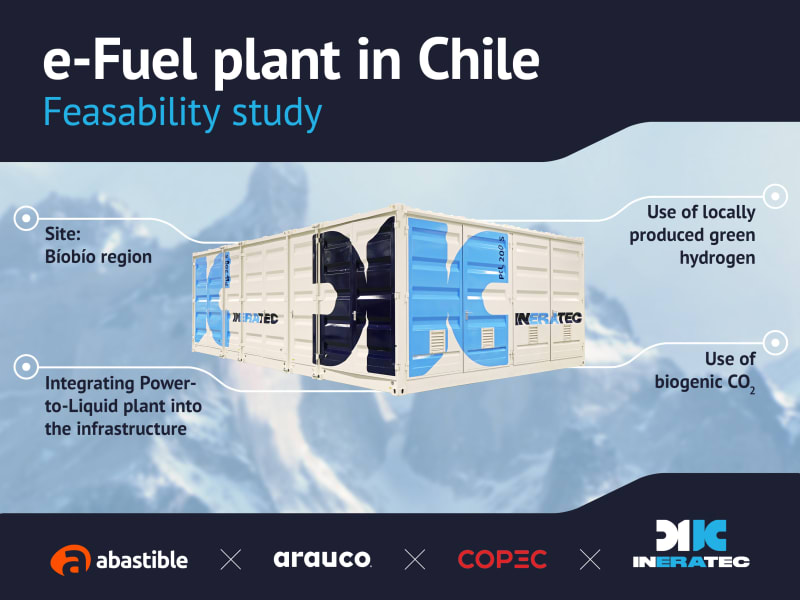
A consortium of Chilean companies and German technology partner INERATEC just completed feasibility studies for a groundbreaking plant that will convert forest residues into sustainable aviation fuel and diesel. The project transforms waste CO2 from forestry operations into fuel that planes and trucks can use today, no engine modifications needed.
Here's how the circular magic works. Forestry giant Arauco generates biogenic CO2 from wood waste at its existing facilities. Natural gas distributor Abastible produces renewable hydrogen. German company INERATEC combines these ingredients in a modular plant to create e-fuels. Industrial group Copec handles the refining and distribution through existing infrastructure.
The plant aims to produce up to 300 tons of sustainable fuel yearly from 1,000 tons of captured CO2. More than one third of that output will be sustainable aviation fuel, with the rest becoming e-diesel for heavy transport.
Chile's state development agency Corfo partially funded the feasibility study, which wrapped up recently. If partners approve investment decisions, construction could begin in 2027.
The Biobío region offers perfect conditions for this integrated approach. Arauco's industrial facilities already operate there, providing reliable access to forest waste CO2. Pairing that local carbon source with renewable hydrogen and existing logistics infrastructure means fewer new facilities to build.
While Chile's massive green hydrogen export projects in the northern Antofagasta and southern Magallanes regions grab headlines, nearly 30 hydrogen projects are quietly moving forward in the central zone. Chile's updated 2020 green hydrogen strategy specifically calls for creating local supply and demand ecosystems and narrowing the cost gap with fossil fuels.
The Ripple Effect
This project demonstrates how existing industries can evolve rather than compete with clean energy transitions. Forest products companies gain a valuable use for their waste streams. Natural gas distributors expand into renewable hydrogen. Fuel distributors add sustainable products without rebuilding their entire logistics network.
Aviation and heavy trucking face unique decarbonization challenges because batteries remain too heavy for long hauls. Drop-in sustainable fuels that work in existing engines offer an immediate solution while longer-term technologies develop.
Germany's INERATEC is already building what will become the world's largest e-fuels plant in Frankfurt, producing 2,500 tons of ultra-low-carbon aviation fuel annually. Their modular, scalable technology allows projects like Chile's to start smaller and grow as demand increases.
The Chilean project shows how collaboration between traditional industries and clean tech innovators creates pathways that neither could achieve alone.
What started as sawdust might soon help travelers fly with lighter carbon footprints.
More Images



Based on reporting by Google News - Chile Renewable Energy
This story was written by BrightWire based on verified news reports.
Spread the positivity!
Share this good news with someone who needs it