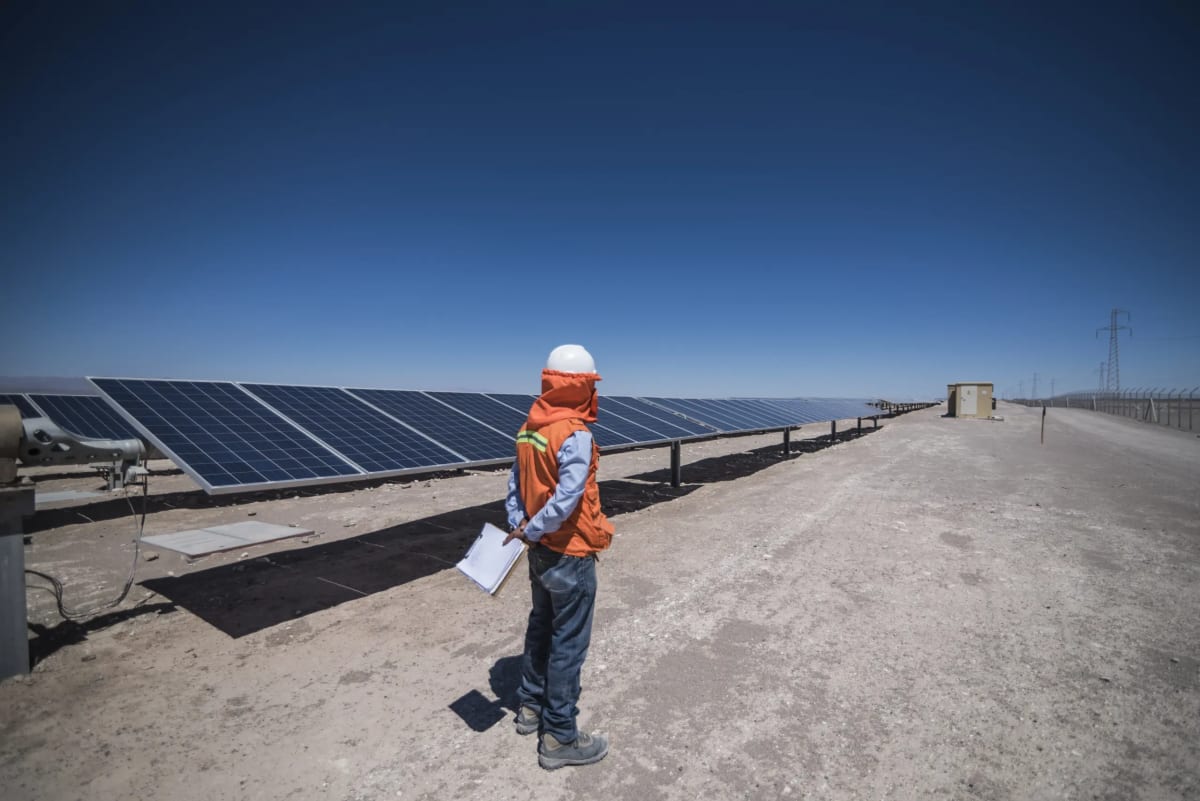
Chile's Solar Center Gains National Recognition
Chile just elevated its solar energy research center to national priority status, cementing the country's position as a renewable energy leader. The move builds on over a decade of breakthrough research in one of the sunniest places on Earth.
- Chile's Solar Energy Research Center (SERC Chile) designated as Center of National Interest by ANID
- Recognition builds on 12+ years of solar research
- Chile has world's highest solar radiation levels (Atacama Desert)
- In 2025, solar/wind hit record share of national electricity
- SERC focuses on solar generation, storage, green hydrogen, e-fuels
- Chile is positioning as Latin American renewable energy leader
Story Type: DEEP DIVE (innovation/science/policy) = 600-800 words
---
BRIGHTWIRE ARTICLE
TITLE: Chile's Solar Center Gains National Recognition
SUMMARY: Chile just elevated its solar energy research center to national priority status, cementing the country's position as a renewable energy leader. The move builds on over a decade of breakthrough research in one of the sunniest places on Earth.
CONTENT:
Chile is turning its greatest natural gift into a renewable energy powerhouse that could change Latin America's energy future.
The country's Solar Energy Research Center (SERC Chile) just received designation as a Center of National Interest from Chile's National Agency for Research and Development. This recognition caps more than 12 years of groundbreaking solar research and positions Chile as a continental leader in clean energy innovation.
The timing couldn't be better. In 2025, solar and wind power reached a record high share of Chile's national electricity mix, proving that the rapid integration of renewable energy isn't just possible but profitable.
Chile's secret weapon is geography. The Atacama Desert boasts the highest levels of solar radiation anywhere on the planet, creating what scientists call "an unmatched natural laboratory for solar energy." Those intense rays have powered photovoltaic generation rates that exceed global averages and sparked innovations that are spreading across the region.
SERC Chile operates as a joint partnership between the Pontifical Catholic University of Chile and the University of Chile. The center focuses on practical applications that matter: solar power generation, energy storage systems, renewable energy integration, and the development of solar fuels like green hydrogen, ammonia, and e-fuels.
But the research goes deeper than just capturing sunlight. Scientists are also tackling the harder questions about material efficiency, waste management, and environmental impact to ensure the transition to solar energy is truly sustainable.
"Chile has a natural laboratory for solar energy that is unmatched anywhere in the world," said Juan Carlos de la Llera, rector of the Pontifical Catholic University. The center's mission extends beyond technology to include evidence-based public policies and ensuring benefits reach communities across the country.
Rosa Devés, president of the University of Chile, framed the challenge in human terms. "The energy transition requires something more profound than simply replacing one technology with another: it requires us to rethink our relationship with the land, with natural resources, and with future generations."
Chile isn't just generating clean electricity for itself. The country has already launched Latin America's first solar thermal power plant and multiple industrial-scale green hydrogen projects, positioning itself as a future hub for exporting clean energy and its derivatives to the world.
The Ripple Effect
Chile's solar success story is creating waves far beyond its borders. The research and innovations coming out of SERC Chile are providing blueprints for other countries blessed with abundant sunshine but limited by technical knowledge or infrastructure.
Green hydrogen production, which uses solar energy to split water molecules, could eventually power ships, trucks, and industrial processes that currently depend on fossil fuels. Chile is racing to become a major exporter of this clean fuel to countries that lack the solar resources to produce it themselves.
The designation as a Center of National Interest means more funding, stronger government support, and greater collaboration between researchers, policymakers, and industry leaders. This integrated approach speeds up the journey from laboratory breakthroughs to real-world applications that reduce carbon emissions and create jobs.
When a country with world-class solar resources commits to world-class solar science, everyone wins.
Based on reporting by Google News - Chile Renewable Energy
This story was written by BrightWire based on verified news reports.
Spread the positivity!
Share this good news with someone who needs it