Chimps Love Crystals Just Like Our Ancient Ancestors Did
Scientists in Spain discovered that chimpanzees can identify and become fascinated by crystals, just like early humans did 780,000 years ago. This finding suggests our attraction to these shiny stones has deep evolutionary roots we share with our closest relatives.
Scientists just found a surprising connection between chimpanzees and our ancient ancestors: they both can't resist the allure of crystals.
For hundreds of thousands of years, early humans collected crystals without using them as tools, weapons, or jewelry. Researchers always wondered why our ancestors were so drawn to these stones when they seemed to serve no practical purpose.
Now a team in Spain has found the answer by studying chimpanzees, our closest living relatives. They discovered that chimps can naturally identify crystals and show intense fascination with them, suggesting this attraction runs deeper in our evolutionary history than anyone expected.
The researchers placed a large quartz crystal called "the monolith" on a platform alongside a regular rock of similar size. While both objects initially caught the chimps' attention, they quickly ignored the regular rock and focused entirely on the crystal.
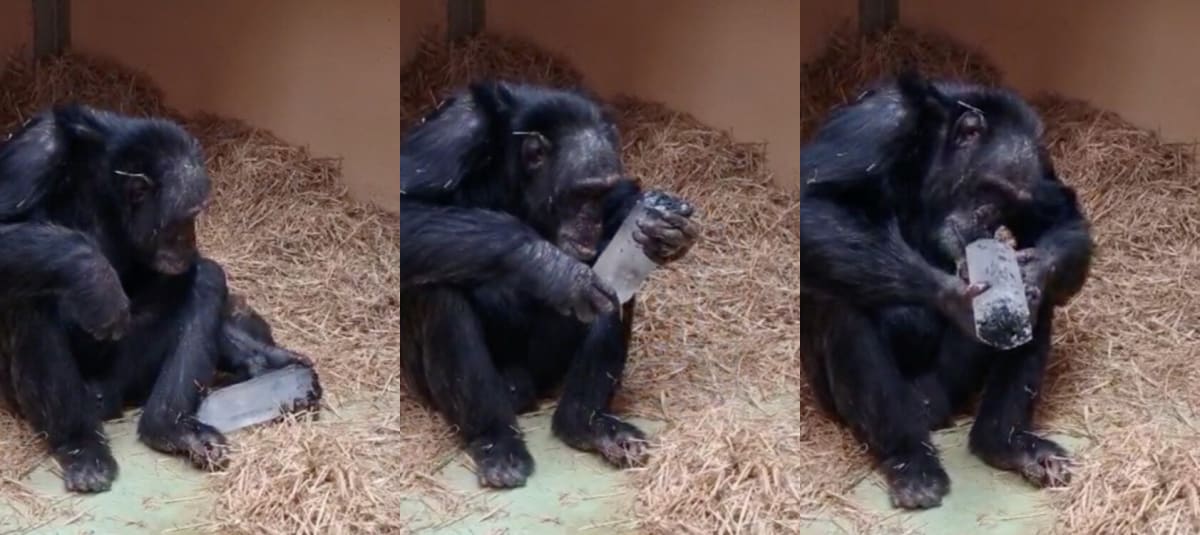
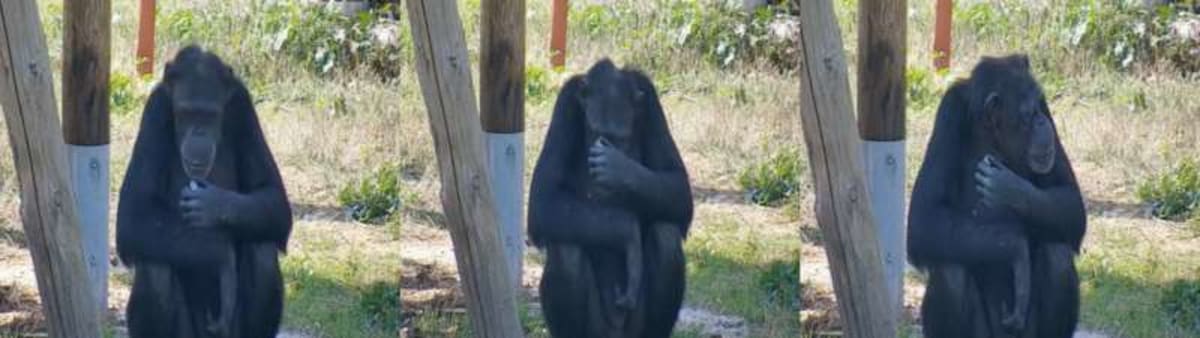
The chimps inspected the crystal carefully, rotating and tilting it to view it from different angles. One chimp named Yvan even carried it decisively to the dormitories, and caretakers had to trade bananas and yogurt to get it back.
In a second experiment, the chimps proved they could spot smaller crystals instantly. Researchers placed quartz crystals among 20 rounded pebbles, and the chimps picked out the crystals within seconds every time.
One chimp named Sandy carried pebbles and crystals in her mouth to a wooden platform and carefully separated them. She sorted all three types of crystals, which differed in transparency, symmetry, and luster, away from the ordinary pebbles. The team noted that chimps rarely use their mouths to carry objects, suggesting they were hiding them like valuable treasures.
The chimps studied the crystals' transparency with extreme curiosity. They held them up to eye level and looked through them for hours, repeating this behavior in ways that amazed the research team.
Why This Inspires
This discovery reminds us that wonder and curiosity aren't learned behaviors but fundamental parts of who we are. The same qualities that made our ancestors pick up shiny stones millions of years ago still live in us today.
Lead researcher Professor Juan Manuel García-Ruiz said the strength of the chimps' natural attraction to crystals was pleasantly surprising. Modern humans split from chimpanzees between six and seven million years ago, but we still share this sense of awe when we encounter something beautiful and unusual.
The team plans to study wild apes next to see if this fascination exists even without human contact. They also want to explore whether different chimp personalities, from idealists to pragmatists, respond to crystals in unique ways.
Our fascination with beauty and wonder has roots that stretch back millions of years, connecting us to both our ancient ancestors and our living relatives.
More Images

Based on reporting by Phys.org
This story was written by BrightWire based on verified news reports.
Spread the positivity!
Share this good news with someone who needs it